

Seeing a cat in a harness can feel surprising, impressive and slightly unusual. But with the right approach, many cats can learn to wear a harness and explore safely outdoors without stress, drama, or betrayal… Here’s lookin’ at you, fearless felines who like to prowl the streets!
This guide explains how to train a cat to go on a walk with you, what to expect at each stage, and how to tell whether harness training is right for your cat.

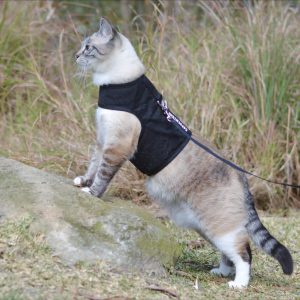
Can you train a cat in a harness?
Yes, many cats can be trained to wear a harness.
A cat in a harness can explore outdoor environments safely while staying under control. It works best for curious, confident cats and should always be done gradually using positive reinforcement.
Just note – not every cat will enjoy harness walking, and that’s okay. The goal is comfort and confidence, not compliance.
To check how ‘trainable’ your cat breed is, scan over our other helpful article, ‘How to train a cat’ >
Why put a cat in a harness?
Common reasons owners train a cat to wear a harness include:
☑️ Safe outdoor enrichment for indoor cats
☑️ Controlled exposure to new sights and smells
☑️ Mental stimulation and exercise
☑️ Preventing escape or injury outdoors
A harness gives your cat freedom within boundaries they can’t slip out of.
Step-by-step: How to train a cat to walk on a lead
Step 1: Choose the right harness for your cat
A successful experience starts with the right gear. The cool cats at Cat Harness Australia have a great range, designed for cats who ‘deserve a life beyond the window’.
Look for:
- A harness designed specifically for cats
- Adjustable neck and chest straps
- A snug but comfortable fit
- Lightweight, breathable materials
Avoid loose-fitting or decorative harnesses. Cats are experts at reverse engineering their way out.
Step 2: Let the harness become familiar
Before placing the harness on your cat, let them investigate it. You could even leave it laying around prior to any training, so they get used to it being around. Place the harness near their bed, or their food bowl, or even one of their favourite resting spots.
Reward calm sniffing or interest with treats. At this stage, the harness should feel neutral, not threatening.
Step 3: Introduce the harness indoors
Put the harness on your cat indoors only, without attaching the leash. Start with 30 – 60 seconds, and gradually increase time over several days.
Your cat may freeze, walk low, or dramatically collapse. This is normal behaviour for a cat wearing a harness for the first time. Be sure to reward calm movement and remove the harness before frustration appears. Patience is key!
 Step 4: Create positive associations
The biggest tip of them all… When training a cat to wear a harness, we recommended only putting it on before something enjoyable. Think meal or treat time, or before a play session. Over time, the harness becomes a signal that good things are about to happen, not a warning sign.
Step 5: Add the leash indoors
Once your cat moves comfortably while wearing the harness, clip on the leash indoors. What’s important though is to go at their pace. Let them take the lead and you simply follow. And never pull on the lead.
At this stage, “walking” looks more like wandering, but that still counts!
Step 6: Take your harnessed cat outside (briefly)
The first outdoor experience should be short and, to be honest, underwhelming.
Choose a familiar, low-noise area (eg. a balcony, courtyard, or front step) and just be together for 2 – 5 minutes, max.
Let your cat observe and sniff, and then the session before signs of stress appear.
P.S – It may feel a little tedious having to train them at such a slow pace, but gradual action will get the best result. Reward for effort!
Step 7: Build confidence gradually
As your cat becomes more confident in a harness, you can slowly extend time outdoors, introduce new locations, and allow gentle exploration. Some cats will walk purposefully. Others will sit still and absorb the world. Both are valid outcomes!
Common mistakes when training a cat to walk on a lead:
❌ Skipping indoor training
❌ Pulling or guiding the leash
❌ Starting in busy environments
❌ Expecting dog-style walking
❌ Continuing when your cat is clearly uncomfortable
Harness training should always feel optional to your cat. And if you sense, within any of the above steps, that they’re just not into it, don’t force it – it just might not be their thing.
Monitor their body language, and if your cat freezes repeatedly, hides, or shows flattened ears, harness training may not be right for them.
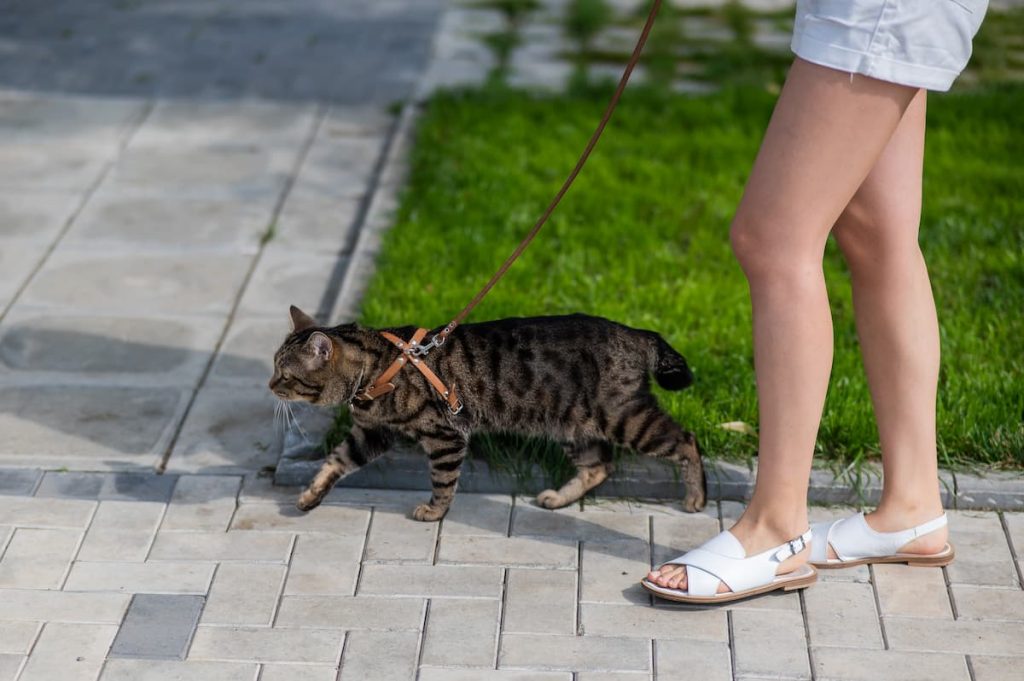 Signs a cat is comfortable in a harness:
A confident cat in may show:
- Relaxed posture
- Curious sniffing
- Calm tail movement
- Willingness to approach the door (or you) when the harness appears
FAQs about cats in harnessesCan any cat wear a harness?Most cats can learn to tolerate a harness, but only some will enjoy walking outdoors. It’s more about their individual personality. How long does it take to train a cat to walk on a lead?Some cats adjust within a week. Others may take several weeks. So, training should progress at your cat’s pace. Should a cat wear a harness every day?No – a cat should only wear a harness during supervised sessions and removed afterward. A collar, on the other hand, should be always on. Is a harness better than a collar for cats?For outdoor exploration, yes, because harnesses distribute pressure across the body and reduce the risk of escape or injury. |
Training a cat in a harness isn’t about distance walked or destinations reached. It’s about giving your cat safe access to the world beyond the window, on their terms.
Go slowly. Reward generously. Respect the signals.
And, if your cat decides the front step is enough adventure for one lifetime, that’s still a successful outing!
