
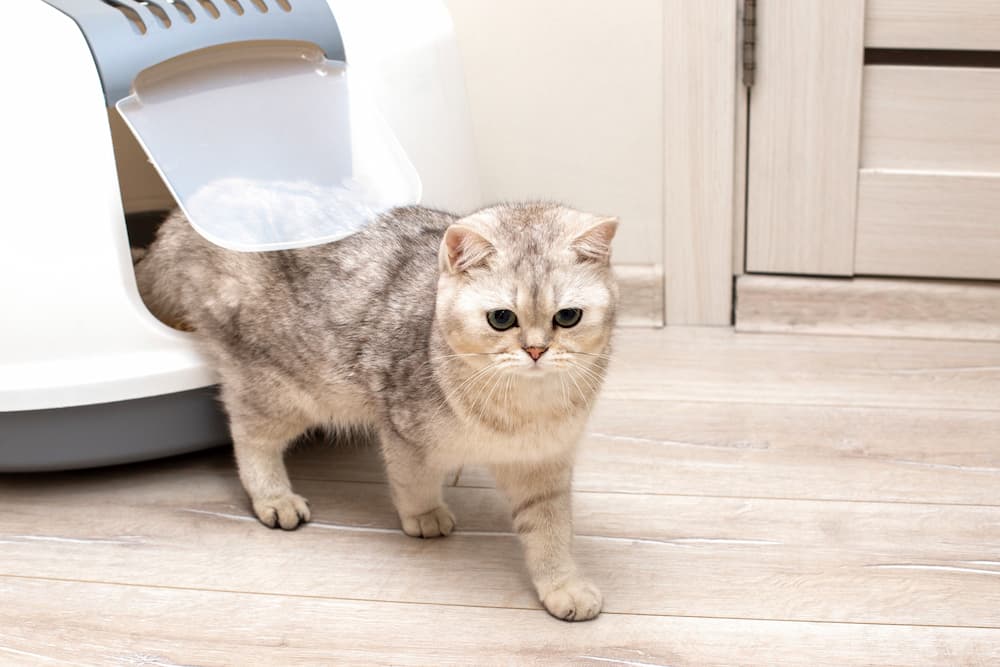
Your cat’s litter tray isn’t just a place to bury business, it’s a window into their digestive health. By keeping an eye on their cat poo, you can spot subtle signs of diet issues, hydration problems, or gut imbalances before they become serious.
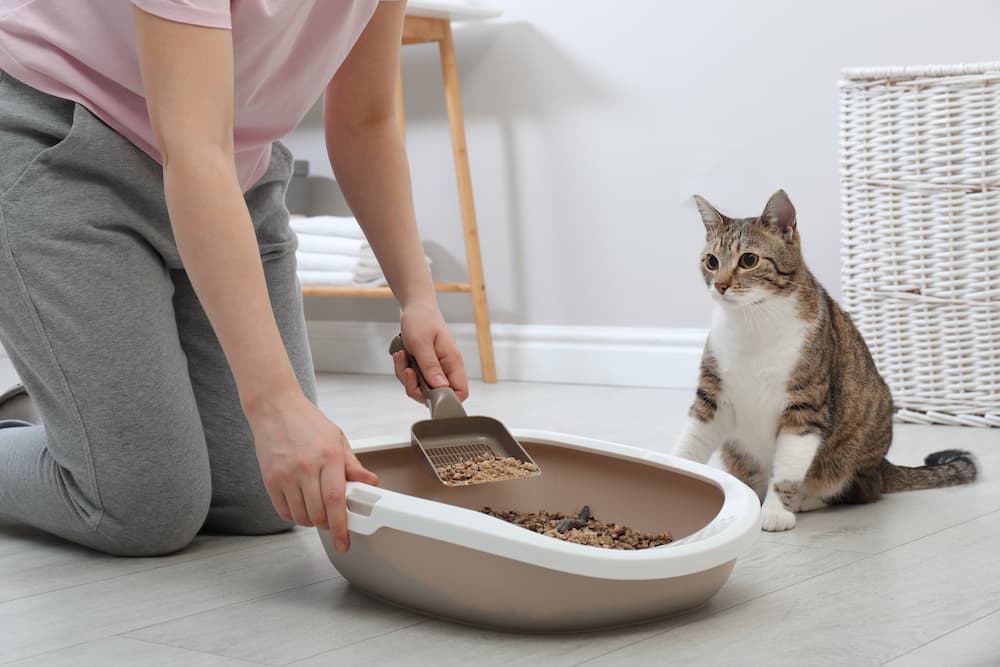 To make sense of what your cat’s litter tray is telling you, it helps to break it down into four simple checkpoints: colour, consistency, content, and coating.
Keeping an eye on these ‘4 C’s’ makes it easier to spot what’s normal, what’s off, and when it’s time to take action.
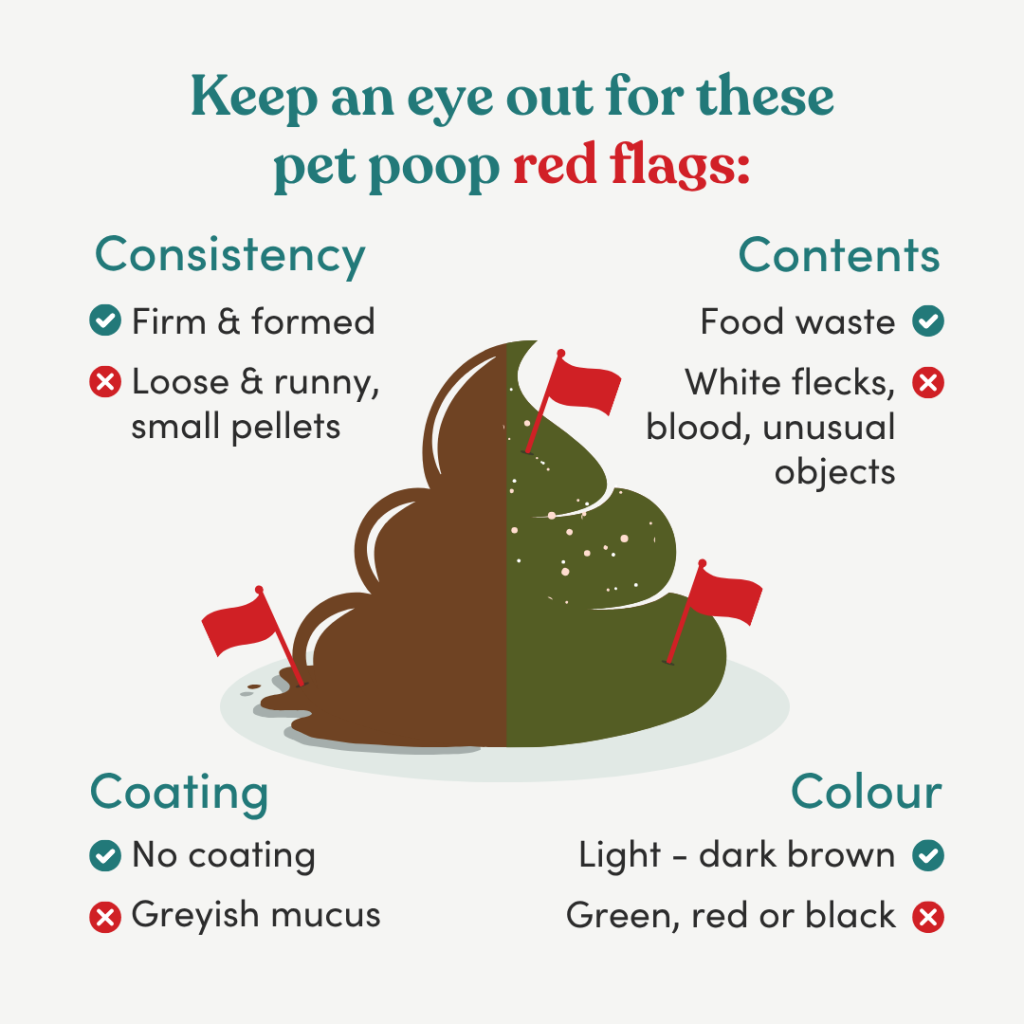
The 4 C’s of healthy cat poo
Use these four indicators as a ‘litter box checklist’ to determine how healthy their gut is:
1. Colour
Healthy cat poo should be deep brown in colour. Watch out for black, red or yellow/green as these can be signs of potential internal bleeding, irritation or inflammation, or digestive issues.
2. Consistency
Ideal cat poo is firm but not rock-hard, often slightly segmented. If it’s too soft, there may be a possible dietary intolerance or stress, and if you notice hard, dry stools: common sign of dehydration (very “cat” behaviour)
3. Content
Cats are obligate carnivores, so their digestion is pretty efficient. What’s normal = very little visible content. What’s not: undigested food, worms, or anything unusual / foreign.
4. Coating
Like dogs, cat poo should be coating-free. If there’s any sign of mucus or a shiny film, this may indicate inflammation in the colon.
 Why cat poo can be… extra pungent
Cat parents can attest to this point… The smell of cat poo can linger!
This is often due to either a high-protein diet, or highly concentrated waste (cats are masters of water conservation). A strong smell isn’t always a problem, but a sudden change in odour can signal something’s off.
If you’re looking for a cat litter that naturally neutralises odours, you can explore the benefits of each type in this guide to the best cat litters.
What affects your cat’s gut health?
Cats are creatures of habit, and their digestive systems agree. Key factors include:
- Diet quality and protein source
- Hydration…or lack thereof
- Stress / anxiety or environmental changes
- Hair ingestion (hello, hairballs)
- Parasites or illness
How to keep your cat’s gut (and litter tray) in check
- Feed a high-quality, species-appropriate diet: Cats thrive on protein-rich, highly digestible food.
- Encourage hydration: Cats love a water fountain, so this can help entice them. Otherwise, wet food can help increase moisture intake for the really fussy felines.
- Make changes gradually: Cats are not fans of sudden anything. Especially food changes.
- Support gut health: Probiotics and fibre can help regulate digestion and reduce issues.
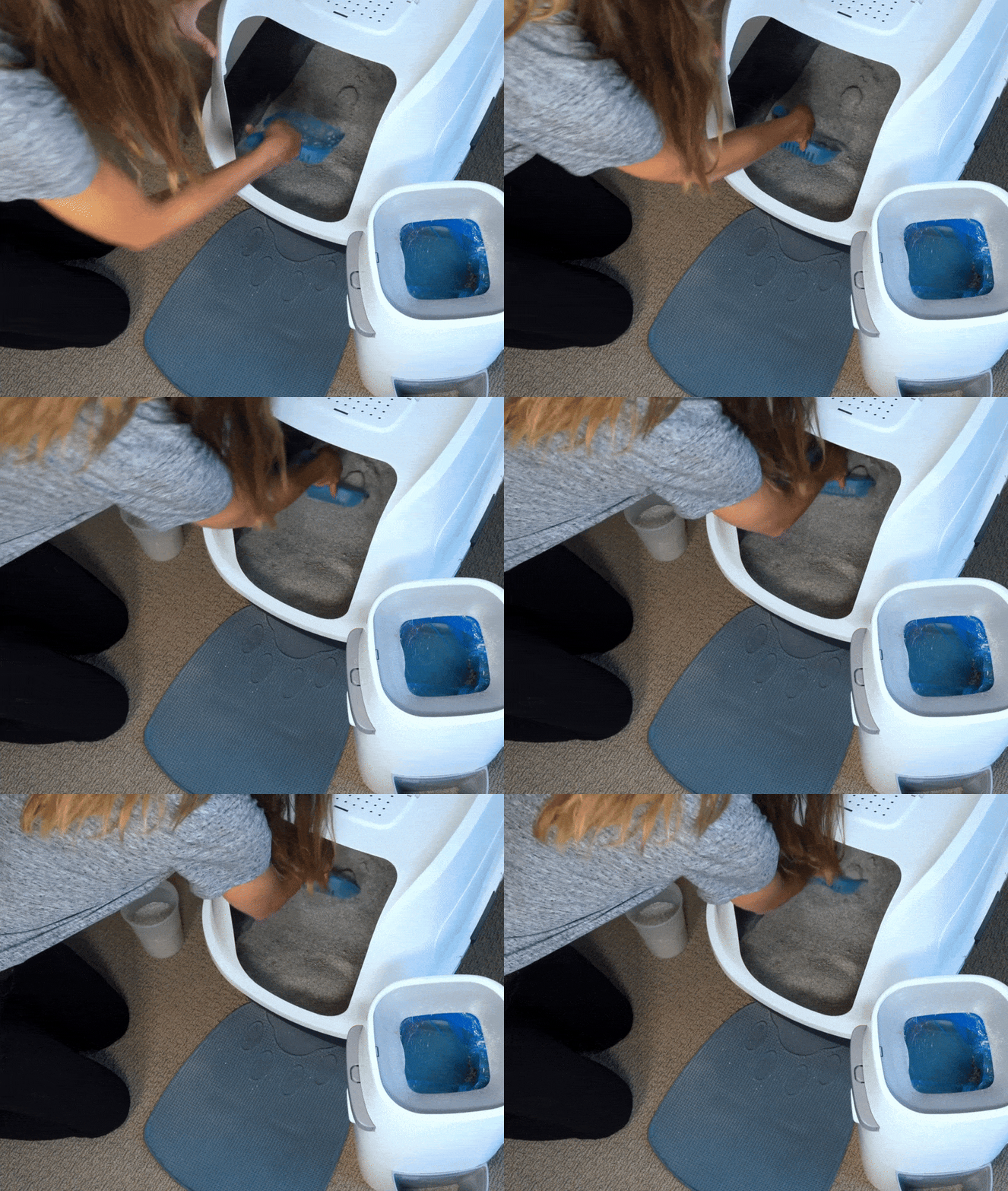
- Keep the litter tray clean: A clean tray encourages regular habits and makes it easier to spot changes.
When to call the vet
Cats are masters of hiding illness, so small changes matter. Look out for:
- Ongoing diarrhoea or constipation
- Blood or mucus in stool
- Sudden changes in frequency or smell
- Straining in the litter tray
- Reduced appetite or energy
The bottom line
Monitoring cat poo might not be glamorous, but it’s one of the most reliable ways to spot health issues early.
A quick daily check of the litter tray can give you a clear picture of what’s happening inside your cat’s gut… even if they’d prefer to keep it a mystery.
