
Yes, cats can be trained!
Training a cat might sound ambitious, but it’s entirely possible. With the right approach, many cats can learn useful skills and fun tricks that improve behaviour, mental stimulation, and your bond together.
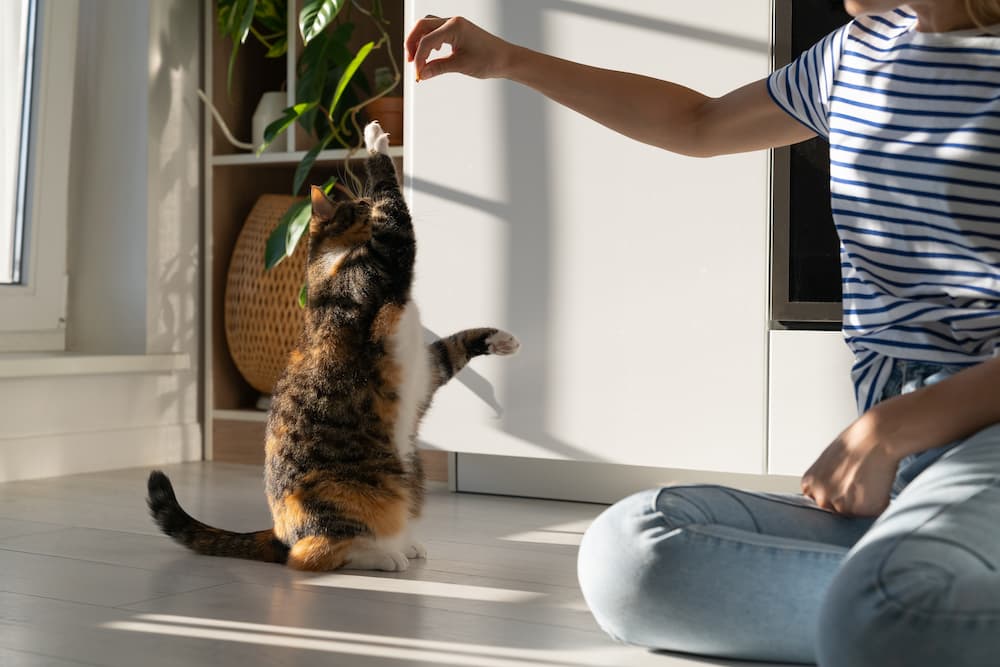 This guide explains how to train a cat step-by-step, what skills cats can realistically learn, and how to keep training stress-free for both of you.
Cats learn best through positive reinforcement, meaning they repeat behaviours that lead to rewards like treats, toys, or attention. Attention is a big factor, and it’s one of the reasons why many cats tend to knock things off tables. Read more on that, when you get a chance!
While cats aren’t motivated by obedience in the same way dogs are, they are excellent problem solvers when the reward is worth it.
Before we get into the nitty gritty of how to train a cat, want to know if you have a fighting chance at nailing a skill or trick?
Cat breeds that are considered easiest to train:
- Bengal – Intelligent, active, loves problem-solving; thrives on interactive training.
- Maine Coon – Social, confident, adaptable; responds well to gentle, consistent training.
- Siamese – People-oriented and vocal; learns quickly when rewarded with attention.
- Abyssinian – Curious and agile; enjoys puzzles, clicker training, and tricks.
Cat breeds that can be harder to train:
- Persian – Low-energy, laid-back; responds best to gentle, functional training.
- British Shorthair – Independent and reserved; benefits from short, high-reward sessions.
- Russian Blue – Sensitive and cautious; needs slow, quiet, familiar-environment training.
But, don’t be discouraged! Cat breed can influence their tendencies, but confidence, curiosity, and reward motivation are usually more important than pedigree.
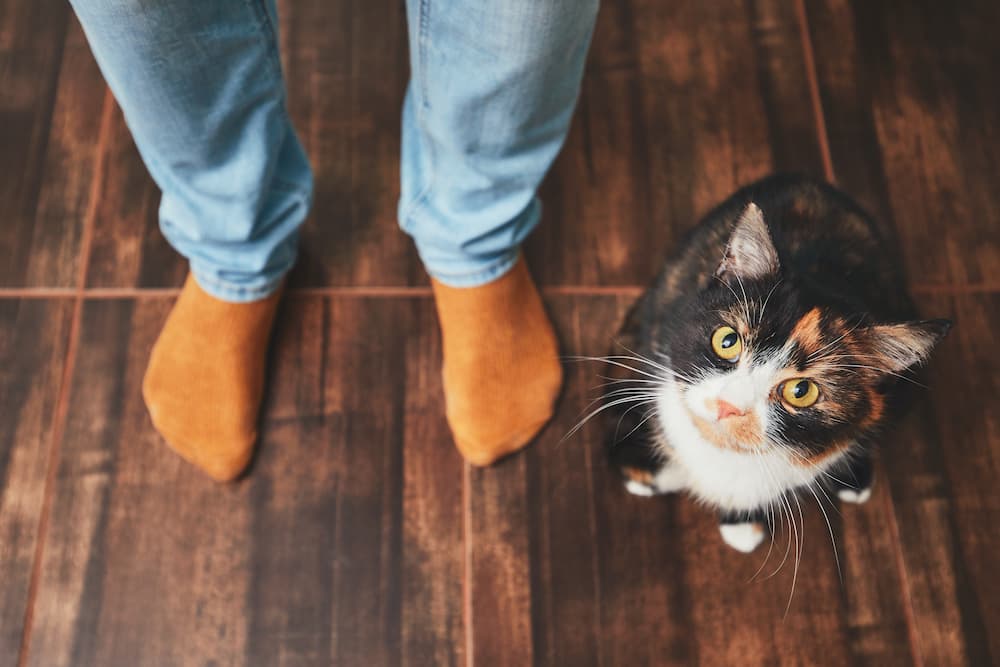 Keen to see if you and your feline friend can learn a trick or two? Follow these 8 simple steps to training a cat:
Step 1: Pick the right “why”
Cats don’t do things “because you said so.” They do things because there’s something in it for them.
Before you start, work out your cat’s currency:
- Tiny food treats (soft, smelly, irresistible)
- Favourite toys
- Praise or chin scratches (for the affection-motivated few)
Whatever it is, that reward needs to be exclusive to training time. Make it special. Make it scarce. Make it worth getting off the couch for.
Step 2: Start small (like, really small)
Your first goal isn’t “roll over” or “high five.” It’s attention.
Begin by rewarding simple things like: looking at you, turning their head when you say their name, or staying near you for a few seconds.
This builds the idea that “when I do something near this human, good things happen.”
Once your cat understands that actions = rewards, you’ve unlocked the tutorial level.
Step 3: Use short, sharp sessions
Cats have the attention span of a leaf in a breeze, so you need to monitor their interest levels to ensure the best outcome. Aim for:
- 2–5 minutes per session
- Once or twice a day
- End before your cat loses interest
Stopping while things are going well makes your cat more likely to come back next time. Training should feel like a sneak peek, not a lecture. Make sure you’re up to scratch with reading your cat’s body language >
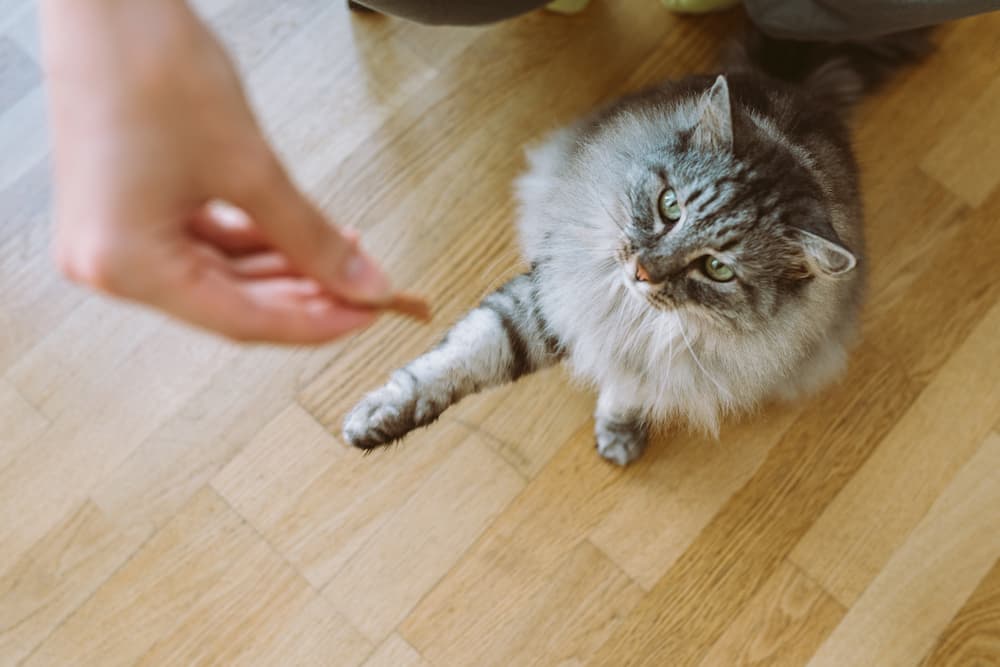 Step 4: Teach one skill at a time
Pick a single, simple behaviour and stick with it until your cat gets the idea. Good starter skills include:
- Sit
- Touch your hand or a target stick
- Come when called
- Jump onto a mat or bed
- High five
Then, break the behaviour into tiny steps and reward progress, not perfection. A half-sit is still a sit in training terms, so get so treats or chin scratches ready!
Step 5: Mark the moment
Timing matters. Your cat needs to know exactly which action earned the reward. You can do this by saying a consistent word like “yes”, using a clicker to help train a cat, or making a soft clicking sound with your tongue.
Most importantly, though, the reward should come immediately after the marker. Late treats will just confuse them.
Step 6: Repeat, don’t push
Cats learn through repetition, not pressure. If your cat walks away, lies down, or starts grooming mid-session, that’s your cue to stop. Training should always end on a positive note. You can try again later when the motivation resets.
If you’re not patient and feel this step may bring all your efforts crashing down, enlist the help of a pet trainer to do some of heavy lifting.
Step 7: Make it useful
Training your cat to do tricks can be fun, and a bonding moment for you both, but it can also be very handy when you need them to behave in certain situations. Think about how to train a cat so they’re more calm in situations such as:
- Going into a carrier
- When visiting the vet
- Sitting still for grooming
- Coming when called
- Happily walking on a harness
…or to re-direct their energy away from your furniture!
Just want to learn a fun skill? Try these:
- High fives
- Spins
- Jumping through hoops
- Fetch (yes, some cats love it)
Both build confidence, mental stimulation, and a better human-cat relationship. If you have visitors or book a house visit with a Mad Paws Pet Sitter, these skills will be very much appreciated!

Step 8: Accept the cat clause
Some days your cat will nail a trick five times in a row. Other days they’ll stare at you like you’ve lost the plot. That’s normal. Progress with cats is not linear. Just like off, they can have days where their attention span or motivation is lower.
So, just remember – training a cat isn’t about control. It’s about communication, enrichment, and meeting your cat halfway (which, coincidentally, is usually where the treats are).
3 things to focus on when learning how to train a cat: Keep sessions short, rewards are valuable, make sure your expectations realistic.
And, if your cat learns nothing except that you are the ‘Bring Treats Person’, you’re still winning.