
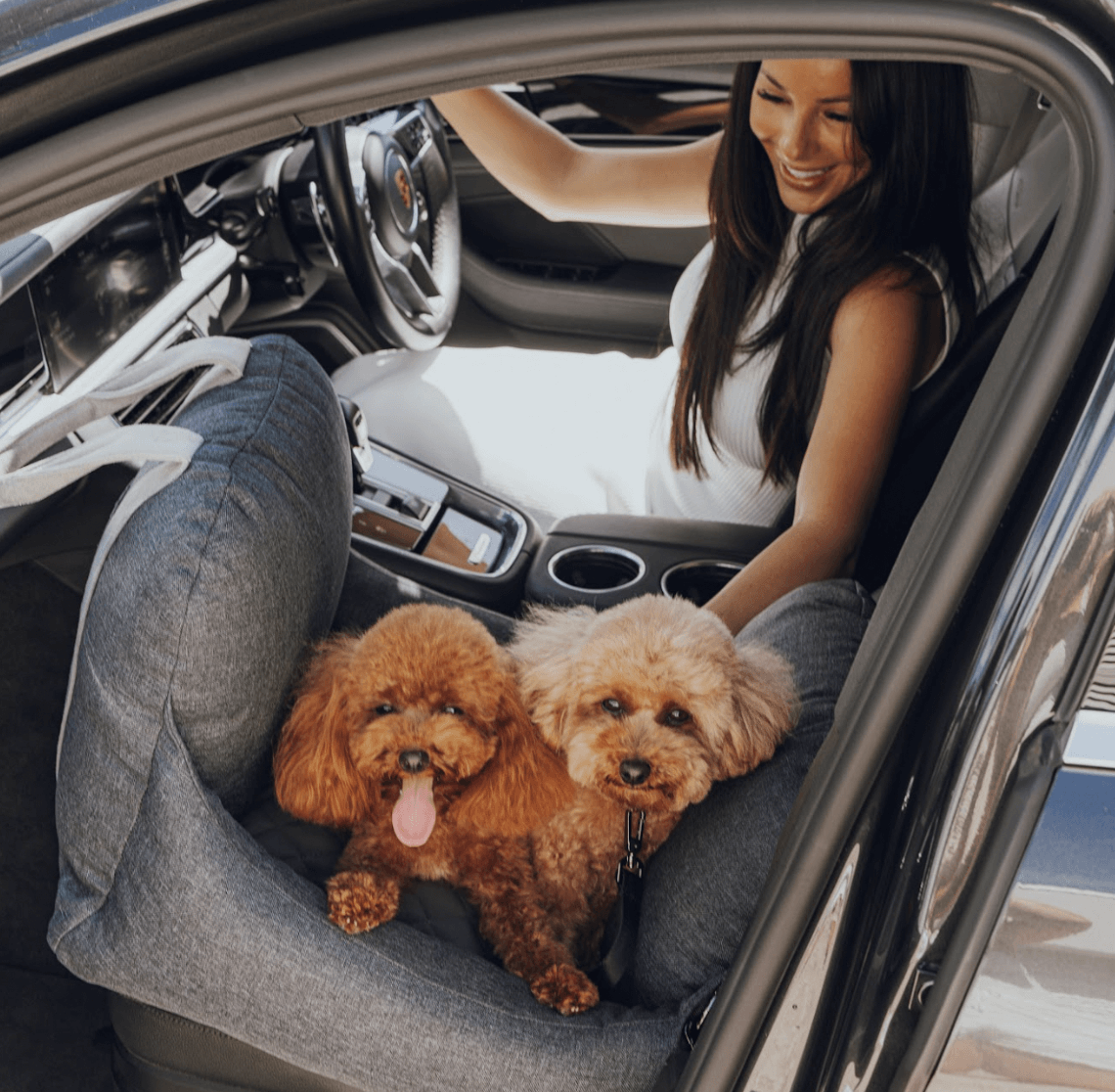
As the weather warms up, we engage in increasing amounts of outdoor activities with our dogs. Some of the adventures require car travel, so it’s crucial that we know how to keep our pups and ourselves safe.
We see our dogs as family members but don’t always understand our legal responsibilities to animals. Understanding the laws around safe transportation is vital, which is why we’ve compiled this handy guide. Not only will we break down the regulations for each state, but we’ll also give you all the tips and tools you need to comply.
 Whether taking a quick drive to the park or a road trip to the beach, it’s worth familiarising yourself with the law with dogs in cars to ensure everybody has a great time.
Legal requirements for travelling with dogs in cars
We all love taking our dogs away with us, but did you know that incorrect transportation of animals can lead to unwanted consequences? Your pet’s safety is jeopardised, and you could face thousands of dollars in fines and even jail time.
Here is a brief rundown of the law regarding dogs in cars across Australia to ensure you stay safe—and legal—with your pup.
Important note: Be sure to check your state’s official laws for accurate information at time of reading.
Australian Capital Territory (ACT)
Vehicle restraint: ACT prioritises safety, so all dogs must be securely restrained to avoid jumps and falls. If you fail to correctly restrain your pup, you could face a $3,200 fine.
No distractions: Similar to most other states, you cannot drive with a dog on your lap or in a position that blocks your view. If your dog creates an obstruction, it may result in fines of up to $3,200.
New South Wales (NSW)
Risk of injury: If your dog is hurt because you didn’t secure them properly, you could face a fine of up to $27,500.
Travelling in the back: Dogs cannot roam freely in the back of utes and open vehicles. The penalty is a fine of $5,500 or up to six months in jail.
Dog Distraction: Driving with a dog on your lap is considered a distraction, and you could face a fine of up to $2,200.
Northern Territory (NT)
Unrestrained dogs: While the laws are slightly more relaxed in the NT, you cannot let a dog distract you or block your view. You can technically drive with an unrestrained dog, but if they cause any distraction, you could face $3,240 or even six months in jail.
Queensland (QLD)
Unrestrained load: No Queensland law directly states that you must restrain dogs. However, dogs that are not properly secured can be considered as “unrestrained loads.” These carry a fine of $2,875.
Ute travel: The Law states that dogs travelling in utes must be restrained for safety.
When tethering your dog, please refrain from using choker chains, as they are dangerous and can injure your pup.
Lap dogs: Dogs cannot ride on your lap as they create a distraction. If you do this, you can be fined up to $2,875.
South Australia (SA)
Dog obstructions: Placing a dog on your lap or in any position that blocks your view is considered an obstruction and could land you a fine of $205.
Ute restraints: You must adequately restrain any dogs travelling in utes. Failure to do so can result in fines of up to $1,250.
Tasmania (TAS)
Safety restraints: Tasmania law emphasises control. Your dog must be secured appropriately against jumps and falls, or you could face a $905 fine.
Driver Control: If you place your dog in a distracting position (on your lap, blocking your view etc) you could face a fine of up to $1,810.
Victoria (VIC)
Travelling in the boot: It is illegal to transport your dog in the boot. If you do so, you could face a fine of up to $2,726. There are some exceptions, such as SUVs or wagons, but it is worth checking before you travel.
Hot dog: Heat stroke can occur rapidly on summer days. If the temperature is 28°C and above, you cannot leave a dog in a car for more than 10 minutes. If you do, the fine could be up to $3,635.
Driver distraction: You cannot carry your dog on your lap while driving because it means you are not in complete control. If you do, you could face a fine of $909.
Western Australia (WA)
Harmful transportation: WA takes dog safety very seriously. If you transport your dog in an unsafe way, you face fines of up to $50,000 or up to five years in jail.
Lap hazard: If you allow your dog to ride on your lap, you can expect a $100 fine. This is because you cannot maintain full control if you have your pup in the driver’s seat.
Motorcycle rules: If you want to take your dog for a motorcycle ride, you will need to secure it on the back. Dogs cannot ride between the handlebars and the driver or in any position that interferes with the driver’s ability to control the bike.
If you’re taking a dog on a motorcycle, we highly recommend purchasing a properly secured carrier to keep them safe.
Important note: Be sure to check your state’s official laws for accurate information at time of reading.
The importance of complying with the law
While respecting the law is important, you’ll also want to take some measures for safety’s sake. As a responsible pet parent, consider the following factors.
Ute travel. There are numerous hazards for dogs travelling in the back of utes. These include jumps, falls, being struck by oncoming vehicles or being dragged alongside moving vehicles.
For these reasons, it is paramount that you secure your pup while keeping them safe. The tether should allow your dog to move but not enough to touch the sides of the ute.
Hot surfaces. The back of utes and trucks can be scorching in the summer sun. While it may be easy to overlook, your dog is susceptible to burnt paws and heatstroke. Always check the temperature of surfaces. Ideally, provide a non-metallic spot for your dog to stand on (you could use a blanket to cover hot metal, for example). And, where possible, transport them inside the cooler cabin.
Injury risk. Dogs that aren’t adequately secured are a risk to themselves and others in the event of a crash. A sudden stop could launch them straight into the windshield or other passengers. Using a dog carrier, seat belt, or harness helps protect them and their human occupants from serious injuries.
Window exposure. It may look cute when dogs hang their heads out of the window, but it can create a hazard. Dust, debris, and insects can damage their eyes. Plus, if they stick their heads out too far, they could be struck by an oncoming vehicle.
Hot dog. You’d be surprised at just how quickly a parked car can heat up to a dangerous level.
This is a serious risk as dogs are more sensitive to heat than humans. Even with the windows cracked, your dog can experience heat stroke in a very short amount of time. According to RSPCA, it takes just 6 minutes for a dog to die in a hot car.
Stress, anxiety, and escapes. Not all dogs enjoy car travel, which can cause them to behave unpredictably. Purchasing a car seat for you dog not only ensures their safety – it could also help them to relax and feel safe.
Safety benefits of using a dog car bed
There are a multitude of dog car seatbelts and car seats, so how do you choose which is best? You look for a product that can keep your pet safe and comfortable, especially for long drives. For these reasons, more and more pet parents are turning to dog car beds; here’s why.
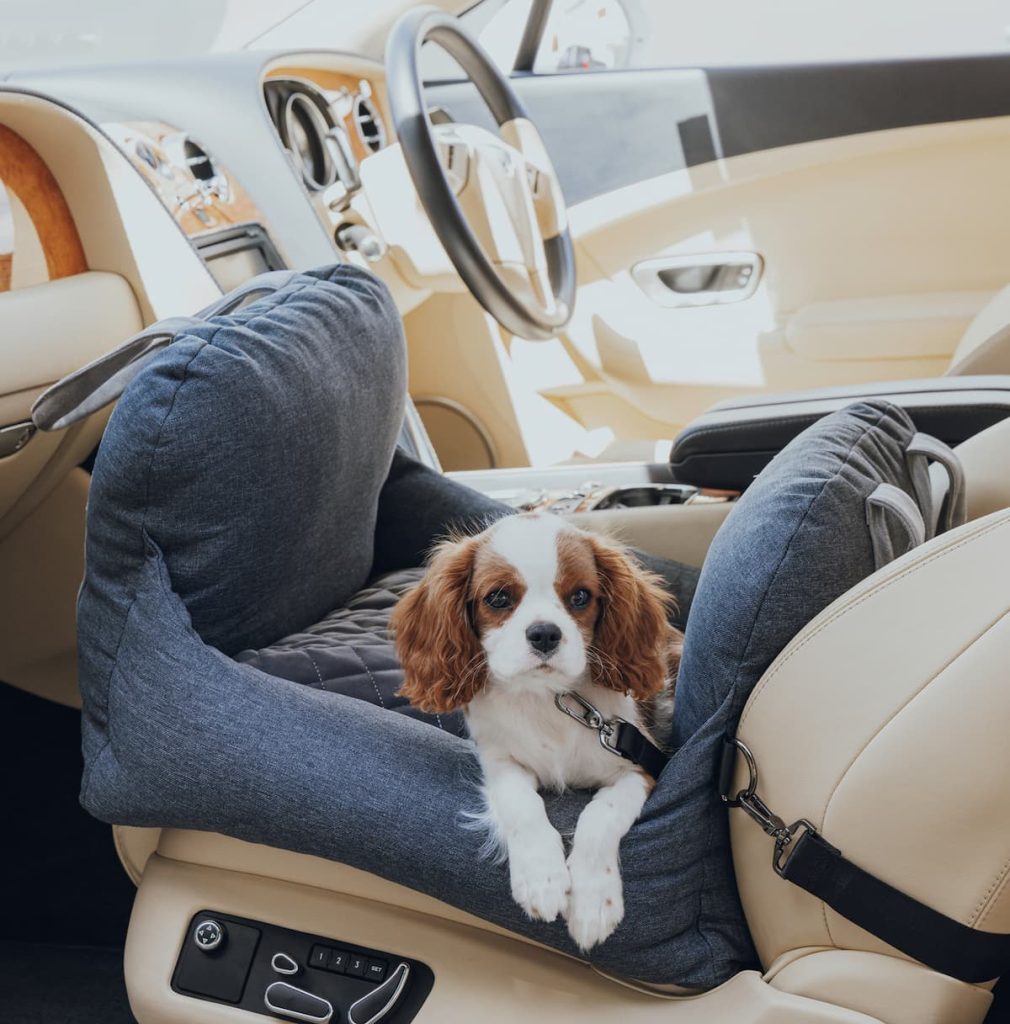
Car dog beds secure your pet to prevent them from moving around or distracting the driver. Many come with built-in harnesses or loops that attach to your car’s seat belt system. This feature limits your dog’s mobility and secures them in one place in the event of an accident.

1 comment
This is a clear and much-needed guide that every pet owner should read, especially those travelling by car in Australia. Many people don’t realise that transporting dogs unsafely can lead to fines, safety risks, and serious consequences in the event of an accident. I appreciate how this explains the legal requirements alongside practical advice—like proper restraints, ventilation, and never leaving dogs unattended. It’s not just about following the law, but about protecting your pet, passengers, and other road users. A practical, responsible, and timely reminder for anyone who travels with dogs regularly.