
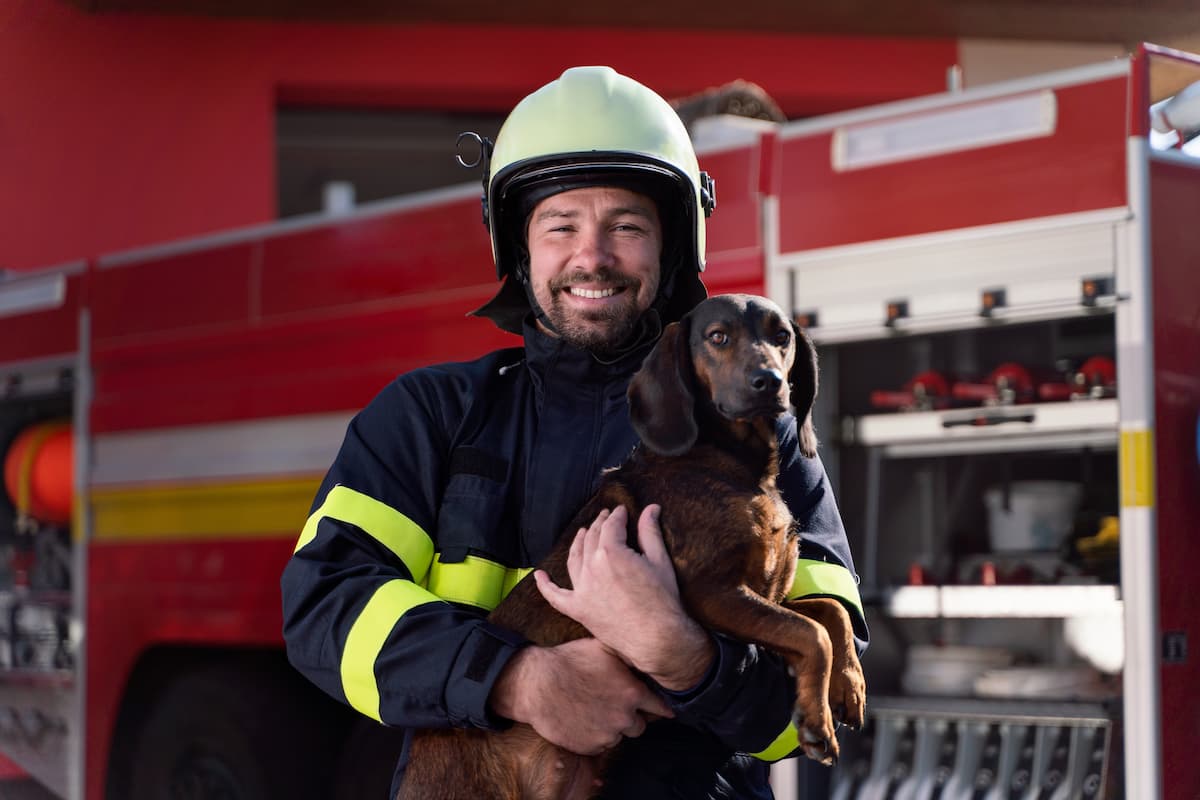
Fires are a harsh reality in Australia – whether it’s an electrical fault, an accidental blaze, or the ever-present threat of bushfire season.
And every year, thousands of pets tragically perish in house fires…or are the source of a fire unintentionally caused by curious paws or tails.
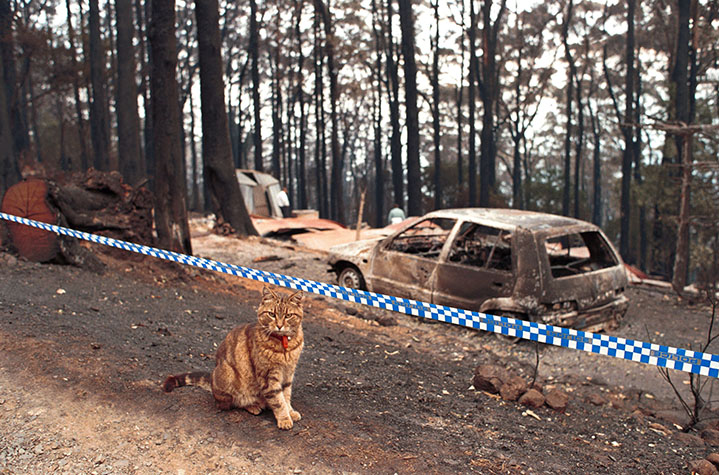
Credit: cfa.vic.gov.au
That’s why every household needs a pet fire safety plan. Your four-legged friends rely on you to keep them safe, and a few simple precautions could be the difference between life and death. Take this as a reminder to fire-proof your home and have a clear evacuation strategy in place.
Here’s how to protect your family members (human and hairy) and be ready if disaster strikes.
Follow these two steps for a pet fire safety plan:

Credit: Maroota South RFB
But first, can we take a moment to recognise this black and white haired hero?!
This is Barclay and he is a very good boy! Fire fighters in NSW were called to a bushfire that was threatening a home. Barclay had alerted the neighbours with his big boy bark while staying fixated on the fire! The neighbour was able to protect the house until our crews arrived to extinguish the fire. For his efforts, Barclay was given a helmet to protect him next time!
OK now onto the instructions for planning!
Step 1: Make your home fire-safe
1. Swap risky flames for safer glow
Never leave candles (especially scented ones) unattended around curious whiskers or wagging tails. Opt for flameless LED candles that still give you mood light, but with zero flame risk!
(If you need another reason to use LED candles instead, check out the answer to the question, ‘Are candles toxic to pets?‘)
2. Stove‑top savvy
If your furry friend likes countertop adventures (we’re looking at you, kitty cats!) they could accidentally switch on a burner or knock a pot. To support a pet fire safe plan, fit stove knob covers. And, be diligent in keeping pets off kitchen tops, whenever possible.
3. Ditch the glass water bowls outside
Sunlight through glass can focus like a tiny magnifying laser and ignite nearby materials on hot days. Steel or sturdy plastic bowls are a safer sip station for your pet.
4. Hide electric hazards
Chew‑prone pups and dangly cords don’t mix! Use cord protectors or tuck wires out of sight and snout reach.
5. Install & maintain smoke alarms
Working smoke alarms are your first line of defence. We’re stressing the word ‘working’….! Place them near bedrooms and living spaces, and test them monthly.
Step 2: Build your pet safe fire escape plan
1. Know your exits
Ensure everyone in the household knows the safest way out and have at least two exit routes if possible. Hold a family meeting about it at least once a year, so everyone’s clear about the plan.

Credit: Altered Images Photography Pty Ltd
2. Pack a pet fire safety emergency kit
Include:
- Food, water, and bowls for several days
- Leash, harness, carriers or crates
- Medications and health records
- Comfort items like blankets or toys
- Recent photo of your pet
- Contact info + microchip number
3. Keep ID & pet microchips current
It’s critical that your pet’s ID tag and their microchipping has up-to-date details if they slip away in an emergency. Check these 3 ways to ensure your pet has proper ID >
4. Practice makes perfect
Do a practice run loading pets into carriers or cars so everyone knows the drill.
5. Help rescue crews if needed
Place a “pets in home” sticker on a window. Include the number and type of pets, so firefighters know who might need rescuing if you’re not home.
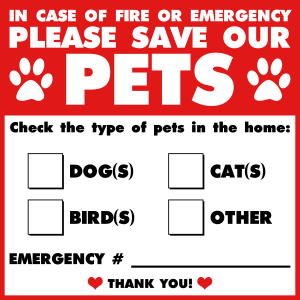
Display in window to help emergency services
Bottom line: If your household has a pet, it’s important to include them in your fire plan.
For a more comprehensive plan, and top tips from the fire safety professionals, watch the video below and/or visit the relevant fire authority in your state.
