Pet parents are pretty good at spotting the obvious signs of stress and anxiety. But it’s the sneaky signs that we sometimes brush off as a quirky personality trait or harmless habit is actually your pet trying to cope with stress.
The dramatic greetings when coming home, constantly following you from room to room, or their head suddenly snapping around when you pick up your car keys, like this:
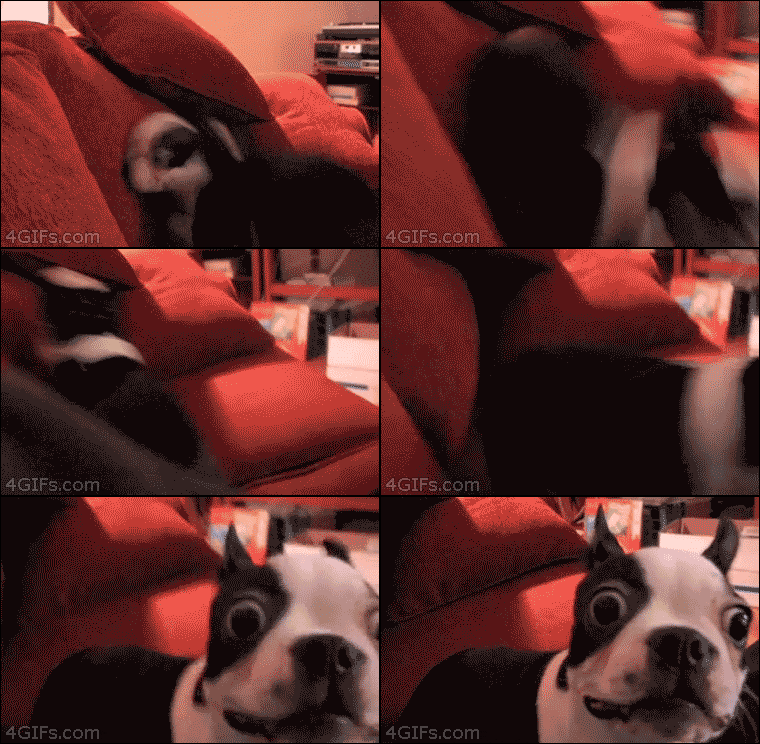
IYKYK, right?
However, sometimes those everyday moments are your pet’s way of saying, “Hey, I’m not totally okay with what’s going on here.”
And the tricky part? The line between normal and not-so-normal isn’t always obvious.
So when is it just a quirk and when is it cause for concern? Let’s decode a few of the most commonly misunderstood behaviours.
Can zoomies be a sign of pet anxiety?
Yes, they can.
Zoomies are sudden bursts of energy, often called FRAPs (Frenetic Random Activity Periods). In many cases, they’re completely normal. Dogs commonly get zoomies after baths, at the first sound of the word “walkies”, or after holding in energy throughout the day.
While we often tell ourselves, “They’re excited”, zoomies can also happen during stressful or overstimulating situations.
Zoomies are more likely to be stress-related if they:
- Happen immediately after a stressful trigger
- Look frantic or difficult to interrupt
- Occur alongside whining, pacing, or clinginess
- Happen frequently in high-stimulation environments
Normal zoomies usually:
- Are short-lived
- Look playful and loose-bodied
- End with your pet settling down naturally
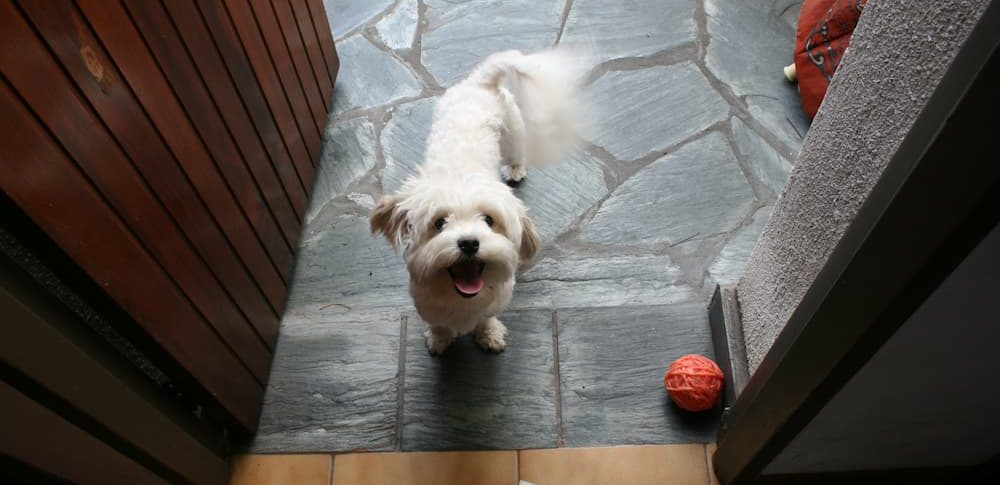
Is my pet’s excited greeting actually anxiety?
Sometimes, yes. Excited greetings are normal, with most pets happy to see their owners come home. But extremely intense greetings can indicate your pet has struggled emotionally while alone.
A normal level of excitement usually remains playful and manageable, and settles quickly.
Signs your pet’s greeting may be anxiety-related:
- Whining, crying, or frantic behaviour
- Difficulty calming down afterwards
- Overexcitement that escalates over time
- Signs of distress before you leave home (eg. grabbing your keys or putting your shoes on)
 Is my pet following me everywhere because they love me?
Perhaps! Dogs have an instinct to follow their ‘leader’ and stay within the pack, so it could be in their DNA to keep close… But not always.
Some pets naturally enjoy being close to their humans. Others become overly dependent and struggle when separated. A velcro pet can sometimes be showing early signs of dependence-driven anxiety, especially if your pet struggles the moment there’s a closed door between you.
Signs your pet may be anxious rather than just affectionate:
- They become distressed when you leave the room
- They struggle to settle alone
- They follow you constantly, even when relaxed
- They panic when they can’t access you
Normal attachment usually looks like:
- Choosing to be near you sometimes
- Comfortably resting independently
- Remaining calm if you leave briefly
@happystaffyco Ever notice this about dogs? The ones who love you never want to leave your side #dogs #staffy #clingy #dogsofttiktok
Can destructive behaviour be caused by a pet’s anxiety?
Yes. Chewing furniture, scratching doors, ripping up cushions, or getting into bins can all be linked to stress or anxiety, especially when pets are left alone.
Many pet parents assume this behaviour is caused by boredom or “bad behaviour,” but anxiety is a common underlying factor.
Anxiety-related destruction often:
- Happens when the owner is away
- Targets doors, windows, or personal belongings
- Appears suddenly or escalates over time
- Happens alongside pacing or vocalising
Whereas boredom-related destruction is more likely to:
- Happen throughout the day
- Improve with exercise or enrichment
- Look exploratory rather than frantic
If this hits home for you, take a read of our article: Preventing and managing destructive behaviour in pets >
Is excessive licking or grooming a sign of stress?
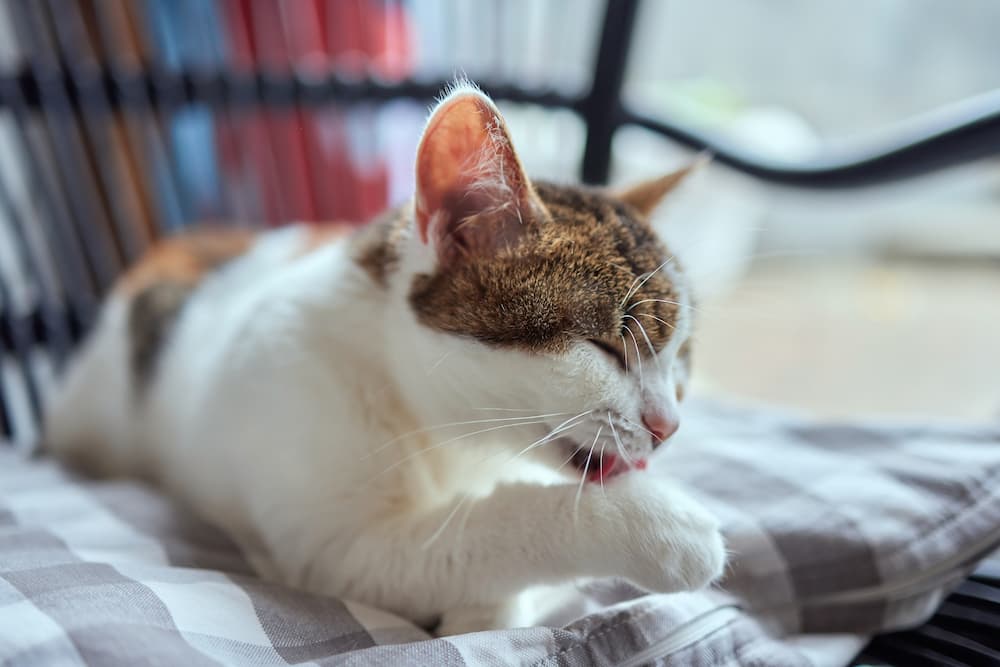
It can be. Dogs and cats sometimes lick or groom themselves to self-soothe. While grooming is normal behaviour, repetitive or excessive grooming may indicate stress or anxiety.
If you notice constant paw licking that’s difficult to distract them from, or repeated grooming in one particular area (enough to cause redness, irritation or hair loss), it can be a sign that they’re stressed or anxious.
In some pets, stress-related grooming can become compulsive over time so it’s important to try and intervene early. If you have a cat, there are several stress triggers – identifying the cause will help you reduce the impact on them.
 So, what’s the difference between normal behaviour and anxiety?
To understand if you should be concerned or not, it’s less about the behaviour itself and more about:
- Frequency (Is it happening often?)
- Intensity (Is it escalating?)
- Context (When and why is it happening?)
A single zoomie session is normal. Whereas a daily, frantic sprint paired with clinginess and distress is worth a closer look.
Keep in mind, though – it’s not about turning every cute quirk into a cause for concern. It’s simply about noticing patterns. Because when you start to see behaviour as communication, it can be easier to know what to do. Ask yourself, “What are they trying to tell me?”.
Noticing potential signs of pet anxiety?
If a few of these felt a bit too familiar, don’t panic! Small changes can make a big difference, like:
- Creating a predictable routine
- Increasing mental enrichment
- Gradually teaching independence
- Reducing stressful triggers
- Providing calming spaces at home
If behaviours are severe or escalating, it’s best to speak with a veterinarian or qualified behaviour professional.
And sometimes, it’s as simple as making sure they’re not spending long stretches of time feeling unsettled in the first place.