
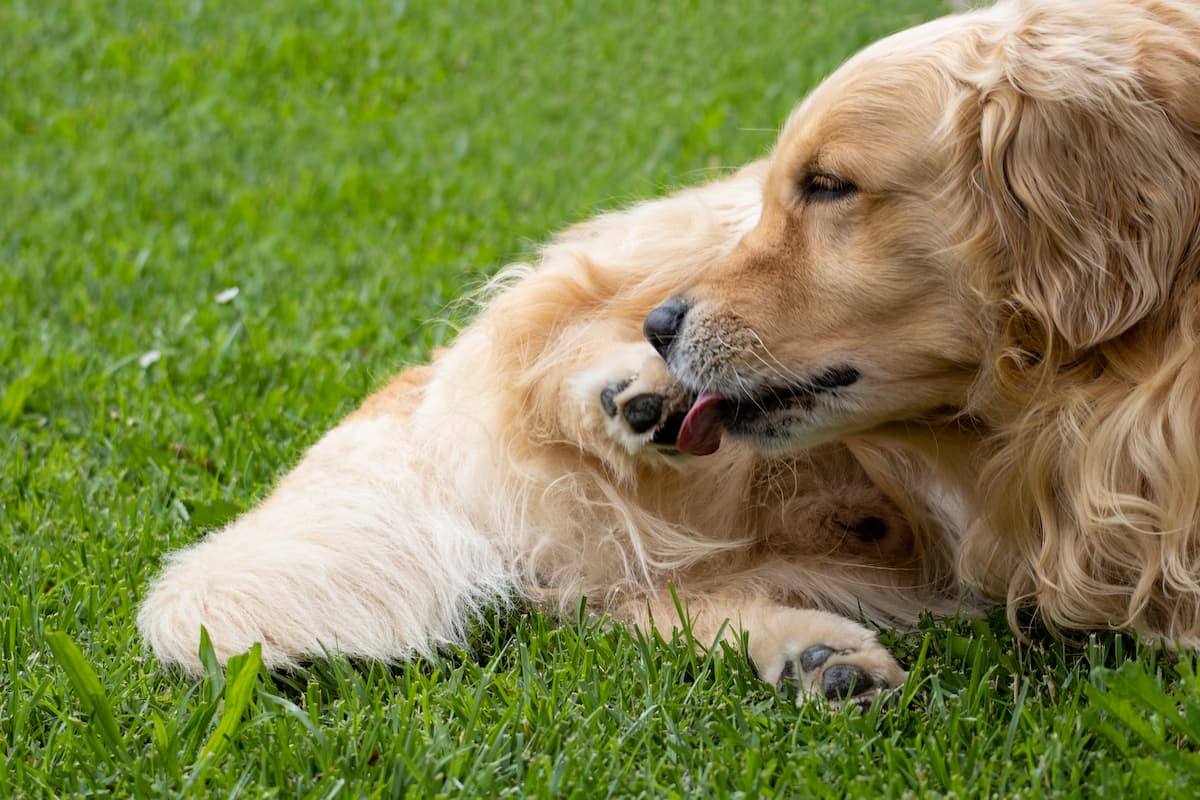
If you’ve ever glanced over to see your dog deep in concentration, licking their paws incessantly, you’re not alone. Paw licking is one of those canine habits that sits somewhere between ‘totally normal’ and ‘quietly concerning’. Sometimes it’s just a dog being a dog. Other times, it’s their version of waving a tiny red flag.
So why do dogs lick their paws? Let’s unpack the most common reasons, when it’s harmless, and when it might be time to intervene.
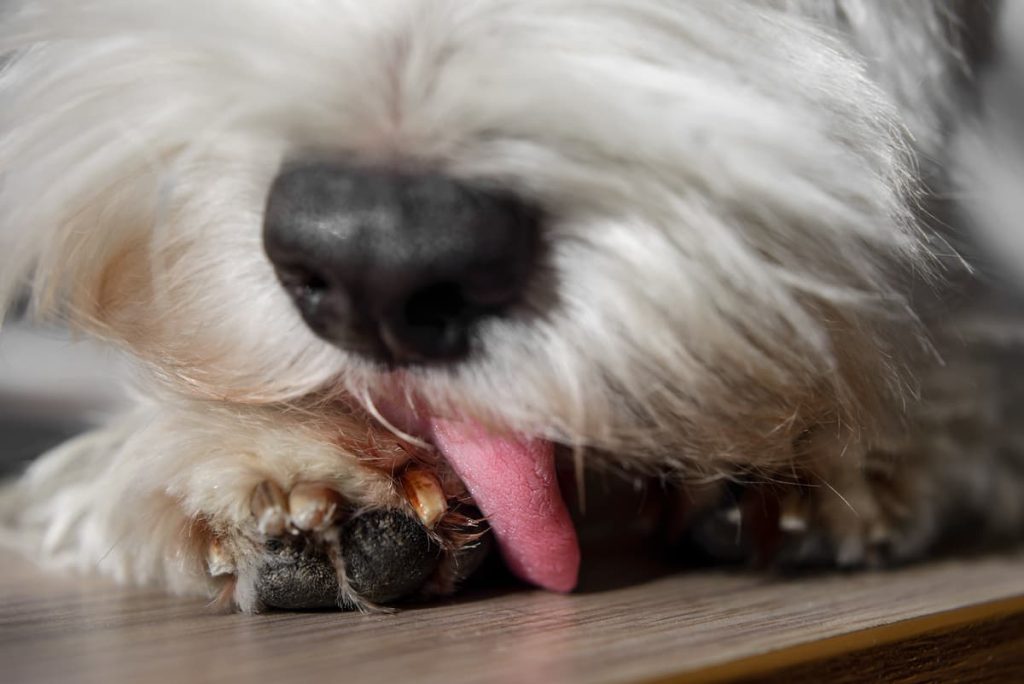
6 different reasons your dog is licking their paws:
1. Basic grooming behaviour
Dogs don’t have bathrooms stocked with loofahs and foot scrubs, so licking does a lot of the heavy lifting in that department! A quick lick helps remove dirt, sand, food crumbs, and whatever mysterious substances they’ve stepped in during their daily adventures.
Occasional paw licking, especially after a walk or play session, is usually just good hygiene. Think of it as the canine equivalent of washing your hands.
Normal signs of paw licking include: Short licking sessions, no redness or swelling (or hair loss), or if it happens after walks or meals.
2. Allergies (the big one)
The answer to the question, ‘why do dogs lick their paws?’ is most commonly because of allergies. Dogs commonly lick their paws when something in their environment or diet makes them itchy.
Common allergy triggers include:
- Grass and pollen
- Dust mites or mould
- Certain proteins in food
- Cleaning products or lawn treatments
Allergic itching often targets paws because they’re in constant contact with the ground. Dogs may lick, chew, or nibble at their feet to soothe the irritation.
Clue it’s allergies:
- Persistent licking, especially all four paws
- Red or inflamed skin between toes
- Seasonal flare-ups (particularly in spring time)
- Ear infections happening alongside paw licking
Solving the source of the allergy may be a process of elimination. Try changing their routine – walk different routes, keep them away from your lawn for a week or so, and try changing their food. Single protein dog food can help to ease allergies from ingredient.
3. Anxiety, stress, or boredom
Dogs don’t have smartphones to spend endless hours doom-scrolling, so what else is there to do when they’re bored? Paw licking can be a helpful calming ritual when a dog feels anxious, under-stimulated, or stressed.
Common triggers include:
Being left alone for long periods
Changes to routine
Loud noises or unfamiliar environments
Not enough mental or physical enrichment
In these cases, licking isn’t about the paws at all. It’s about what’s going on in your dog’s head, and their attempt at self-soothing. Maybe you need to redirect their energy? Try some puzzle dog toys that stimulate their senses, or these seven ways to enrich your dog.
Clues that their paw-licking is emotional: Licking increases when your dog is alone, or if it seems to happen mostly in the evenings or during quiet moments. Another indication it’s more emotional than allergic reaction is if you can’t see any obvious skin irritation at first.
4. Injury or pain
Dogs are famously stoic – they don’t suffer from ‘man flu’ style symptoms! Rather than yelping or limping dramatically, they often go straight to licking when something hurts.
This could include small cuts or abrasions, cracked paw pads, foreign objects like grass seeds or splinters, or sore joints or nails.
Licking helps clean wounds, but too much can slow healing and introduce infection.
Clue it’s pain-related: If your dog is focused on licking one paw in particular, or if they’re limping or favouring one leg. Another thing to look for is sensitivity when you touch the area. Learn how to check for grass seeds in dogs, and how to remove them.
5. Dry or irritated skin
Just like humans, dogs can suffer from dry skin. Hot weather, cold weather, frequent bathing, or low humidity can all dry out paw pads and surrounding skin. Dry, cracked paws can feel uncomfortable and can therefore lead to your doggo licking for relief.
Clue it’s dryness: Rough or flaky paw pads, mild licking without redness, worse during seasonal weather changes (which is when it can flare up, like in humans). Trusted brands like Antinol have specially formulated skin treatments that help calm irritation and help provide a healthy skin barrier.
 6. Parasites and infections
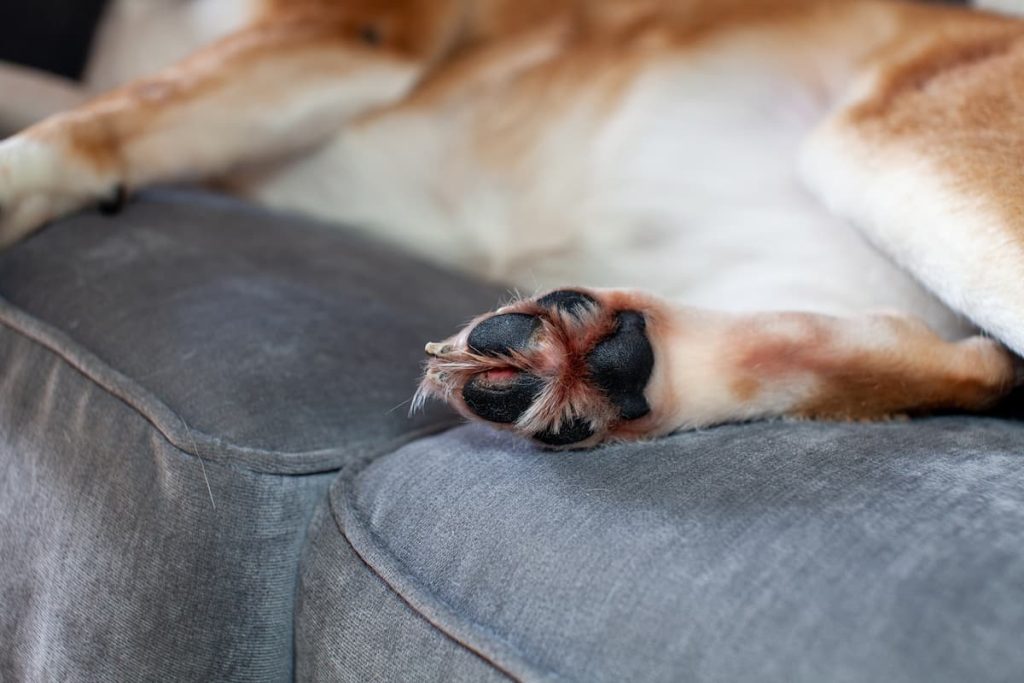
Sometimes the cause is microscopic and very annoying. Fleas, mites, yeast, and bacterial infections can all trigger intense paw licking. Yeast infections are particularly common in paws because they thrive in warm, moist spaces between toes.
Clue it’s an infection:
- Strong odour (often described as smelling like “corn chips” – we’ve all been there!)
- Brown or yellow discharge
- Swelling between toes
- Licking combined with chewing
When your dog’s paw licking becomes a problem
A little licking is normal. Constant licking is not. Excessive paw licking can lead to hair loss, raw or bleeding skin, secondary infections, and hot spots (a red, inflamed patch).
If your dog is licking their paws daily, obsessively, or to the point of damage, it’s time to dig deeper.
 What you can do at home:
Before rushing to the vet, there are a few gentle steps you can try:
Check the paws: Look between toes and pads for redness, cuts, or foreign objects.
Rinse after walks: Especially if allergies are suspected. Plain water can remove pollen and irritants.
Dry thoroughly: Moisture can fuel yeast growth.
Increase enrichment: More walks, puzzles, or playtime can reduce stress-related licking.
Avoid harsh cleaners: Floors and lawns treated with chemicals can irritate sensitive paws.
When to see the vet:
If your dog’s paw licking is constant, getting worse, or starting to cause visible changes, it’s time to book a vet visit. Swelling, discharge, broken skin, or signs of pain aren’t just cosmetic issues. They usually mean something deeper is going on, and the sooner it’s addressed, the easier it is to manage.
A vet can help pinpoint what’s really behind the licking, whether that’s allergies, an infection, an injury, or even anxiety. Once you know the cause, treatment becomes targeted rather than guesswork, giving your dog faster relief and saving those hardworking paws from further irritation.
