

In short:No, cats don’t really have nine lives. Like us, they get just the one. So where did this strange idea come from? Cats are remarkably agile, curious and surprisingly good at getting themselves out of tricky situations. They can twist their bodies mid-air, squeeze through tiny spaces, climb with impressive speed and occasionally survive accidents that look impossible. Over time, all that seemingly fearless feline resilience has made cats seem almost indestructible. But there’s more to the nine-lives myth than just a cat’s impressive survival skills…Keep reading! |
 Why do people say cats have nine lives?
The exact origin of the nine-lives myth isn’t known.
One theory links it to Ancient Egypt, where cats held a special place in religion and mythology. Archaeologists say that millions of cats were mummified at the height of the Egyptian empire! The Egyptian sun god Atum-Ra was sometimes depicted taking the form of a cat, and was associated with a group of nine deities….Maybe that’s where the nine comes from?
There’s also a much older tradition of cats being associated with multiple lives in European folklore.
And interestingly, cats don’t have nine lives in every culture. In some countries, cats are said to have seven lives instead. The number seems to have more to do with folklore and cultural symbolism than anything biological.

Ancient Egyptian limestone cat sculptures exhibited inside the British Museum, 2022.
What makes cats such good survivors?
Cats really do have some impressive biological tricks up their sleeves:
1. They have a righting reflex
One of the biggest reasons cats seem to defy gravity is their righting reflex.
When falling, cats can use information from their inner ear and vision to work out which way is up, then rotate their bodies so they’re oriented feet-first. Their flexible spine and body structure help them make these rapid adjustments in mid-air.
It’s an incredible piece of feline engineering. But there’s an important catch: A cat landing on its feet doesn’t mean it won’t be injured! A fall can still result in broken bones, chest injuries, internal injuries or worse. Cats are agile, not indestructible.
2. They’re built for climbing and escaping
Cats evolved as agile predators that needed to climb, jump, stalk and navigate complex environments.
Their flexible bodies, sharp claws, powerful hind legs and excellent balance all help them move through spaces that would leave most of us reaching for a ladder.
They’re also remarkably good at squeezing through narrow gaps. Interesting fact: their collarbones are small and not rigidly attached to the rest of the skeleton in the same way ours are, allowing their shoulders to move through surprisingly tight spaces.
3. They’re incredibly curious
There’s a reason the phrase “curiosity killed the cat” has survived for centuries.
Cats are natural explorers. They investigate unfamiliar sights, smells and sounds, often without considering whether whatever they’ve found is a terrible idea.
That curiosity probably contributes to their reputation for getting into scrapes and somehow emerging from them. Although we’d prefer they skipped the scrapes altogether.
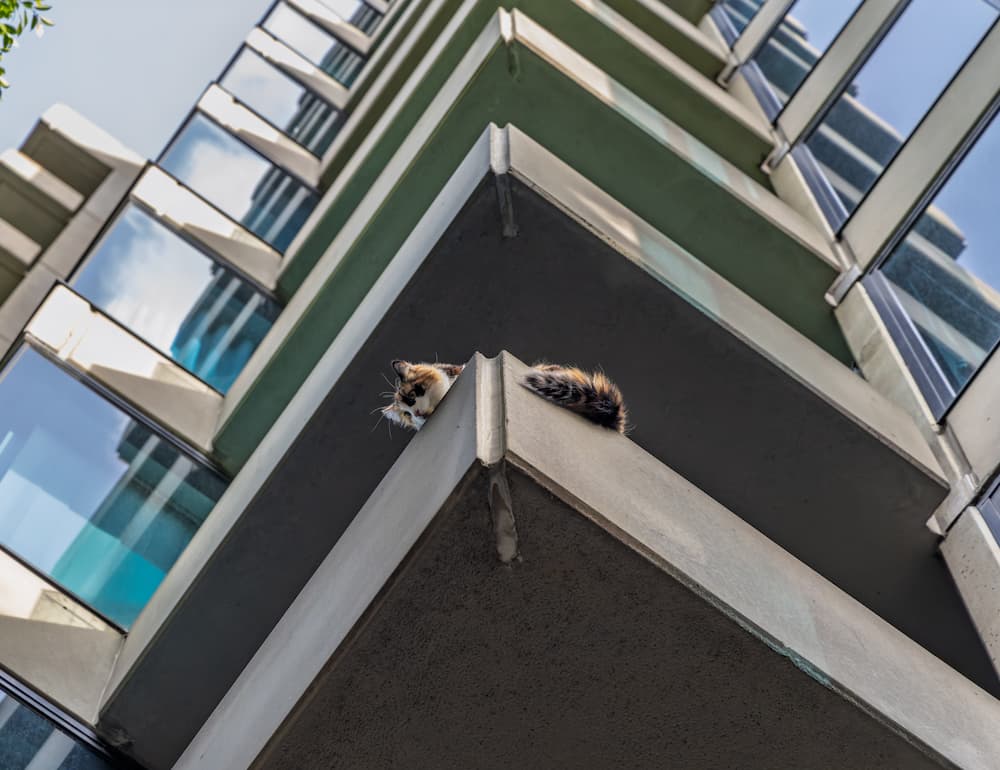
TRUE STORY: No wonder cats have gained the reputation for having multiple lives… In 2019, a cat in Melbourne fell from an 18-storey apartment and lived through it. While it surely shocked those who witnessed it, Charlie’s story is actually an example of feline evolution at work. That’s because domestic cats are perfectly adapted to living in trees—they have the exact surface area to body weight that allows them to fall without ever reaching a terminal velocity that would be life-threatening. And, they’ve got an incredible ability to maintain spatial awareness even as they fall, giving credence to the other old saying about cats: they always land on their feet. |

Do cats always land on their feet?
No! Cats have an impressive righting reflex, but it isn’t a guarantee that they’ll land safely.
The reflex also depends on factors such as the cat’s position when they fall, the distance involved and the surface they land on. And even when a cat does land on its feet, the impact can still cause serious injury.
So if your cat has fallen from a balcony, window, roof or other significant height, don’t assume they’re fine because they’re standing up and walking around. Some injuries aren’t immediately obvious. If you’re concerned after a fall, contact your veterinarian as soon as possible.
How you help your cat make the most of their one life:
Cats have one life, so make it a good one! A few things can make a big difference:
1. Keep dangerous areas secure
If you live in an apartment or have accessible balconies, windows or other elevated areas, use secure screens or barriers designed to prevent falls. Don’t rely on your cat’s ability to judge the edge.
2. Give them safe ways to climb
Cats love being up high. Rather than letting them turn bookshelves, balconies and kitchen cupboards into their personal climbing gym, give them safe options such as cat trees, shelves or secure perches.
3. Keep them mentally and physically active
Play, scratching, climbing, exploring and food-based enrichment can all help keep indoor cats active and engaged.
4. Keep up with veterinary care
Cats are very good at hiding signs that something isn’t quite right. Regular veterinary check-ups can help catch health problems before they become more serious.
5. Think about outdoor safety
Outdoor cats face additional risks from roads, other animals, infectious diseases and environmental hazards. If your cat enjoys the great outdoors, consider safer options such as a secure enclosure or supervised outdoor time.