
In the world of canine obedience training, one proven method is clicker training (also known as ‘mark and reward’ training).
Keen to understand how clicker training for dogs works and why it’s so valuable? Read on!
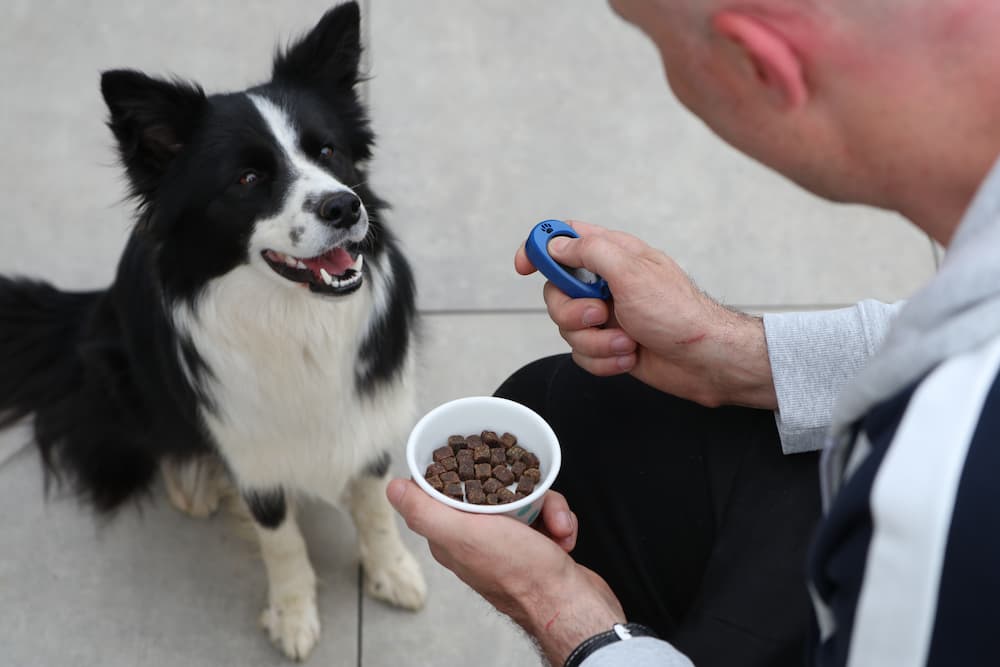
What is clicker training for dogs?
Clicker training for dogs is a positive reinforcement training method that uses a small handheld clicker to mark good behaviour.
When your dog does the right thing, you click at the exact moment it happens, then immediately follow with a reward such as a treat, praise, or a belly rub.
The click itself doesn’t mean anything to your dog at first. It simply becomes a clear signal that tells them, “Yes, that’s it. A reward is coming!”.
Over time, dogs learn to repeat behaviours that earn the click, making training clearer, faster, and more enjoyable.
Fun fact: Clicker training isn’t just for dogs. It’s also used with cats, birds, rabbits, horses, dolphins, and even big cats (like leopards).
Why is clicker training good for dogs?
1. It uses positive reinforcement
Clicker training focuses on rewarding good behaviour rather than punishing mistakes. After you press the clicker, you can follow it up with a reward – such as a treat, belly rub, or even their favourite tasty dog meal – to give your dog a training incentive. By now it’s probably obvious where the term “mark and reward” comes from!
Positive reinforcement is said to be a more effective dog training approach than negative punishment techniques like using a shock collar.
2. It makes dog training more enjoyable
Dogs love learning new things, and clicker training is a challenging, but fun, way of teaching them. Because rewards are involved, it feels more like a game than a chore!
The benefits for you as the pet parent:
✔️ You get to bond with your dog
✔️ It builds trust between you
✔️ You reap the rewards of a fun training method
The benefits for your doggo:
✔️ It’s a great way to offer them mental stimulation
✔️ They learn without any risk of punishment
✔️ A tasty incentive is usually involved!
Without the risk of punishment, dogs tend to feel more confident during training sessions, which often leads to faster learning and better long-term results.
3. It’s more precise than other training methods
The click marks the exact moment your dog does the right thing. This precision removes guesswork – your dog knows exactly which behaviour earned the reward, unlike treat-only training where timing can get muddled or distracting.
Because the click sound is only used during training, it becomes a strong, consistent signal that helps dogs learn more efficiently. If you were to use the same treats or words of encouragement like “Good girl!” as you do outside of training, it could get a little confusing and take your dog longer to learn.
4. You can start clicker training at any age
Clicker training works for puppies, adult dogs, and seniors.
It can even be used during potty training. When your puppy finishes toileting in the correct spot, click immediately and then reward. Repeating this process helps reinforce good habits early.
5. Anyone can use a clicker
One of the biggest benefits of clicker training for dogs is consistency. The clicker makes the same sound no matter who’s using it, which means family members, friends, and even Pet Sitters can all take part in training without confusing your dog. This helps dogs generalise their training across different people and environments.
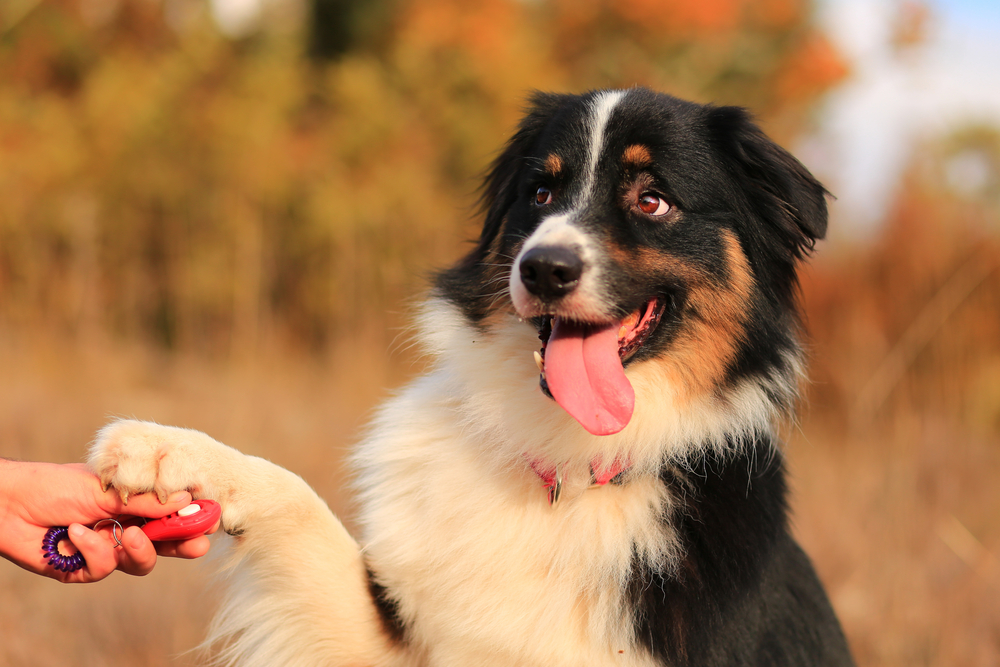
How to incorporate clicker training for dogs into your obedience regimen
Wondering if clicker training for dogs is difficult to incorporate into your pupper’s routine? The good news is, it’s not! Clicker training is as easy as it is useful. Here’s how to do it:
- Gather your supplies
Start by grabbing your clicker and your dog’s favourite treats, be it kibble, roast chicken pieces, or special training aids. If you’re not using food-based rewards, all you need to get started is your clicker!
- Teach them what the click means
Before attempting any actions or tricks, make a clicking noise with your clicker. Then, hand your dog the treat, or reward them with a belly rub or pat. Do this a few times so your dog starts to connect the click and the reward. - Introduce training
Now, start the training habit – when your dog performs a desired behaviour, click at the exact moment it happens, then reward. Timing matters more than duration. Short, frequent sessions work best. - Use verbal cues
Once your dog has started to get the hang of the action or trick, you can introduce verbal cues. Continue with the clicker training to reward them every time they do what you want on command. - Phase out the clicker
Eventually, your dog will master the action or trick simply by responding to your verbal cue. Once they’ve done this, you can start to phase out the clicker and replace it with an emphatic “Good boy!” or “Yes!” to show they’ve done the right thing. In next to no time, we’re confident your doggo will be an absolute expert at obedience training!
Once you’ve mastered clicker training for dogs, move onto teaching them some easy dog tricks and see how quickly they master following your lead.
Prefer to outsource click training to a professional?
We have many 5-star Dog Trainers to choose from. Find one near you >

3 comments
This is a great program and I’m ready to start. Lady is 1-1/2 years old now, a full blood Australian Shepherd and was raised around goats and cows. She wants to run with the herd and leads at their head instead behind them. How do I break her from this? I want her to learn this so bad so next week I’m starting out with your instructions and just me and her. Where do I find the clicker? Thanks
Where can I get the clicker?
Hi there Carol, you should be able to find clickers for dog training at pet stores like PetBarn or PetStock. Alternatively, you could use another method like tongue clicks, or soft-sounding tools like clicking a pen. Anything that remains a short, sharp, consistent sound that they can relate back to the command. Hope this helps!