
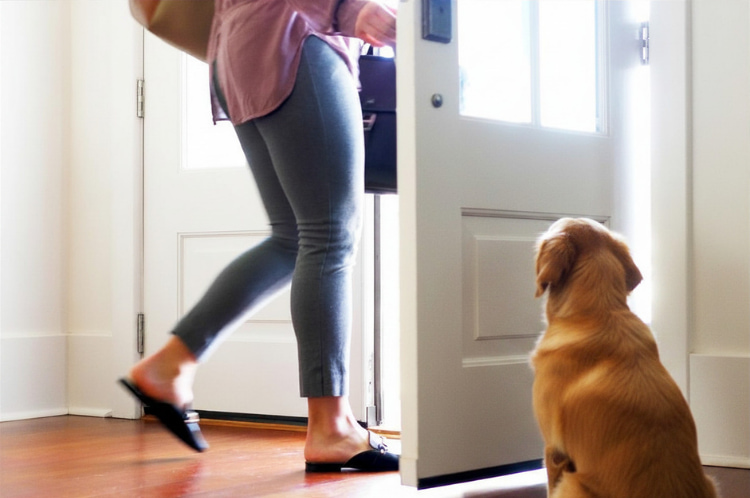

Does something as simple as picking up car keys set your dog into a panic?
Separation anxiety doesn’t usually start with full-blown panic. It often starts small.
Your dog follows you from room to room. They cry when you grab your keys. They start pacing the second you put shoes on. Maybe they seem “clingy,” overly excited when you return home, or unsettled the moment they realise you’re leaving.
Here’s how to help train your dog to feel calmer and more confident when left alone.
What does separation anxiety in dogs look like?
Separation anxiety is when a dog experiences stress or panic when separated from their owner or left alone. It can range from mild distress to severe anxiety and often shows up through behaviours like:
- Barking or whining
- Excessive drooling or panting
- Pacing and/or destructive behaviour
- Toileting indoors
- Escape attempts
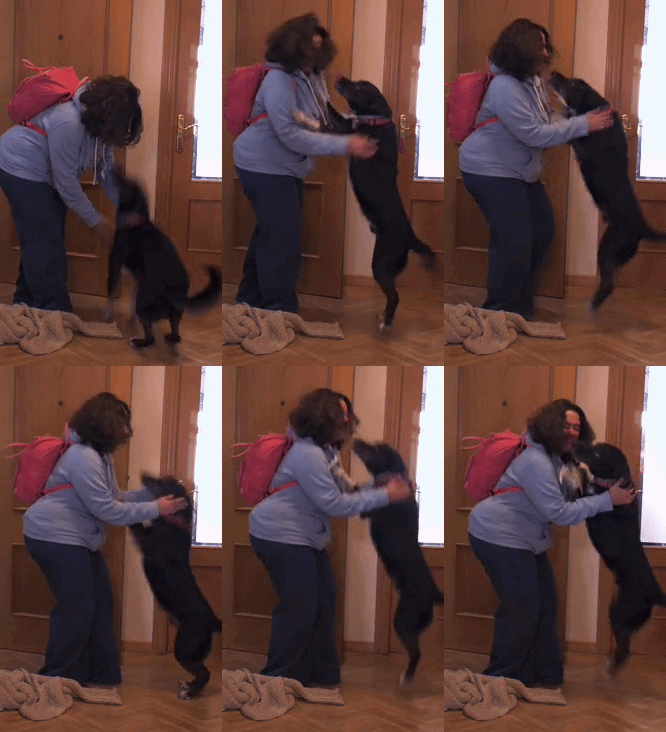
- Excessive greetings when you arrive home (that last for a while)
Some dogs only struggle for a few minutes after you leave. Others remain anxious the entire time they’re alone.
Take a read of this article that helps you to differentiate between playfulness & pet anxiety >
Can dogs be trained out of separation anxiety?
In many cases, yes, dogs can improve significantly with gradual training. The goal is not to force your dog to “get over it,” but to teach them that:
- Being alone is safe
- You always come back
- Leaving cues are not scary
- Alone time can predict positive experiences
Progress usually happens slowly and consistently over time.
Simple techniques that actually help:1. Use gradual desensitisation (also known as micro-departures)One of the most effective separation anxiety training methods is gradual desensitisation. This means exposing your dog to being alone in very small, manageable steps before they become distressed. What are micro-departures? Micro-departures are tiny practice exits that help teach your dog that you leaving is temporary and safe. Try this sequence of actions: Step outside for 5 seconds –> Return calmly –> Repeat several times –> Slowly increase the duration over time. The key is to return before your dog becomes anxious. Why this works: Dogs with separation anxiety often panic because they anticipate long absences. Micro-departures help retrain that expectation. Instead of you leaving = panic, your dog gradually learns that you leaving = normal. Important tips for success:
2. Decouple your leaving cuesMany dogs become anxious before you even leave the house. Why? Because they’ve learned that certain cues predict separation. Common anxiety-triggering cues include picking up keys, putting on shoes, grabbing a bag…the types of actions you take when you’re about to leave the house. Over time, these tiny routines can become emotional alarm bells. How to stop leaving cues that trigger anxiety: This process is called decoupling cues. The goal is to make these cues feel meaningless again. Try things like:
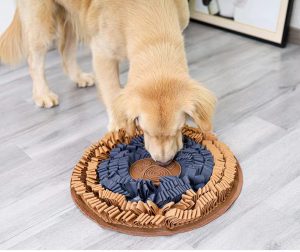
Eventually your dog learns, for example, that keys don’t always mean abandonment. Which helps reduce anticipatory stress. 3. Build positive associations with alone timeDogs with separation anxiety often associate alone time with negative emotions. One of the best ways to help is by pairing your departures with something positive. Examples include:
The goal is to create a positive feeling that something good is about to happen! What makes positive associations effective? The activity needs to be high value (eg. delicious), engaging (eg. distracts them and offers reward for effort), and reserved mainly for alone time (so they know what that activity means). This helps your dog build a new emotional response to your departure.
|

Should you ignore your dog when leaving?
Not completely. You don’t need to pretend your dog doesn’t exist, but overly emotional departures can accidentally increase tension.
Instead, keep departures calm and predictable, avoid big goodbyes, and return home casually.
For anxious dogs, calmness is often more reassuring than excitement.
How long does dog separation anxiety training take?
The answer to this depends on a few things – the severity of the anxiety, your dog’s history, your consistency in conducting training, and the pace at which you’re keeping the training going. Follow the steps in our other article, to help understand the severity of their separation anxiety >
Some dogs improve within weeks. Others need several months of gradual work. The biggest mistake owners make is progressing too quickly.
Just remember, slow progress is still progress.
Common mistakes that can make separation anxiety worse:
| Leaving your dog distressed for long periods: Repeated panic can reinforce the fear response. | Moving too quickly: Jumping from 30 seconds alone to 30 minutes can overwhelm your dog. |
| Punishing anxiety behaviours: Your dog is stressed, not “being naughty.” | Making departures emotionally intense: Big goodbyes can signal that something worrying is about to happen. |
When should you get professional help? Some dogs need additional behavioural support alongside training. It’s worth speaking with a veterinarian or qualified behaviour professional if your dog:
- Injures themselves trying to escape
- Panics intensely when alone
- Stops eating when left
- Cannot tolerate even short absences
- Shows worsening symptoms over time
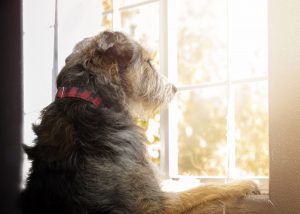
Some dogs can cope..

…and some act out
Have any tips of your own to prevent dog separation anxiety?
Every doggo is different, and pet parents often have their own clever ways to convince their pup to be comfortable alone. We’d love to hear any tips, tricks, and types of treats that worked to prevent dog separation anxiety for your furry friend. Tell us in the comments below!