

In short:Calming music can help reduce stress in some dogs and cats by masking sudden noises, lowering environmental stimulation, and promoting relaxation. It works best for mild anxiety or situational stress, but not severe separation anxiety on its own. |
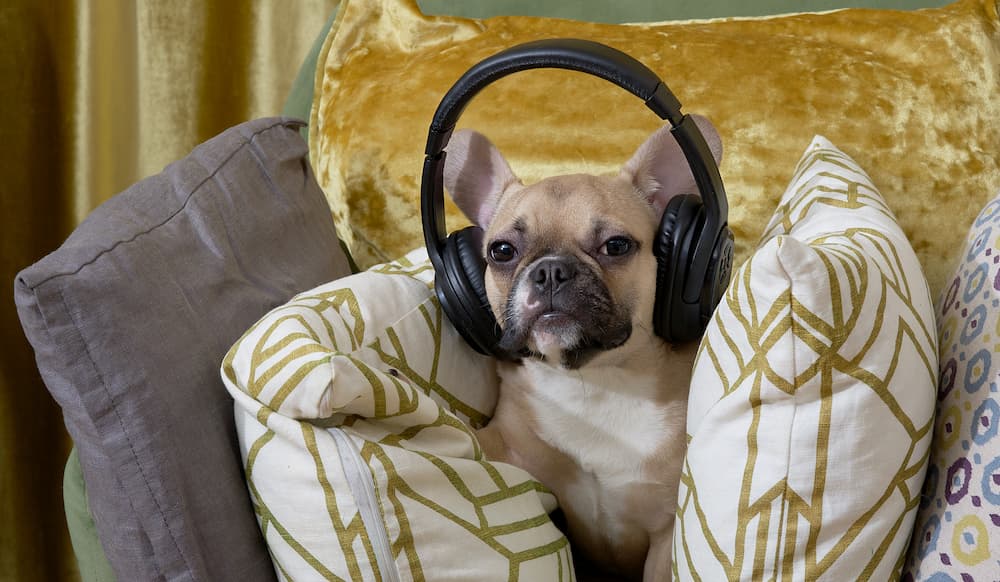
It’s easy to imagine calming music working like an on/off switch. Press play, dog exhales, cat forgives the universe, everyone relaxes into a blissful afternoon nap.
The reality, though, is a bit more interesting.
Calming music can help pets…but not because it ‘fixes’ anxiety. It works by shaping the environment around your pet’s nervous system, not overriding it.
Let’s break down what it actually does, when it helps, and when it’s more background noise than behavioural breakthrough.
Calming music for pets is different to what we might choose. Unlike human playlists, pet-focused playlists are typically designed with:
- lower frequencies,
- slower rhythm changes, and
- fewer sharp or sudden sounds
Examples of what would be considered calming music for dogs and cats:
- Slow-tempo classical music
- Soft instrumental tracks
- Species-specific sound compositions (designed for dogs or cats)
- Nature sounds or ambient audio
For reference, here’s what dogs and cats can hear compared to humans:
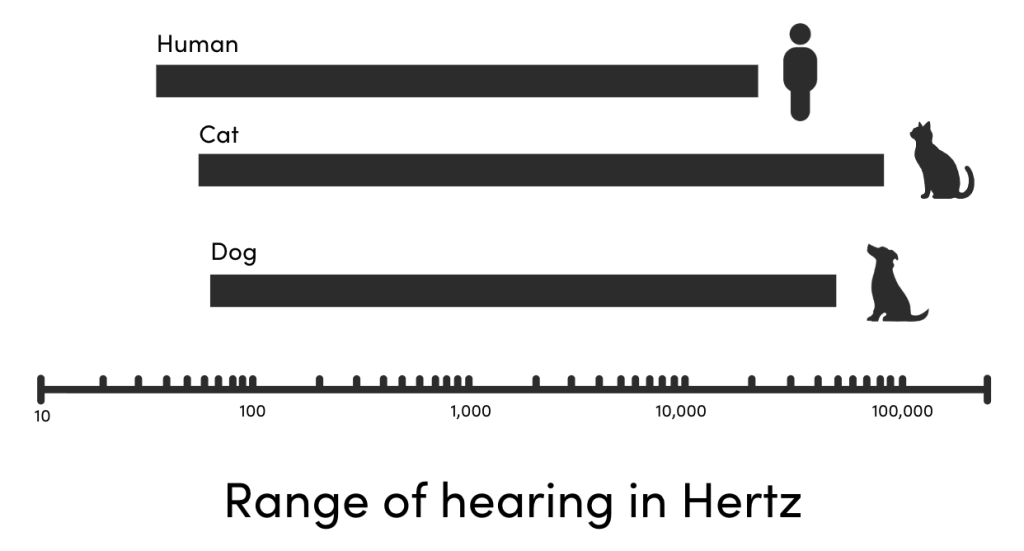 (Source: Psychology Today)
How calming music actually helps your pet:#1 It masks sudden, stressful noisesPets are far more sensitive to sound than we are. Did you know, dogs have vastly superior hearing sensitivity for high-frequency sounds compared to humans? And when it comes to cats, they can hear sounds five to ten thousand hertz higher than dogs. Common triggers include: door slams, traffic, neighbours, footsteps outside, or any sudden household sounds. Calming music or white noise can smooth out these spikes so the environment feels less unpredictable. #2 It reduces overall stimulationSome anxious pets are constantly scanning their environment, staying alert for any and all sounds of potential danger (or for their best friend to return home). In silence, every small sound becomes noticeable. Soft background music can reduce alertness, and simply make the home feel less empty. For some pets, especially indoor cats or sound-sensitive dogs, this can support relaxation. #3 Calming music helps create routine associationIf music is played consistently during calm periods or when you leave, pets can start to associate it with downtime. That predictability alone can be comforting for anxious animals. If, for example, your dog or cat knows that their music starts playing when you leave the house, or after dinner when the house is winding down, it’s their routine cue to settle. |
 Does calming music work for dogs?
Yes, especially for:
݀ puppies adjusting to alone time
݀ dogs with mild separation anxiety
݀dogs sensitive to environmental noise
Studies and behavioural observations have proven it’s success, too.
A study of 150 dogs (living in both private homes and public kennels), by Joshua Leeds, a psychoacoustic expert (who studies how sound is perceived), and veterinary neurologist, Susan Wagner, found fewer symptoms of anxiety when piano-style music was played. Read more about the findings of this study and about calming music for dogs >
But they didn’t stop there! Joshua and Susan then went to music streaming platform, Spotify, now hosts pet-friendly playlists under the artist name ‘Through a dog’s ear‘.
 Does calming music work for cats?
Sometimes. Some cats can find calming music comforting, while others will ignore it and prefer silence.
Cats may respond better to soft, consistent sounds (think harps and nature sounds – the kind of music you’d hear while getting a massage at a relaxing day spa!).
What calming music won’t do:
It’s important to note that calming music won’t miraculously fix any stress or anxiety in dogs and cats. If a pet is panicking when alone, music is a support tool, not the solution.
If your pet is showing signs of stress and anxiety, you need to deal with the root of the problem. Take a read of this article about how to train your pet *out* of separation anxiety.
As long as you’re providing other ways to help reduce their anxiety – gradual alone-time training, enrichment toys, predictable routines, safe resting spaces – calming music is a nice complement to help them relax.