
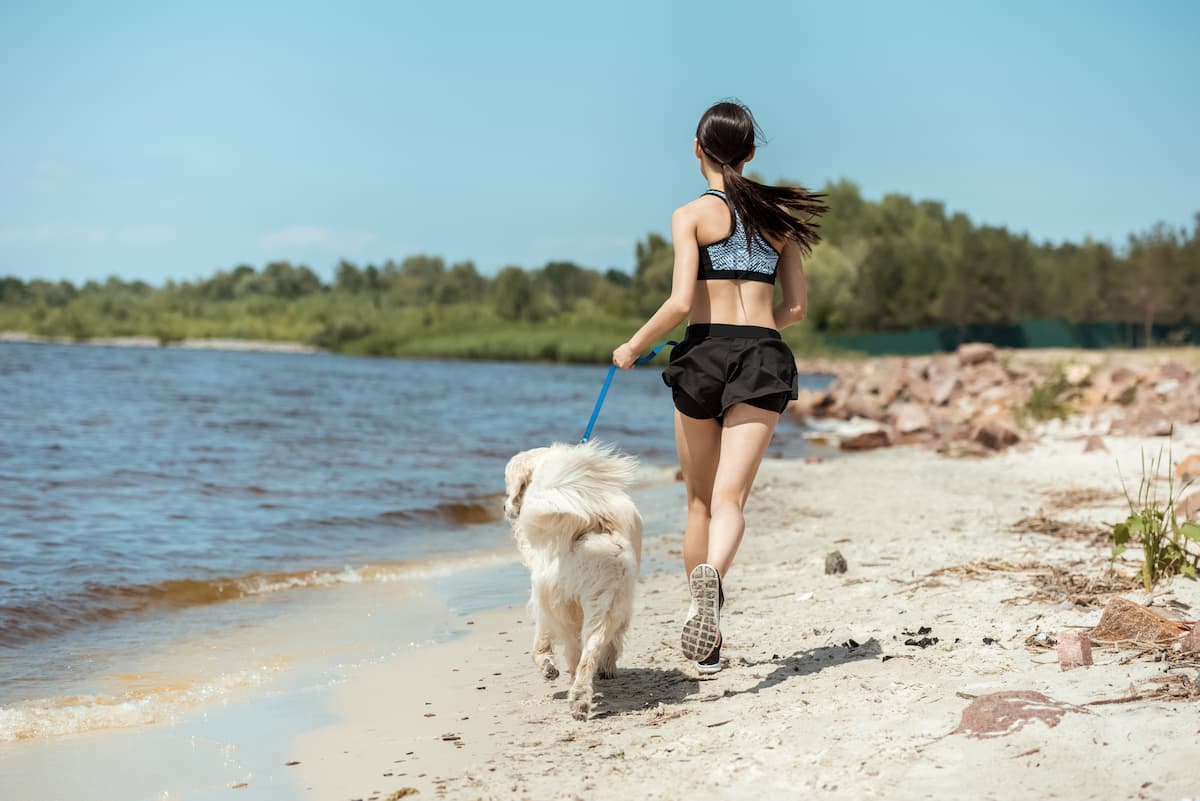
You think you’re exercising your dog.
Your dog thinks they’re running an extremely important sniff investigation, chasing invisible enemies, or playing a game they definitely invented.
Either way, you’re both moving. And that’s the point!
Here are seven ways to exercise with your dog that don’t feel like ticking off a fitness box, but still get hearts pumping, legs burning, and tails wagging.
1. A Sniffari run (AKA. you jog, they investigate)
Yes, running with your dog is obvious. But here’s the twist – stop fighting the stops!
Dogs don’t run in straight lines with tunnel vision. They sprint, pause, sniff, stare, and suddenly decide a leaf is suspicious. Instead of seeing this as “bad running etiquette”, treat it like interval training:
- Jog when they’re moving
- Jog in place when they’re sniffing
- Resume when they’re ready
It becomes a stop-start workout for you and a fully immersive sensory adventure for them. Less marathon, more jazz. And, by letting your dog set the pace makes them a far more willing running partner long-term.
Bonus: Mix up the trail by alternating between the neighbourhood streets, the beach, the local dog-friendly parklands. It makes for a more stimulating time for both of you!
2. A ‘neighbourhood watch’ walk
Walking might be the most underestimated workout of all. Especially when it’s done properly. This isn’t about getting from A to B. This is about letting your dog gather neighbourhood intel.
So, let them stop, let them sniff, let them stare at the bird flying around near the tree. In fact, there are 5 different walking styles you can alternate through.
Mentally, this is exhausting for dogs. Physically, a brisk walk still burns calories, strengthens muscles, and gets hearts working. For puppies, senior dogs, or anyone easing into a routine, it’s elite-level movement disguised as a casual stroll.
Think of it less as a walk and more as urban research.
3. Staircase olympics
This one’s perfect for when the weather is miserable and cabin fever kicks in!
Running up and down stairs spikes heart rates, builds leg strength, and burns energy fast. Think of it as exercise that gives you great bang for buck!
Why? Running on an incline burns more calories than running on a flat surface, which is why hill sprints are so popular these days. In fact, a 70kg person burns 191 calories running up and down the stairs for 10 minutes! Using the stairs also gives your glutes, hamstrings, quads, and calves a good workout.
For dogs, it’s a full-body workout. For you, it’s essentially hill sprints without leaving the house.
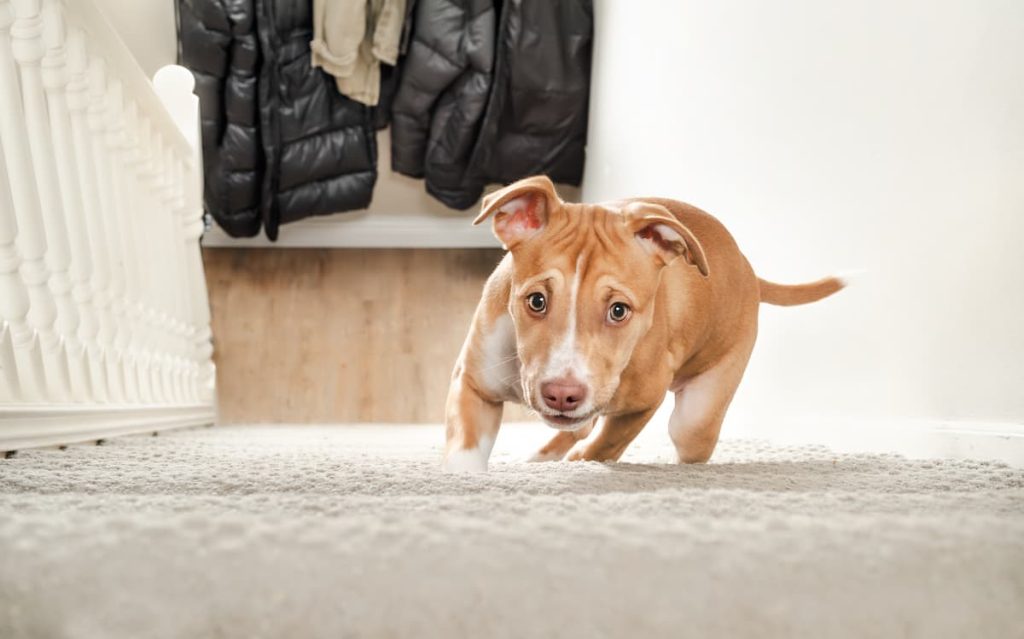
How to do it: Start slow, make sure your dog is confident with stairs, and keep sessions short. A few rounds goes a long way. This is not about endless laps. It’s about controlled chaos and a very satisfied nap afterwards (for both of you!).
 4. A game of fetch, but more fun
Classic fetch is fine. But your this kind of exercise with your dog deserves a plot twist.
Try these alternate options that give them so much more than just a regular fetch-and-grab:
Competitive fetch: Once the ball leaves your hand, start running alongside your dog to see who gets to the ball first.
Hide & fetch: Throw when they’re not looking, and see how quickly they can sniff it out!
Obstacle fetch: Around trees, benches, garden furniture. This one’s great for agility training.
Fetch that toy: For the more advanced doggo, throw out a bunch of toys and have them only fetch the one you yell out.
Suddenly fetch becomes cardio and a brain game. Which means a more tired dog and fewer “why are you still awake” moments later.
5. Human sports but dog rules
Many dogs love ball sports, even if they don’t remotely understand them.
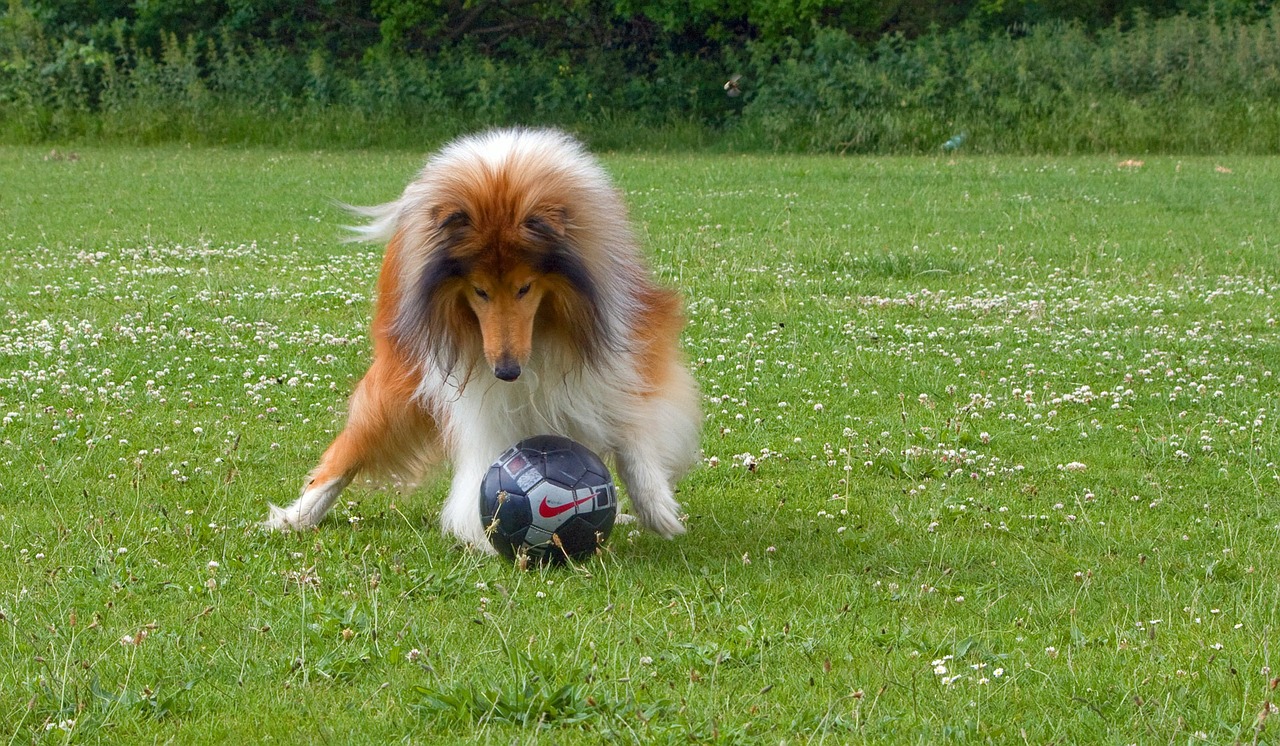
Soccer works brilliantly because it taps into their natural chase instincts. Use a dog-proof ball*, set up a goal, and let them “score”. You can dribble, dodge, and jog while they attempt to intercept everything with their face.
It’s not about rules. It’s about movement, laughter, and accepting that your dog is wildly competitive for reasons unknown.
*Just make sure you buy a dog-proof soccer ball. A regulation ball won’t hold up to your dog’s sharp teeth. Nothing brings a kick-around to an end faster than a popped ball.
6. The treadmill tandem
When outdoor exercise isn’t an option, this is where a great treadmill sesh comes in.
Have you ever seen videos of dogs walking on a treadmill? They’re hilariously cute! Plus, the dogs get a great workout.
Some dogs take to them instantly. Others need slow, patient introductions. Start with a walk, keep sessions short, and never set a pace your dog can’t handle. They can’t press stop. You’re their safety switch.
The beauty of treadmill training is your dog can either do a brisk walk or a full run. In other words, this type of exercise together can meet both of your current fitness levels.
7. Cycling, (but cruise mode, not Tour-de-france style)
For high-energy dogs, cycling can be a game-changer.
This is about steady cruising, not speed. Your dog should be able to run comfortably beside you without straining. Short loops are better than long rides, and a warm-up walk followed by a cool-down sniff makes all the difference.
For humans, riding a bike burns 500 calories an hour and builds great leg muscles. If using a lead, attach it to the bike frame with a shock-absorbing strap designed for dogs. Just make sure you don’t ride too fast so your dog can keep up!
Before you head off on your next exercise adventure with your dog…
- Please note that before you exercise with your dog, you should take them to the vet first. This will ensure there are no underlying health concerns that can harm them.
- Not all dogs can handle strenuous activities. Breeds such as Bulldogs and Shih Tzus are brachycephalic dogs. These types of dogs have obstructed airways (due to their flat faces) and have a hard time breathing. As a result, exercise for these breeds should be short and moderate.
- The same goes for puppies and old or sick dogs. Your puppy’s bones aren’t entirely formed yet, so they can’t go as hard as adult dogs. And for senior dogs, arthritis could limit their mobility, so consider a joint supplement to help.
- Dogs with short legs don’t need as much exercise as regular sized dogs. Work out how much exercise your dog needs.
- Take your time when building your dog’s resistance to exercise. Don’t take your pooch on a flat out 10k run on the first day! Like you, your dog needs time to strengthen his muscles and joints.
- Don’t forget to hydrate! Bring enough water for you and your dog.
- Be careful when it’s hot and humid because dogs don’t sweat as humans do. Heatstroke in dogs is very real, so make sure you’re keeping a close eye on them (no matter what the weather).
