

As temperatures creep up, the snakes creep in! The dry, warm climate allows snakes to thrive and can attract them to the comfort of your yard or home.
Every year in Australia, around 3,000 humans experience a snake bite…but that’s not the worst of it. Statistics show that over six thousand dogs are bitten by snakes each year!
While cats are more likely to survive snake bites than dogs, it’s important to keep all your furry friends separated from their slithering cousins and to know what to do in case of an emergency.

Keeping pets safe from snakes
Reduce your risk at home
Keeping your property’s grass short and removing any large rocks is the first step to snake proofing your yard. Snakes are cold blooded and so seek shade to stay cool so reducing potential hiding places in your garden is a good idea.
Snakes typically catch and eat rodents and woodpiles provide the perfect environment for mice to live so try stacking firewood as far away from your home as you can to avoid unintentionally attracting snakes.
Be prepared with a pet first aid kit: Having a well-stocked pet first aid kit can help you stay calm and organised in an emergency. While it’s not a replacement for vet care, items like bandages, gloves, and emergency contact numbers can make a stressful situation a little easier.
Keep them leashed & be on the lookout
If you’re going on a walk in an area known to have snakes, keep your pooch on a leash to avoid them sticking their snouts where they don’t belong! It also makes sense to keep to the trail to avoid disturbing any snoozing snakes in the undergrowth.
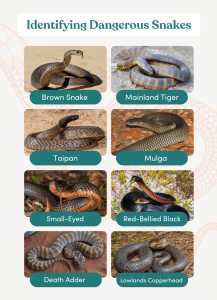
It’s important to be able to distinguish between a venomous snake and a harmless one. This helps to know what to do if your pet is bitten. Our other article, poisonous snakes for dogs, can help to identify the most harmful ones and what to do next to help get the right care for your beloved fur friend.
Save this snake ID card for future reference:
Press and hold the image, then click ‘save to photos’.
Act immediately!
If your pet is bitten by a snake, don’t wait for symptoms to appear. Try to keep your pet as still and calm as possible and head to a veterinarian immediately. Do not delay. Some venoms can take a few hours to show symptoms in pets and by that time, it may be too late.
If your vet determines that your pet has been bitten, they will administer a broad spectrum anti-venom, which is usually very effective. Your pet will most likely also be given intravenous fluids and oxygen and spend a few days at the vet for observation.
The sooner you get your pet to the vet, the better their chances of survival are. Be aware that the treatment for a snake bite can be extremely expensive and can cost thousands of dollars. Pet insurance is one way to help take the sting out of receiving critical treatment from your vet.
Signs of a snake bite in dogs & other pets
Of course, pets are not constantly at our side and can come across a snake when we’re not around. During the warmer months, if your pet starts acting strangely you must bear in mind that it could be due to a snake bite and contact your veterinarian immediately. Symptoms can be:
- Vomiting
- Shaking or twitching
- Lethargy or collapsing
- Wobbly legs or limping
- Breathing difficulties or drooling
- Swelling, redness or pain
- Bleeding from wound
Remember, symptoms can vary depending on the bite and your pet’s size. If something feels off, it probably is.
What to do immediately:
If you suspect your pet’s been bitten by a snake:
Keep your pet calm and as still as possible
Move them away from the area to prevent further bites
Contact your vet or an emergency clinic right away
Note what you saw (snake, spider, location) without trying to catch it
What not to do:
It can be tempting to act fast, but some common approaches are dangerous:
- Don’t apply a tourniquet, cut, or try to suck out venom
- Don’t give human medications
- Don’t wait to see if symptoms improve
