If you’ve ever been lovingly head-butted, slow-blinked at, then promptly used as a human cushion, you’ve probably experienced kneading. The rhythmic push-pull of paws. The blank, blissed-out stare. Sometimes claws involved. It’s absolutely adorable…maybe a bit painful, but you don’t care.
So… why do cats knead?
Your cat is showing you affection, and that’s all that matters.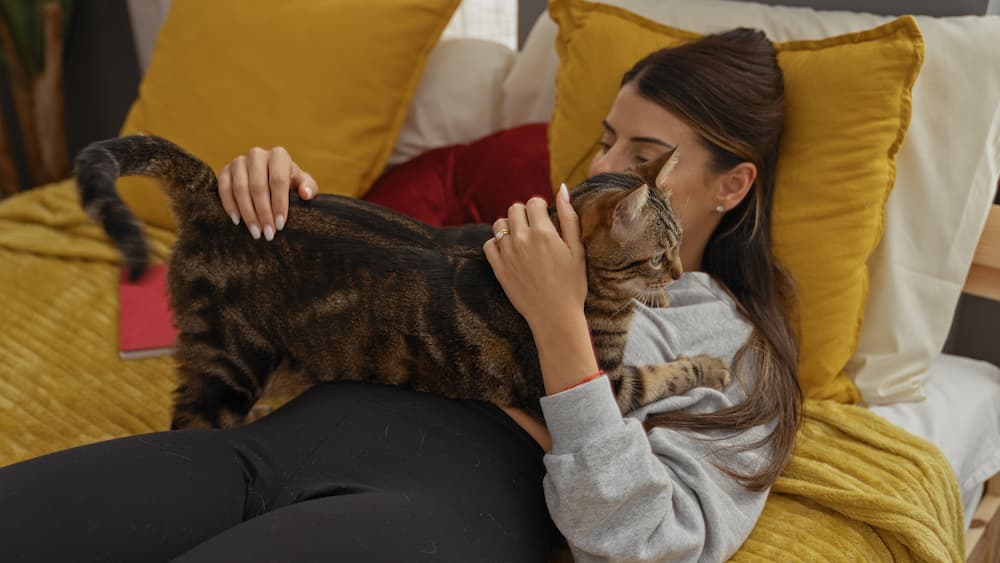
Should we view in the same light as a dog turning in circles before having a snooze? Or is it a bit like a child sucking their thumb? In this article, we’re going to get to the bottom of the question: “why do cats knead?”
First, let’s explain what kneading is:
Kneading is a cat behaviour in which your kitty will use their two front paws to knead or massage a soft surface.
They may extend and retract their claws, and the behaviour is usually accompanied by purring. Some cats may also relax their jaws or bite down on the edge of a blanket or pillow. It’s a bit of an odd behaviour to describe, but if you’ve ever seen it, you know exactly what we’re talking about.
Cats generally knead when they’re relaxed or getting ready to lay down for a nap or longer snooze.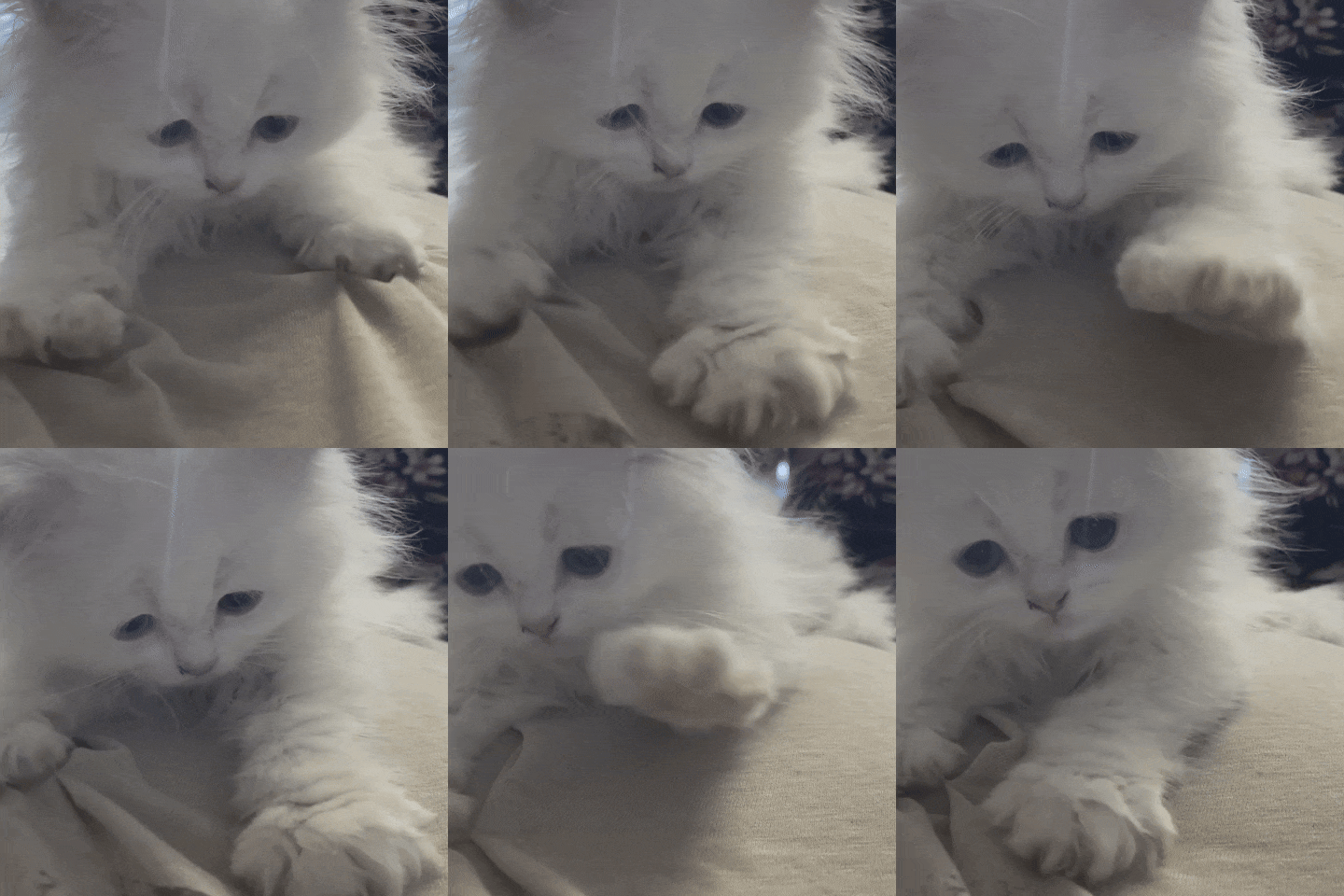
Now, five potential answers to the question, ‘why do cats knead?’
Cats haven’t been living in domesticity for very long, so there’s a lot that we are still learning about them. In fact, while humans have coexisted with cats for 4,000 years, it was only in the last 100 years or so that we would even consider allowing cats into the house. Now, they’re some of our most beloved furry friends. What that means is that we’re still trying to figure out some of their odd, adorable behaviours. So, here are the biggest theories:
1. It’s a comfort reflex from kittenhood
Kneading starts early. Very early.
Kittens knead their mum’s belly while nursing to stimulate milk flow. The motion becomes tied to warmth, safety and full-tummy bliss. Fast-forward to adulthood, and kneading is still a shortcut to those same feel-good emotions.
So, if your cat kneads you, congratulations. You’re emotionally classified as safe, warm, trusted surface. Awe!
2. They’re marking you as theirs
Cats have scent glands in their paw pads. When they knead, they’re quietly stamping their signature. No drama. No growling. Just a subtle “this human is mine now.” That’s how you know they’re really the boss of the house.
3. It’s how cats settle in
Wild cats knead grass, leaves or bedding to make a spot comfortable before lying down. Domestic cats kept the habit, even if the “nest” is now a couch, a doona, or your stomach. Kneading often means a nap is imminent…so if they’re doing it on you, it’s probably a good idea to cancel your plans!
4. It’s a sign of affection
Cats don’t hand out physical affection lightly. Kneading is usually paired with purring, slow blinking or a relaxed posture, all signs of contentment. What this means is your cat is relaxed, happy, and enjoying your presence.
5. Sometimes it’s linked to hormones or stress
In some cats, kneading can increase during times of change, stress, or heightened emotion. It can also be more common in un-desexed cats.
Just take note: Occasional kneading is normal. Constant, frantic kneading paired with other odd behaviour may be worth a vet check.
What’s the difference between kneading versus scratching?
You’ll notice that your cat uses their claws when they knead, but it’s important to differentiate kneading and scratching.
Scratching is a behaviour that cats will use to sharpen their claws and mark their territory. It’s this behaviour that might have your stress levels rising as you see your furniture, carpets, and rugs destroyed. As frustrating as it can be, scratching is a normal behaviour that you cat needs to do to stay healthy. The good news: you can channel this behaviour, which you can read about in our article on how to stop your cat scratching the furniture.
Should I try and stop my cat from kneading?
It’s an affectionate, gentle behaviour that shows you that your cat is happy and comfortable. So don’t stop them unless it’s causing injury or stress. Kneading is a self-soothing behaviour and stopping it abruptly can make some cats anxious.
What if the claws come out?
Let’s be honest. Love shouldn’t draw blood! Here are some helpful tips to keep their kneading comfortable for everyone:
- Place a thick blanket between you and your cat
- Keep your cat’s nails trimmed
- Gently redirect them to a soft surface nearby
- Never punish kneading, it’s an instinct, not bad behaviour
If you’ve got a kneading cat on your hands, congratulations! Your cat loves you, trusts you, and sees you as the perfect napping place. If the claws are painful, you might place a towel or pillow on your lap – they’ll love the extra cushion!
‘Knead’ someone else to be your cat’s personal cushion?
Our trusted Cat Sitters can care for your feline friend when you’re away or have a busy social calendar. Choose from pet/house sitting (where the Sitter comes to your home), pet hosting (where your cat stays at the Sitter’s house) or even house visits, where someone simply stops by to check-in and top up their food and water.