
In short:While kids and dogs can become the best of friends, they don’t always speak the same language. Children often see dogs as soft, friendly companions and may try to hug, poke, or grab without understanding boundaries. At the same time, dogs may not recognise a child’s behaviour as harmless. With guidance, however, children and dogs can learn to understand each other. This builds trust, reduces stress, and helps create safe, positive relationships that last. |
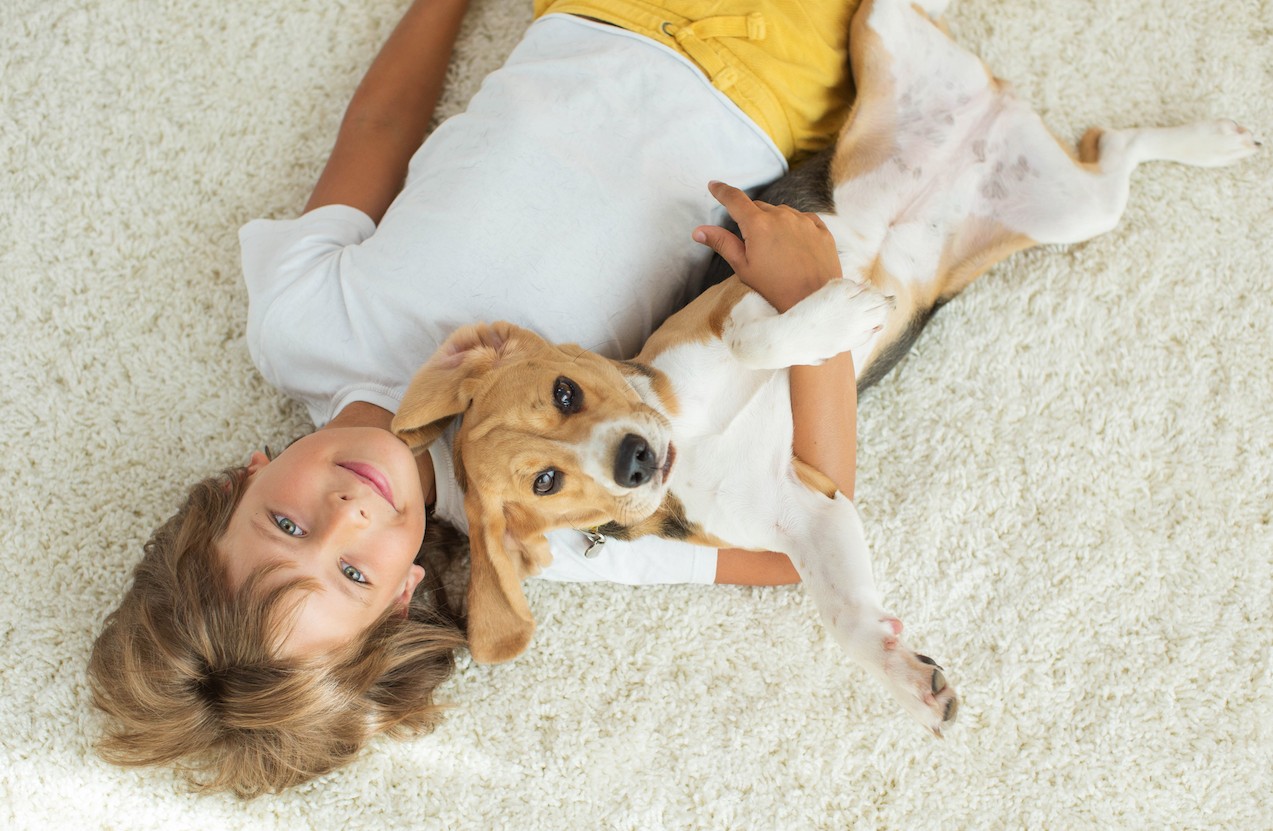
Dogs and children can have a lot in common. They share boundless energy, they require constant attention to thrive, and they can bring you endless joy!
With all the excitement and energy, though, it’s easy for them to get carried away. We’ve discussed how to introduce your dog to a new pet, and to new people, but dogs and children require their own process.
Teaching kids a few simple boundaries helps them build happy, safe friendships with dogs.
Keep a watchful eye on both of them
Whilst they’re getting to know each other, you’ll need to play the role of supervisor, mediator, and translator. If your dog starts growling or stiffens their posture, separate the two of them.
It’s important to take a firm but calm tone with your dog, and explain to your child that they were in danger. Your child will learn to respond to your furry friend’s needs, and your dog will see that you will intervene on their behalf if they’re being annoyed (which will deter them from escalating their ‘concerns’).
Your role is to encourage calm behaviour from the child so that they dog has the best chance of staying relaxed and content.
Know the limits of both dogs and children
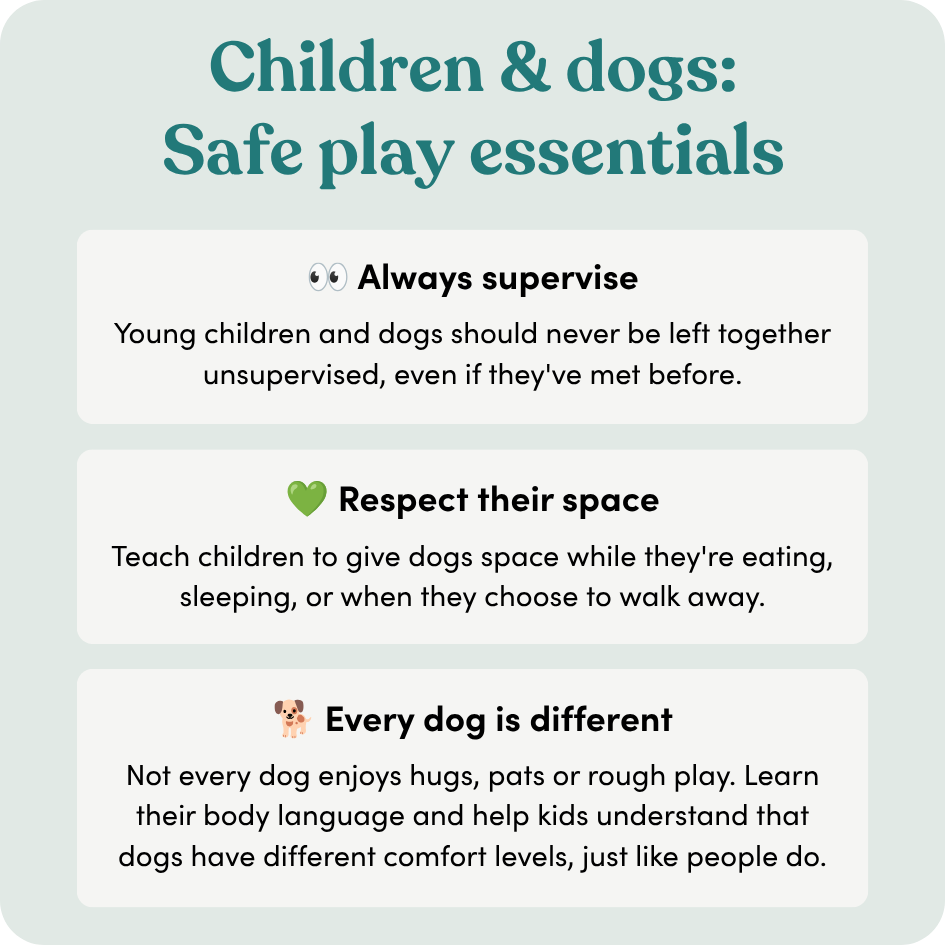
Never leave young children and dogs alone together, especially when they’re first getting to know each other.
Unless your child has been raised around pets, they won’t know how to behave towards your new dog. They may treat them like a teddy bear to be hugged, poked, and jostled without restraint. Your child also won’t be accustomed to reading the warning signs of a threatened dog. This can create a perfect storm of an irate pooch and an oblivious kid… which can end badly if you’re not supervising.
Turn your child into a mini canine expert
Once things are calm, you can start teaching children how to safely interact with dogs.
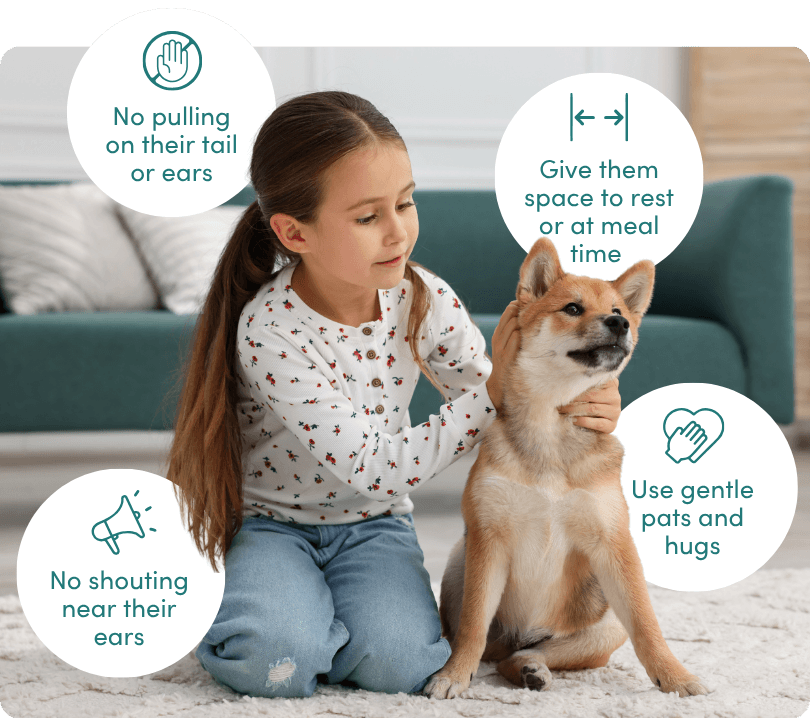
Start simple by teaching the child to approach a dog slowly, with a relaxed, outstretched hand. When the dog sniffs their hand, your child will begin to see that it’s a dog’s version of a handshake. Next, lay out some golden rules:
❌ Don’t pull tails
❌ Don’t grab ears or faces
❌ Don’t shout near dogs
❌ Don’t touch dogs while they are eating or sleeping
These rules help children understand that dogs have feelings and limits too.
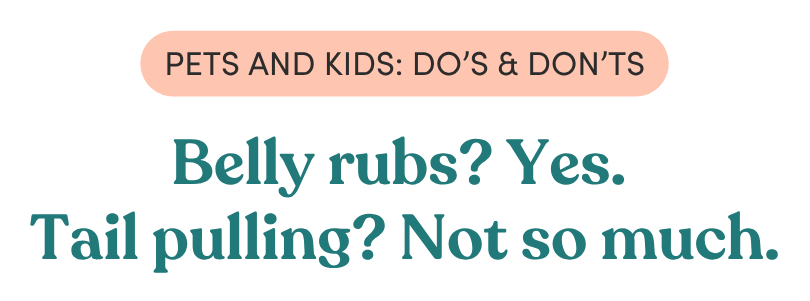
Now you can progress to the fun part: letting your child befriend your dog. Showing them how to rub your dog’s belly, brush their coat, and play fetch with them is a great start. In fact, there’s a range of activities the two of them can pursue together.
At this stage, your pooch and your child can start to be buddies in earnest. They may still need your guidance at times, but once they understand each other, you won’t be able to keep them apart!
  |
For more comprehensive information, including how to introduce your newborn to your dog, head to the Raising Children Network – a parenting guide for all ages and stages, supported by the Australian government.
