
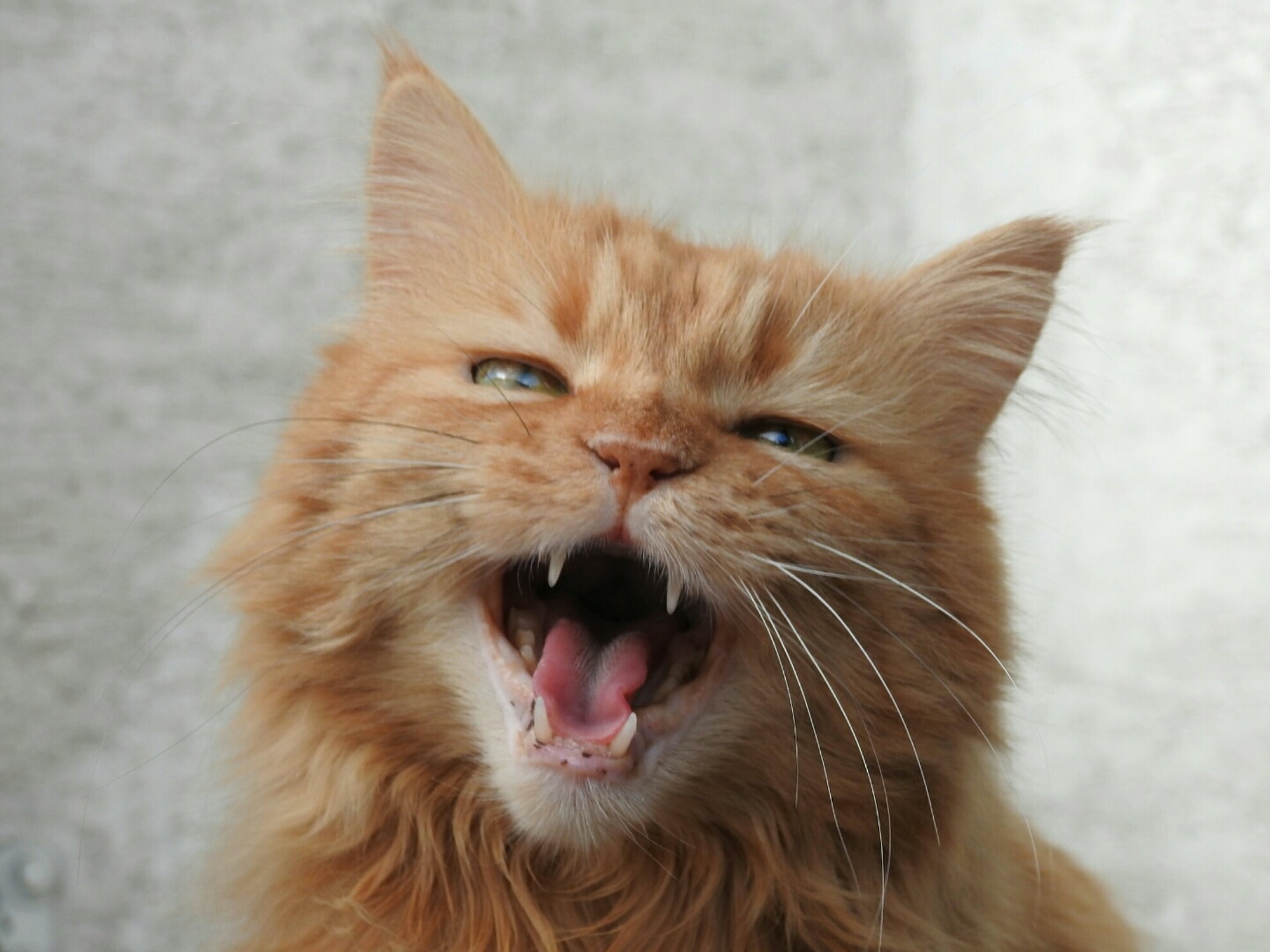
Good question. While we’d love to give you the short, sharp answer for this… here’s the plot twist: a cat’s meow isn’t a single emotion. It’s more like a multipurpose tool cats deploy for comfort, communication and the occasional bit of emotional manipulation.
Here’s how to decode your cat meowing without getting scratched for your curiosity.
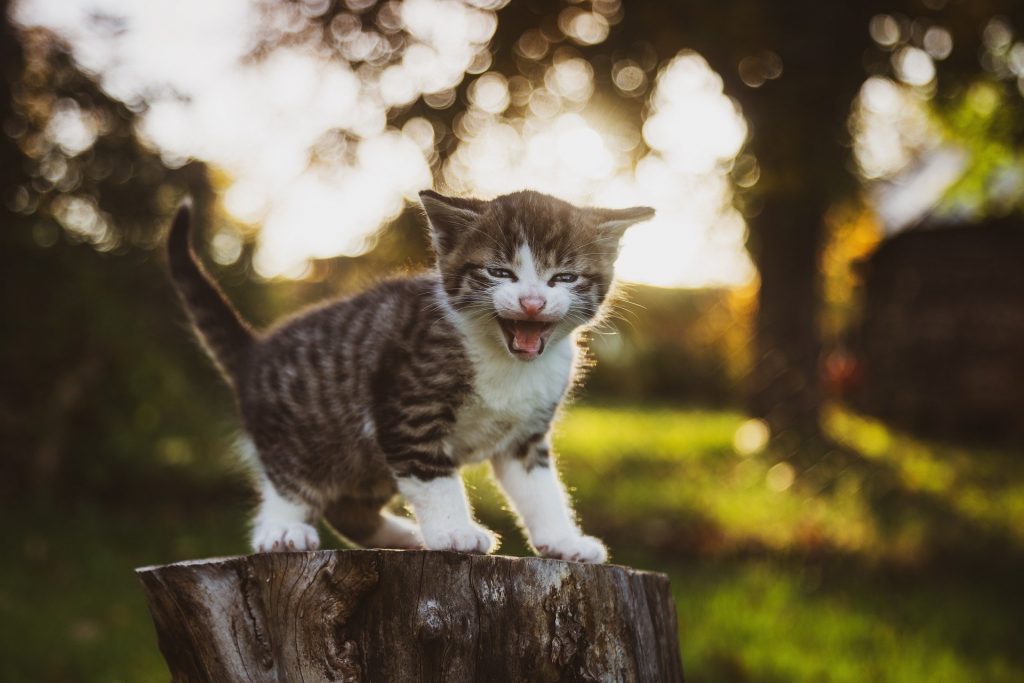
Meows are highly variable in pitch, length, tone and melody depending on context.
And when we say that it’s a way for them to manipulate, we say it lovingly because they’re intelligent creatures! Especially for humans, cats modify and personalise their meows – basically tailoring their voice to what works on you.
To truly translate what they’re communicating, you need to read your cat’s body language as well as their sounds. So let’s put both together to help decode your cat’s meow:
The “I’m living my best life” meow
What it sounds like:
Low, steady, rhythmic. A tiny engine that’s just been serviced.
What the rest of the cat is doing:
- Loose, floppy body
- Slow blinks or half-moon eyes
- Tail still or gently flicking
- Might knead you like dough
Translation:
“You may continue whatever this is forever.” If your cat meowing sounds like this, you’ve nailed it as a cat parent! Gold star, they’re happy and content. Just don’t ruin it by invading their space if they’re settled! Their tone just might change…
The “I’m stressed” meow
What it sounds like:
A little higher-pitched or faster. Sometimes oddly intense.
What the rest of the cat is doing:
- Body tense or crouched
- Ears sideways or flattened
- Dilated pupils
- Still purring… but also ready to bolt
Translation:
“I am stressed and self-soothing.” This one often shows up at the vet, during thunderstorms, or when a stranger exists. If you think this might be what you’re hearing, take a read of our other article about different stress triggers for cats and how to help them.
The “Something’s not right” meow
What it sounds like:
Constant, almost non-stop, sometimes louder than usual.
What the rest of the cat is doing:
- Hiding more than normal
- Not eating or moving much
- Acting unusually quiet or clingy
Translation:
“I may be in pain and this meow is my coping mechanism.” Cats can meow to help calm themselves… and even promote healing! Research has found that the vibrations from constant purring can create endorphins that act as a ‘natural painkiller’ and help comfort them. If this purr comes with other off behaviour, it’s vet-visit time.
The “I’m bored” meow
What it sounds like: Often flat or mid-tone, and on repeat.
What the rest of the cat is doing:
- Following you around the house
- Sitting near you, then meowing at you….then sitting slightly closer just in case
Translation:
“I require enrichment immediately, or I will continue my ‘sighs’ on loop.” If your cat spends a lot of time on their own (and it’s not in their personality to happily accept that, they’re simply vying for some attention. Try an interactive toy to keep them busy and entertained whilst you’re out, or otherwise it might be time to book a Mad Paws Pet Sitter to provide some company.
The “Manipulation mode” meow
What it sounds like:
Normal purr, but with a sneaky high-pitched cry layered in. Almost baby-like.
What the rest of the cat is doing:
- Staring directly into your soul
- Leading you toward the food bowl
- Acting like they’ve never been fed, ever, in history
Translation:
“I’ve hacked your brain. Feed me.” In this instance, they’ve officially used their cuteness to get their way! Like all living creatures, problems are usually solved with food. Just don’t let things get to hangry-mode, because then it might come with a touch of destruction to help get your attention!
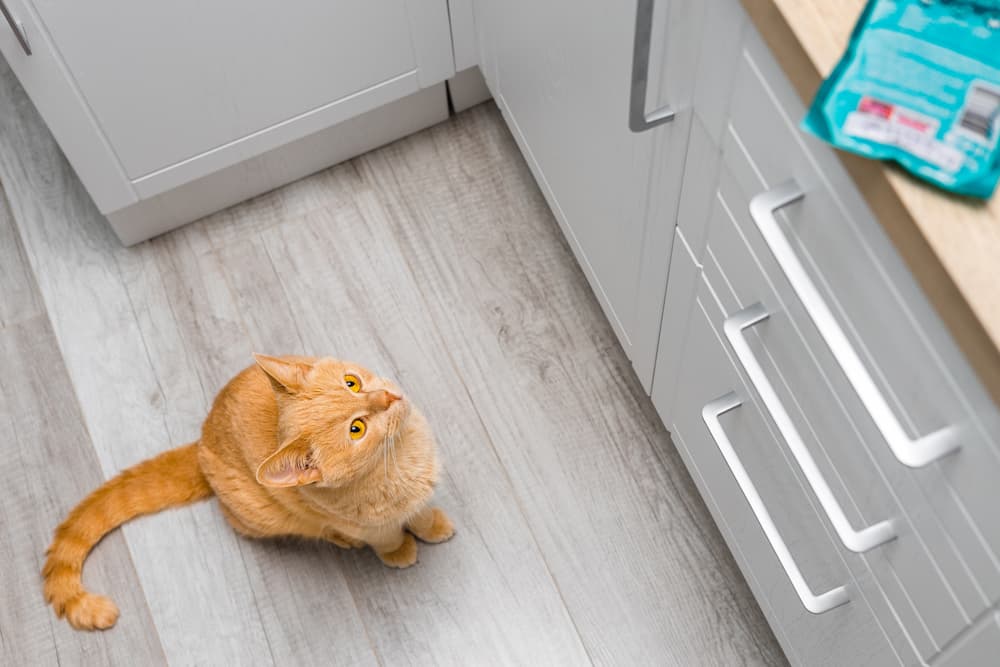
Here’s a rule of thumb if you’re still getting the hang on the different cat meowing melodies:
If their meow matches relaxed body language, it’s happiness.
If their meow is meshed with tension, fear, or weird behaviour, you may need to investigate a little further.
Want to learn more about how cat’s communicate?
Read our other article where we answer the question, “Why do cats chirp?“>