

In short:Not really. A lick of plain vanilla ice cream won’t usually hurt a healthy dog, but in general it isn’t recommended. It’s high in sugar and fat, and many adult dogs can’t digest the lactose. Some flavours, and any sugar-free version, can contain ingredients that are toxic to dogs. That’s the short answer. The longer one depends on your dog, the flavour, and what else is in the tub. Here’s what to know before you share your cone. |
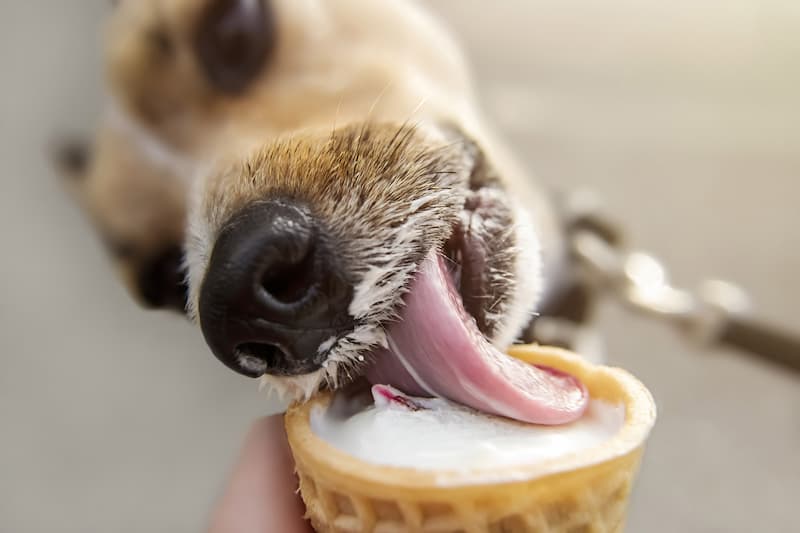 Just as we mentioned in our previous articles on milk and cheese, dairy products fall into a grey area. For some dogs, even small amounts of dairy can lead to stomach upset. Others can gobble up an ice cream cone that fell to the floor without a trace of tummy distress.
Why isn’t ice cream good for dogs?
Three things make ice cream a poor treat even when nothing in it is toxic.
- Lactose. Puppies make the enzyme that digests their mother’s milk. After weaning they make less of it, so many adult dogs are lactose intolerant to varying degrees. The result can be gas, bloating, vomiting or diarrhoea.
- Fat. A rich, high-fat food can trigger pancreatitis, a painful and potentially serious inflammation of the pancreas. Signs include vomiting, abdominal pain, loss of appetite and lethargy, and it often needs veterinary care.
- Sugar. It adds calories with no nutritional benefit, and too much can contribute to weight gain and dental problems.
Which ice cream ingredients are dangerous for dogs?
Ice cream is only as safe as its ingredient list. Check for these before your dog gets near it.
Ingredient | Why it matters | Where it turns up |
|---|---|---|
Xylitol | Causes a rapid drop in blood sugar and can lead to liver failure. A medical emergency | Sugar-free ice cream, and some peanut butter, sauces and yoghurt |
Chocolate | Toxic to dogs | Chocolate, choc chip and chocolate-swirl flavours |
Raisins | Toxic to dogs | Rum and raisin |
Macadamia nuts | Toxic to dogs | Macadamia and mixed-nut flavours |
Coffee | Caffeine is harmful to dogs | Coffee and mocha flavours |
Alcohol | Dangerous for dogs | Rum, liqueur and other boozy flavours |
If your dog eats anything containing xylitol, call your vet or nearest emergency animal hospital straight away, even if they seem fine. Blood sugar can drop within an hour, while other signs can take up to 24 hours to show.
Can dogs have dairy-free or vegan ice cream?
Dairy-free solves the lactose problem and nothing else. Vegan ice cream can still be high in fat and sugar, and some are made with ingredients, including certain nut milks, that aren’t good for dogs. Sorbet is usually lower in fat, but it’s still mostly sugar, and sugar-free versions can contain xylitol. Read the label, and keep it to a small taste.
What can I give my dog instead of ice cream?If you want your dog in on the summer ritual, these are the better options: 1. Ice cream made for dogsThe safest bought option, because it’s formulated for dogs. Check the label for xylitol and other additives, and count it toward their daily treats. 2. Frozen plain yoghurtUnsweetened plain yoghurt, frozen, is a better pick than ice cream if your dog tolerates dairy. Avoid flavoured or commercial frozen yoghurt, which is high in sugar. 3. Frozen fruit or ice cubesBlueberries or watermelon cubes straight from the freezer, or plain ice cubes in the water bowl. 4. DIY pupsiclesFreeze fresh fruit, peanut butter and plain broth in an ice cube tray. Check the peanut butter label for xylitol, and skip any broth made with onion or garlic. Our Frozen Treats for Dogs guide has five delicious (and easy) recipes. 5. A Kong coneFill it with your dog-safe mix, freeze it overnight, and pack it in an esky with ice for the ice cream run. |
 What should I do if my dog has already eaten ice cream?
- Check the ingredients. If it contained chocolate, coffee, raisins, macadamia nuts or xylitol, call your vet or nearest emergency animal hospital now. Don’t make your dog vomit at home unless a vet tells you to.
- For a small amount of plain ice cream, watch for vomiting, diarrhoea, gas or lethargy. Call your vet if signs are severe or don’t settle, or if your dog seems to be in pain or stops eating.
- Not sure what was in it? Call your vet or the Animal Poisons Helpline with the tub or packaging on hand.
Frequently asked questionsCan dogs eat vanilla ice cream? A small lick of plain vanilla isn’t toxic, as long as it contains no xylitol. It’s still high in sugar and fat, though, and many dogs can’t digest the lactose, so it isn’t recommended as a treat. Can puppies have ice cream? It’s best to avoid it. Puppies’ digestive systems are still developing, and the dairy, sugar and fat in ice cream can be hard on their stomachs. Is lactose-free ice cream safe for dogs? Not necessarily. Removing lactose helps with one problem, but the sugar, fat and other ingredients can still make it a poor choice. Is ice cream made for dogs safe? It’s the safest ice cream option, because it’s formulated for dogs. Check the label for xylitol and other additives, and count it as part of your dog’s daily treat allowance, which should stay under about 10% of what they eat. Which ice cream flavours are toxic to dogs? Chocolate and choc chip, coffee, rum and raisin, and anything with macadamia nuts can be dangerous for dogs. Sugar-free ice cream is a risk too, because it may contain xylitol. If your dog has eaten any of these, call your vet straight away. What should I do if my dog ate ice cream? Check the ingredients. If it contained chocolate, coffee, xylitol, raisins or macadamia nuts, call your vet or nearest emergency animal hospital now. If it was a small amount of plain ice cream, watch for vomiting, diarrhoea or lethargy, and call your vet if signs are severe or don’t settle. |
Feel bad leaving your pup out during the family outing to the ice cream parlour? You might consider setting up an equally exciting adventure for your pooch with their favourite Pet Sitter!