
*UPDATED OCTOBER 2026*
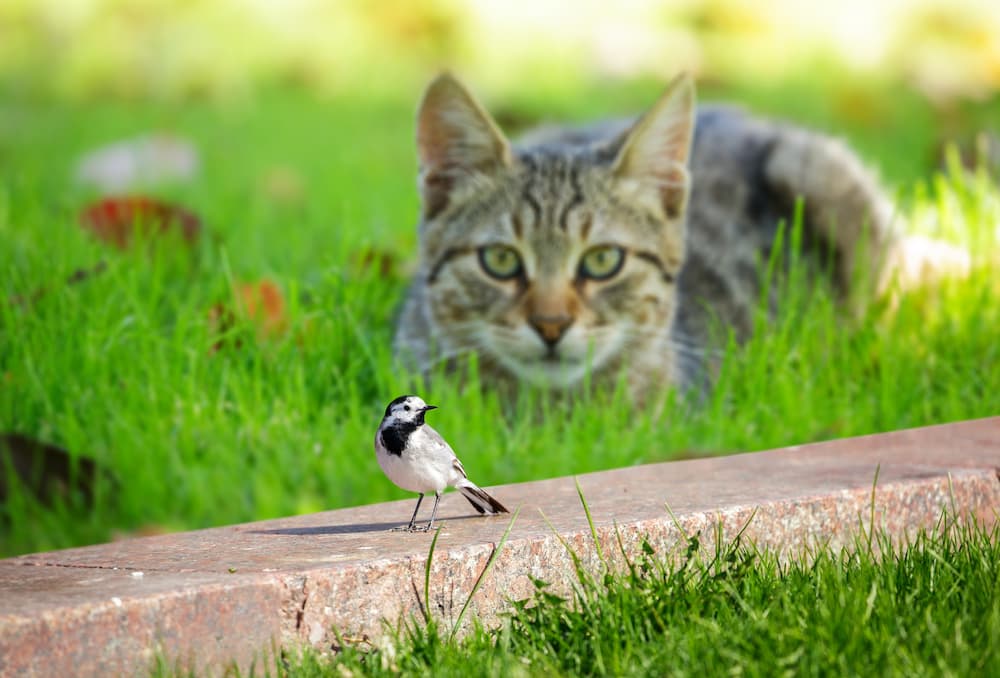
In short:The only reliable way to stop a cat attacking wildlife is to keep it on your property 24 hours a day, whether that’s inside, in a catio, or in a properly cat-proofed yard. If your cat does roam, a bright collar cover can reduce how many birds and lizards it catches, but it won’t make a roaming cat harmless. Cats are exceptionally good at hunting, and Australian wildlife evolved without them and has little defence against them. Your cat isn’t a villain, though, it’s doing what cats do. Keeping that instinct away from possums, birds and lizards is the part that’s up to us all. |
The data surrounding cats and wildlife:
On average, 186 animals a year are killed, per roaming pet cat. About 110 of those are native: roughly 40 reptiles, 38 birds and 32 mammals (from a national analysis of 66 studies led by Professor Sarah Legge).
And, around 85% of kills never make it home, according to video-collar and scat studies reported by AAP from 2023 Biodiversity Council research. So, a cat that never brings you a ‘gift’ may still be hunting.
How do I stop my cat attacking wildlife?
Hunting is instinct, not hunger. A cat with a full bowl will still stalk, chase and catch. So feeding your cat more won’t fix it.
Here are the options, ranked by how well they protect wildlife.
Option | Protects wildlife? | What to know |
Indoors only | Fully | Needs enrichment so your cat stays happy. |
Catio or cat enclosure | Fully, if escape-proof | Can attach to a window or cat flap so your cat chooses. |
Cat-proofed yard | Fully, if your cat can’t get out | Fence-top devices and cat-proof fencing; keep your cat secured on your property. |
Partly | Cuts bird and reptile catches, not mammals. | |
Bell | Limited | Mixed evidence – provides a form of alert to nearby wildlife. |
Keeping your cat in at night only | Partly | Wildlife is still susceptible to attacks during the day. |
Here’s some more context on each option listed above:
1. Keep your cat contained, 24/7
This is the one that works. Researchers behind a national analysis say containing cats around the clock is the only way to keep wildlife safe. Night-only rules help, but they leave the daytime open to birds, lizards and small mammals being hunted.
It’s also better for your cat. Contained cats avoid cars, fights and disease.
To keep your cat’s hunting instincts at bay, choose cat toys that suit their personality >
What does cat containment actually mean?
Councils use two main types of rule:
- A night curfew (dusk to dawn, or set hours such as 7pm to 6am), where your cat must be on your property overnight.
- 24-hour containment, meaning your cat must stay on your property at all times, the same as a dog.
“Contained” doesn’t have to mean indoors. Your cat can be in your home, in a cat enclosure, or in a yard that’s secured so it can’t get out. A cat that can climb your fence isn’t contained, which is why cat-proof fencing and fence-top devices matter.
2. Build or buy a catio
A cat enclosure lets your cat get fresh air without the body count. The RSPCA suggests connecting it to the house through a window or cat flap so your cat can choose where to spend its time. It needs to be escape-proof (so your cat can’t get out) and animal-proof (so nothing else can get in), and any bird feeders should sit well away from it.
3. Make indoors worth staying in
Most cats adapt well to indoor life when their needs are met. Think window perches, climbing spots, regular play sessions (a hunt-and-catch toy gets that instinct out safely), puzzle feeders, and a harness walk if your cat takes to it.
4. If your cat does go out, add a collar cover or cat bib
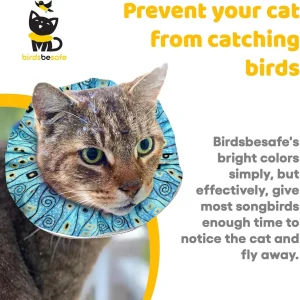
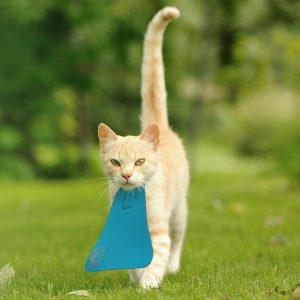
A West Australian study of 114 pet cats found a bright collar cover reduced the likelihood of a cat attacking wildlife by roughly half. It didn’t significantly reduce mammal catches, probably because most mammals can’t see colour well. When the cat bib was University-tested at Murdoch University in Perth, it reduced predation of birds by 81%.
5. Explore the outdoors together
If your cat loves a walk or exploring, you can still make that happen! Simply place a cat harness around them and go on adventures together – it’s a great chance to bond with them too.
6. Desex your cat
Desexed cats are also less likely to roam and fight. This significantly helps the reduce the likelihood of your cat attacking wildlife. In some states and councils, desexing is compulsory.
Do cat bells work?
Bells are widely recommended, but the evidence is mixed. While it can give a cat’s ‘prey’ a heads-up that a threat is approaching, it hasn’t been shown to make significant difference in the number of wildlife being attacked by cats.
Is it illegal to let my cat roam in Australia?
It depends on where you live. In most states os Australia, local councils decide whether cats must be contained. This means the rules can change from one suburb to the next.
For example, in Victoria, some councils already require 24-hour cat containment, and others have night curfews. Fines can also apply, so it’s wise to check the details with your local council.
And if/when enforcement starts in your local council, a cat found off its property can be impounded and you could face a fine and extra fees if your cat isn’t registered.
What should I do if my cat catches a native animal?
- Get your cat away. Calmly move your cat inside or into another room.
- Don’t assume the animal is fine. Cat saliva carries bacteria that can be fatal to small native animals, even from a tiny scratch that doesn’t look like much.
- Contain it gently. If it’s safe to do so, place the animal in a dark, well-ventilated box and leave it alone. Don’t give it food or water, and don’t try to treat it yourself.
- Call for help straight away. Call your local wildlife rescue organisation or a vet who treats wildlife.
What if my cat brings home a dead bird?
Pick it up with disposable gloves or an inverted plastic bag (never bare hands), put it in the bin, and wash anything that touched it. Then watch your cat for a few days. Birds can carry Salmonella, and a cat that gets sick (vomiting, lethargy, loss of appetite) should see a vet.
Frequently asked questionsHow do I stop my cat from killing birds? To help stop your cat attacking wildlife, keep them contained at all times – inside or in a catio. If your cat roams, a bright collar cover can reduce bird catches by roughly half, but containment is the only method that fully prevents it. Why does my cat bring me dead animals? No one knows for certain why, but only around 15% of what pet cats kill is brought home, so you’re seeing a small share of the total. Should I keep my cat inside at night? Yes, it helps, and many wildlife species are most active at dusk and dawn. But cats also hunt in the day, so night-only containment reduces the harm rather than ending it. Do cat bells stop cats killing wildlife? Not reliably. Australian studies found bells added little on top of other deterrents. A colourful collar cover performed better for birds and reptiles. Can a cat be happy living indoors? Yes, when it has things to climb, watch, hunt and chase. A catio or harness walks add outdoor time without the risk. How many animals does a cat kill per year in Australia? On average, a roaming pet cat kills 186 animals a year, about 110 of them native. Across the country, roaming pet cats kill an estimated 390 million animals annually. What should I do if my cat attacks a possum or bird? Separate them, then call your local wildlife rescue service (even if the animal looks fine). Cat bacteria can be fatal. |
With cat containment laws on the rise, it’s also something your neighbours may be thinking about. Take a read of this helpful guide to managing a situation between you, your cat and the neighbours >
