
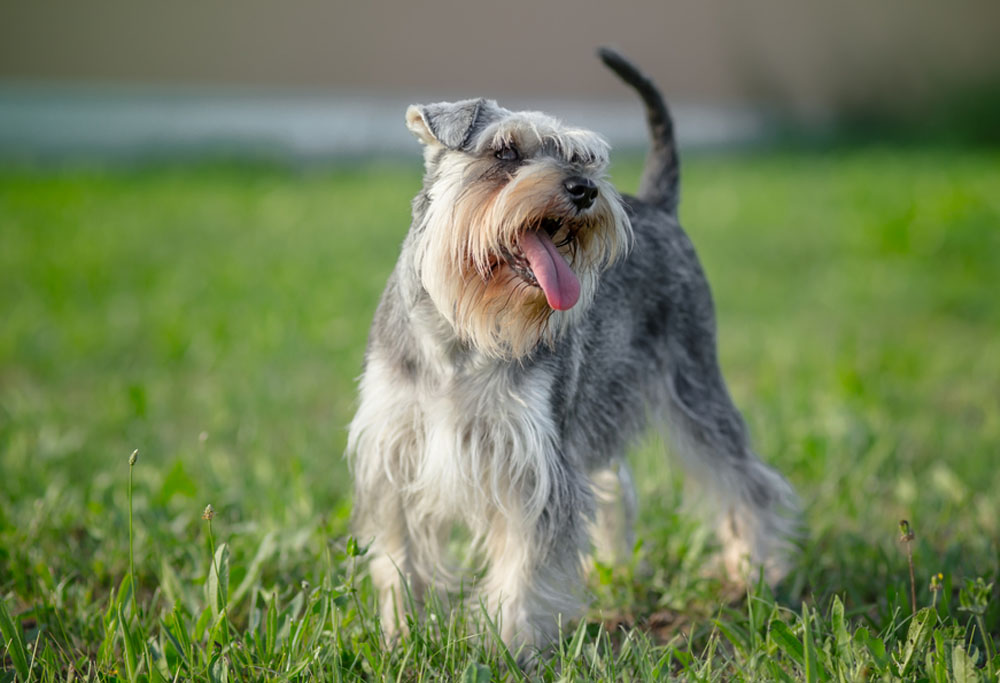
Looking for a Schnauzer-friendly Dog Sitter in Melbourne, Broome, Townsville, or anywhere else in Australia? Mad Paws can match you to a trusted Sitter who knows your pet best.
In the meantime, here’s everything you need to know about this bearded, big-personality breed – the Schnauzer’s origins, personality, trainability, grooming needs and more.
 Quick Facts
Height: 28-36cm (miniature), 45-50cm (standard), 60-70cm (giant)
Weight: 5-9kg (miniature), 14-20kg (standard), 25-48kg (giant)
Lifespan: 12-15 years (slightly shorter for the Giant Schnauzer)
Country of origin: Germany
Breed type: Terrier, and Working Dog
✔ Families with children
✔ Owners committed to training
✔ Apartment living
There’s a lot more to this distinguished pup than an impressive moustache! Even so, those whiskers are a good place to start when talking about the Schnauzer’s history.
Throughout the 19th century, the Schnauzer gained popularity in southern Germany as an all-around farm dog. They kept rats and mice out of the barn, guard the home, and even help with herding duties.
By the 1880s, dog fanciers had both miniaturised and maximised the Schnauzer, giving us, of course, the Mini and the Giant versions. Miniature Pinschers, Miniature Poodles, Great Danes, and Bouvier Des Flandres dogs were all used to influence the size of the Schnauzer.
What is a Schnauzer bred for?
The word Schnauzer comes from the German word “schnauze” meaning snout – a nod to the beard that doubled as protection against rodent bites while ratting.
The different sizes allowed these doggos to perform specialised roles: Miniature Schnauzers were even better ratting dogs than their Standard predecessors and Giant Schnauzers were better suited to farming in the Bavarian Alps.
The Giant Schnauzer was also used as a police dog in Germany in the time leading up to World War I. Later on, the German Shepherd and Belgain Malinois would become the standard choice for law enforcement. This prompted the Giant Schnauzer to turn to other pursuits, like that of friendly family pet.
Today, the Miniature, Standard and Giant Schnauzers are considered three separate breeds, with their own fan clubs and breed standards. The Mini Schnau is the most popular, but all three make wonderful companions.
Personality Traits ★
The first thing that will make you smile when you first see a Schnauzer is the beard. The second thing is this dog’s vibrant personality.
Owners should expect a dog with attitude: intelligent, curious, occasionally stubborn, and naturally protective. They’ll alert you to visitors, then usually warm up fast once introductions are made.
Even when they’re not guarding, they’re quite vocal. You’ll never feel lonely with a chatty Schnauzer around!
Are Schnauzers good family dogs?
Yes! Schnauzers are social, affectionate, and generally patient with children, making them well-suited to family life, particularly with older kids who match their energy. Their farming heritage means some develop a herding instinct around children, so early training and adequate exercise are important.
They can be territorial with small animals due to their ratting background. And, while socialised Schnauzers often get along fine with cats, smaller pets may trigger a prey response. With other dogs they’re generally easy-going, though Minis can feel overwhelmed around large dogs without gradual socialisation.
Are Schnauzers easy to train?
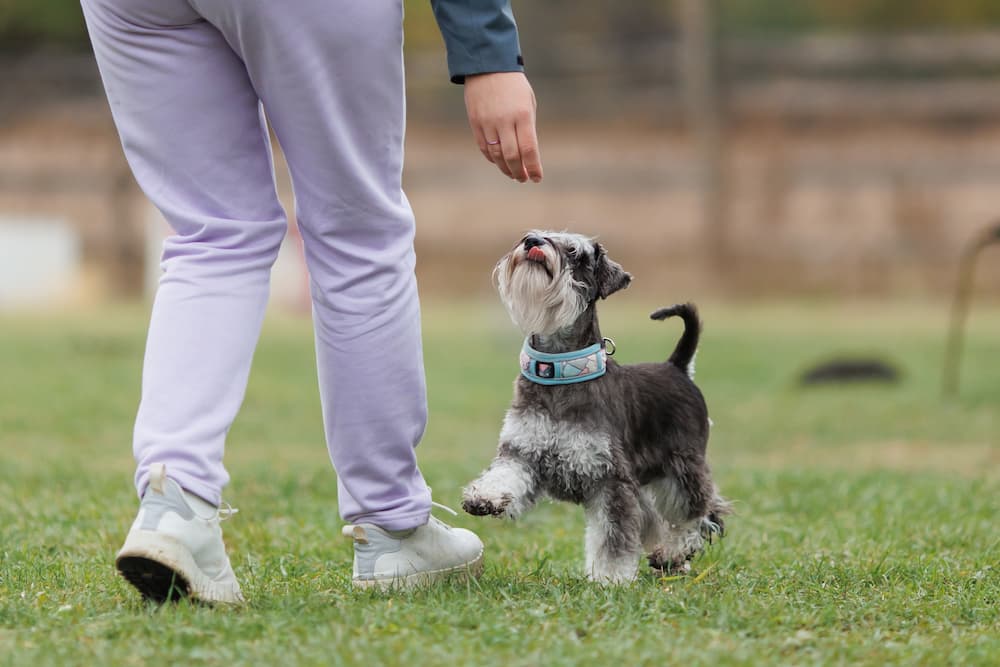
Even with their wilful personality, Schnauzers are people-pleasers deep down. They want a job to do and they want their beloved human to be proud of them. So training can be a much more enjoyable process than you might be expecting. Key tips:
- Build the relationship first — Trust and engagement come from quality time, play, and positive feeding routines.
- Use treats and praise, not punishment — Harsh corrections tend to increase stubbornness.
- Keep early sessions short — Schnauzers are highly distractible and will need short training sessions to start out. Over time, you can build up to longer sessions, but about 5 -10 minutes is plenty for a Schnauzer puppy.
- Prioritise recall — Their strong nose and curiosity make off-leash reliability a slower win, so leash them in open areas until it’s solid.
- Stay consistent and patient — While these dogs are typically easy to train, not every training session will be a wild success. Some days, these opinionated dogs will follow their own path (no matter how tempting the treats). Consistency, patience, and an upbeat attitude will allow you to stick with a regular training plan to offset the occasional failed session.
Training also matters for safety (large sizes) and preventing small dog syndrome (Minis).
 Exercise Needs & Living Conditions ⌂
Standard and Giant Schnauzers do best with more space, while Minis adapt well to apartments. In saying that, the Mini Schnau has the spirit to be right at home on a farm, so don’t discount them from a life in the country.
What’s important, though – a secure yard is essential, since the breed is known to clear six-foot fences!
How much exercise does a Schnauzer need?
Tiny, traditional, or towering, all Schnauzers are highly energetic doggos. They need at least 45–60 minutes of daily exercise, regardless of size. Because Schnauzers were bred as working dogs, activities that engage their nose and brain work best:
- Walking – A daily walk is essential for Schnauzers of all sizes. The mental stimulation of a walk, especially if it can be done in different neighbourhoods, is an amazing way to tire this pup out and ward off boredom.
- Backyard scavenger hunt – Engage the Schnauzer’s powerful sense of smell by hiding treats and toys around the backyard without them seeing. As soon as you set them free, they’ll excitedly explore the backyard until they’ve found every piece of treasure.
- Playtime at the dog park – Schnauzers love to play with dogs their same size and will quickly seek out playmates at the dog park. Just be mindful that they’re displaying good socialisation skills!
- Interactive games – Whether it’s fetch, tug toys, or frisbee, Schnauzers love games that they can play with their favourite human. If you can’t get your dog out for a longer exercise session, a 30 minute interactive play session can give them some much-needed quality time.
- Agility training – Jumping over barriers and through hoops is any Schnauzer’s dream! They’re quick and agile and sure to work up a doggy sweat while they move through an agility course.
- Hiking/Jogging/Bicycling – For larger Schnauzers, you can increase the intensity of your workouts by incorporating other activities like hiking, running, or teaching your Schnau to run alongside your bicycle.
Schnauzer Grooming ✄
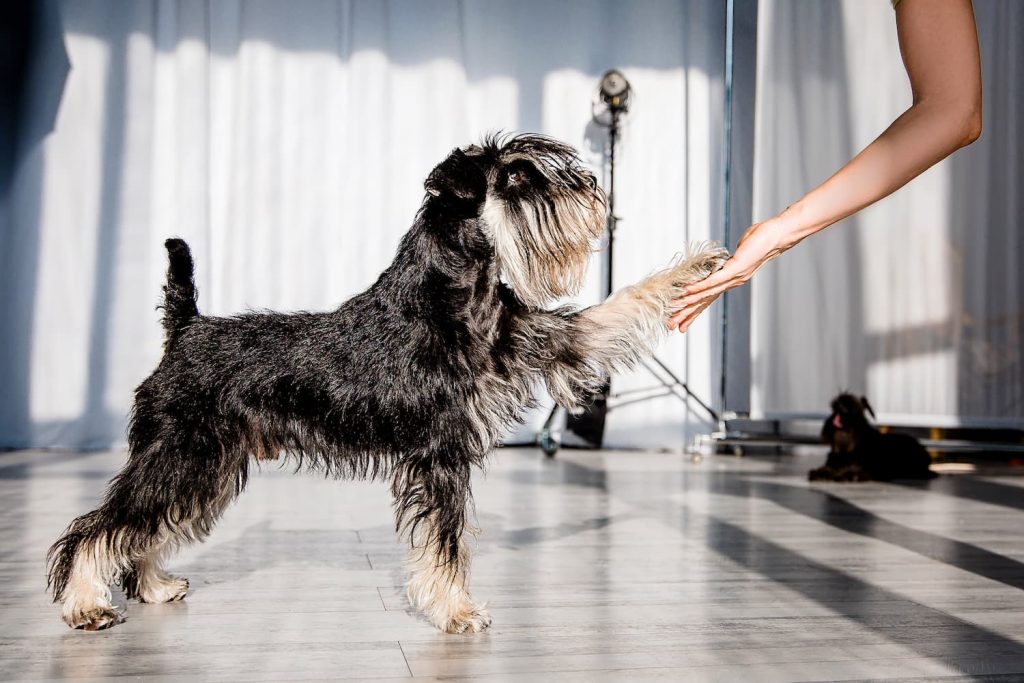
To keep the coat healthy, brushing a couple of times a week is standard. But daily brushing and cleaning of the beard is necessary to stop it becoming tangled and dirty. Especially for lighter coloured Schnauzers, this daily cleaning practice can prevent tear stains as a result of bacteria growth.
The Schnauzer also needs monthly baths, and hand stripping every 6 – 8 weeks to keep their coat in top condition. You’ll want to find a local dog groomer who’s experienced in hand stripping, or be able to commit a few hours to the task yourself.
Beyond coat care, Schnauzers require basic grooming tasks like nail trimming, ear cleaning, and tooth brushing.
Are Schnauzers hypoallergenic?
Yes, Schnauzers are considered a hypoallergenic breed thanks to their wiry double coat, making them a common choice for allergy-prone households.
 What health problems are Schnauzers prone to?
Because they come in a variety of sizes, health risks can vary for different Schnauzers.
- Giant Schnauzers can be prone to bloat, and hip and elbow dysplasia.
- Miniature Schnauzers may be more at risk for eye issues such as cataracts, as well as liver shunts and pancreatitis.
- Standard Schnauzers are considered a very healthy breed, but can also suffer from joint problems and eye conditions.
For all Schnauzer sizes, it’s important to cover them with a dependable pet insurance plan so your energetic fur friend is covered.
Fun Fact about Schnauzers ♥
Is the German Schnauzer a terrier or a working dog?
As it turns out, the dog world can’t come to an agreement! While Standard and Giant Schnauzers have always been considered working dogs, the Mini Schnauzer can seem out of place in that category.
After all, these smaller scruffy dogs have quite a few similarities to terriers. They were bred to hunt rodents, they’ve got the look (and attitude!) of a terrier, and they even sport button ears to protect them while digging. In some kennel clubs, the Miniature Schnauzer meets the requirements for a terrier.
But, because these dogs don’t share common ancestry with so-called true terriers, some dog fanciers are not so sure.
At the end of the day, Miniature Schnauzers themselves don’t give a second thought to the distinction. They just want to be with their favourite humans!
Which Schnauzer size is right for you?
The wonderful thing about the Schnauzer is that there’s one for everybody!
- Miniature: best for apartments and first-time Schnauzer owners
- Standard: the middle ground, suited to most family homes
- Giant: best for active owners with space and a strong training commitment
All Schnauzers are hypoallergenic, intelligent, eager-to-please, naturally protective, and genuinely fun to be around. Training and daily exercise can curb some of their more difficult-to-handle farming habits to make them excellent family pets.
With attitude, bravery, and humour to spare, the Schnauzer is an all-around wonderful dog.
