
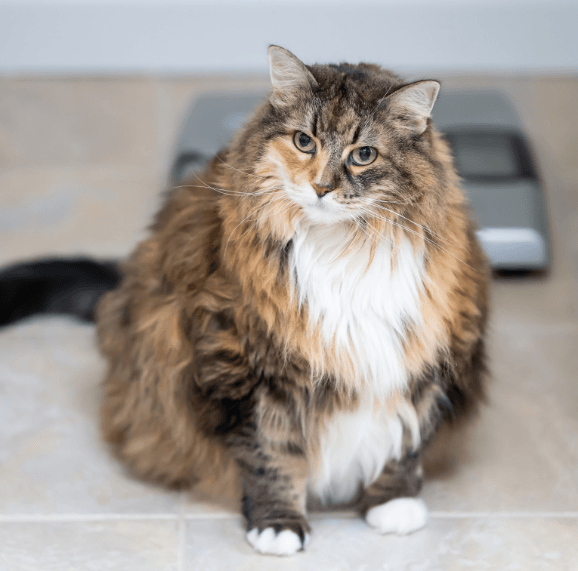
In short:Most domestic cats weigh between 3.5 kg to 5.5 kg. But the ‘right’ weight depends on your cat’s:
Some cats are perfectly healthy at 3 kg, others at 7 kg. It’s less about the number and more about what the number is made of (muscle vs fluff vs snack diplomacy). Keep reading to find out more about your feline friend’s ideal weight. |
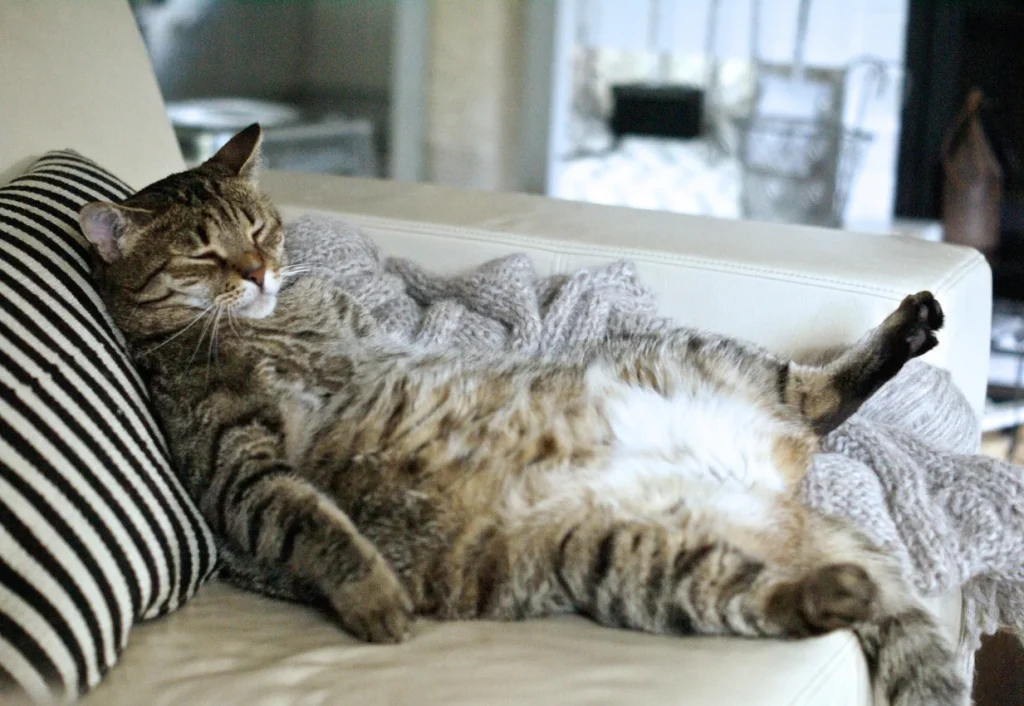 What is a healthy cat weight?
Think of cat weight like tailoring, not a one-size-fits-all hoodie. The general guide looks like this:
- Small cats: 3–4 kg
- Average domestic cats: 3.5–5.5 kg
- Large breeds (like Maine Coons): 5.5–8+ kg (sometimes more if muscular)
But here’s the twist: weight alone can be misleading. A muscular 6 kg cat might be lean and athletic, while a 4.5 kg cat could still carry excess fat depending on build.
Breed makes a big difference
Some cats are naturally built like featherweights, others like small panthers. Common examples:
- Domestic Shorthair / Longhair: usually 3.5–5.5 kg
- Siamese: often lean, around 2.5–4.5 kg
- Bengal: muscular, 4–6.5 kg
- Maine Coon: large frame, often 5.5–8.5 kg+
- Ragdoll: broad and fluffy, 4.5–7.5 kg
So yes, your cat and your friend’s cat might weigh wildly different amounts and both be perfectly fine.
The better question: Is my cat a healthy shape?
Much like checking if a dog is overweight, veterinarians often use a Body Condition Score (BCS) rather than weight alone.
A healthy cat should have:
✅ A visible waist when viewed from above
✅ Ribs you can feel with light pressure (but not see sharply)
✅ A tucked abdomen from the side
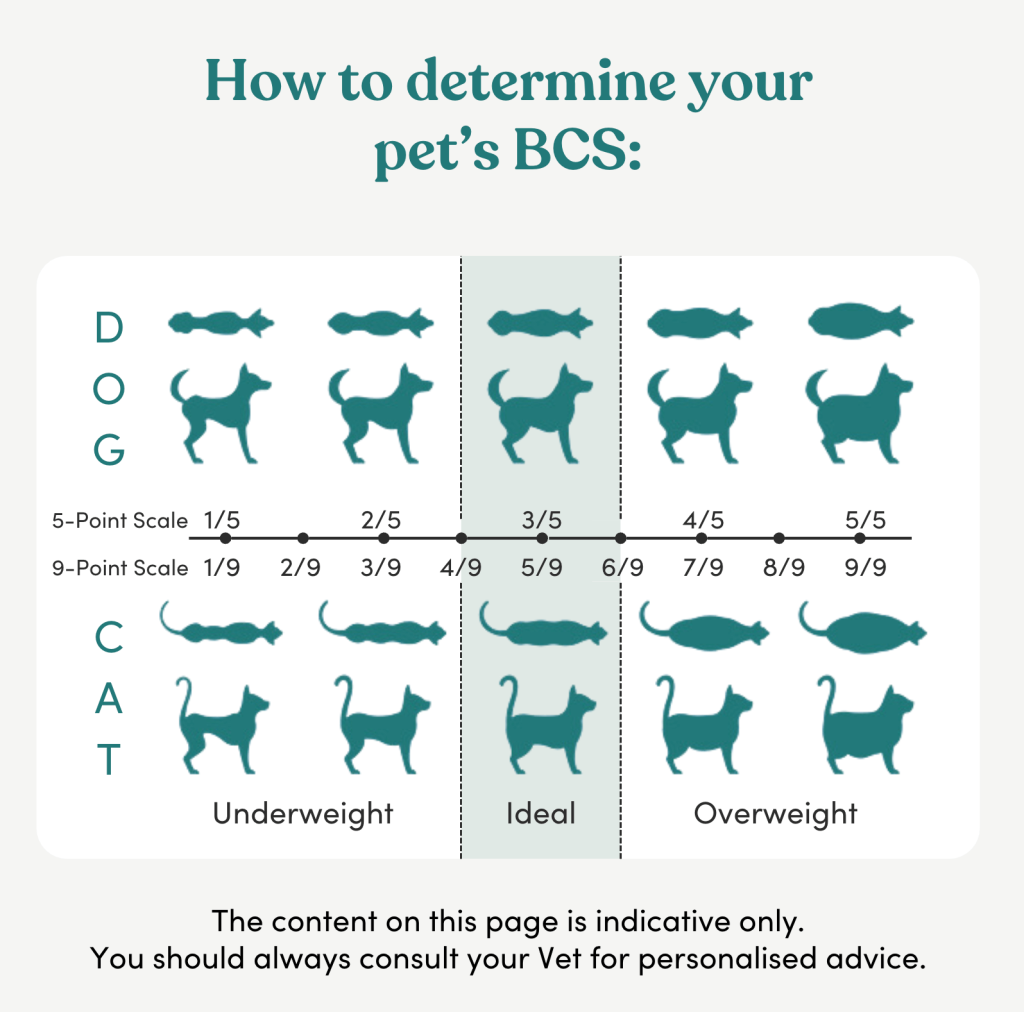 Signs your cat may be overweight:
❌ No waist definition (more “loaf” than “hourglass”)
❌ Difficulty jumping
❌ A growing belly pouch that feels more like a beanbag than a flap
❌ Low energy or reluctance to play
Signs your cat may be underweight:
❌ Ribs, spine, or hip bones clearly visible
❌ Very little body fat coverage
❌ Reduced muscle tone
Why weight matters
Extra weight isn’t just a cosmetic detail. As for humans, weight can impact joint health, diabetes risk, heart function, mobility and playfulness, and even grooming ability.
So, with that said, here’s how to help. In addition to checking their BCS, try one of these methods to weigh your cat (without losing a finger!):
- Step on bathroom scales holding your cat, then subtract your weight
- Use a pet scale at your vet clinic
- Weigh yourself holding the cat in a box or carrier, then subtract
Bonus tip: bribery is a legitimate scientific tool in this process…!
It’s worth checking in with a vet if:
- your cat is steadily gaining or losing weight
- their shape has changed noticeably
- appetite or energy shifts suddenly
- they seem uncomfortable moving or jumping
Cats are very good at slow-change camouflage, so small trends matter more than dramatic ones.
If you’re cat is looking a little more like a loaf than a lightweight:
Here are some easy ways to help your cat move more:
- Spend time each day playing with them, using a wand toy or laser pointer
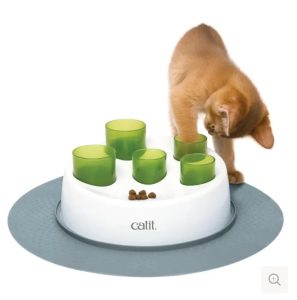
- Utilise food puzzles at meal time to help slow down their eating
- Invest in a scratching post to expend some energy (which also empowers them to get moving on their own)
- Take them on treat hunts around the house, so they ‘work’ for their food
Most cats prefer short bursts of activity followed by dramatic collapsing…followed by another burst 14 minutes later. So, aim for 2 to 3 play sessions daily, even if they only last 5 to 10 minutes.
Common mistakes when helping a cat lose weight
#1 Feeding too little: Cats need careful calorie reduction, not starvation.
#2 Too many treats: Tiny snacks still count.
#3 Not measuring food: “Just a little scoop” has betrayed many pet parents.
#4 No exercise or enrichment: Weight loss works best alongside movement and mental stimulation.
#5 Switching foods too quickly: Cats can be extremely resistant to sudden changes.
TOP TIP: Combine their food intake with an engaging game – try a puzzle feeder toy like this one from PetStock.
 The key takeaway?
There’s no single ‘perfect’ cat weight. Just a healthy range shaped by your cat’s build, lifestyle, and genetics.
If you’re unsure, forget the number for a moment and look at their silhouette.
And if your cat is currently giving you side-eye while lying like a perfectly formed croissant… they’re at least emotionally confident in their body condition!