
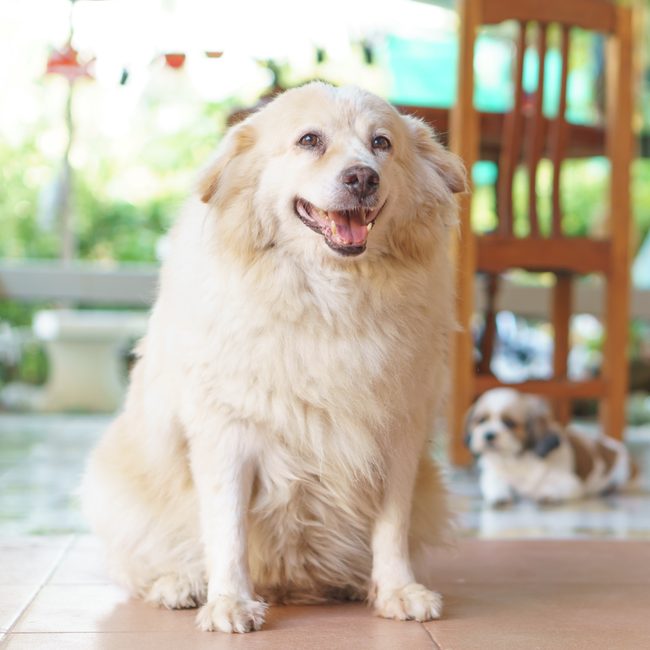
Don’t get us wrong. We love a doggo to be as huggable as possible, and there are plenty of viral videos to prove that chonky pups are here to steal our hearts. But, how do you know if your pupper’s lovable rump is healthy or a sign that they’re overweight? And if your vet has determined that your dog has tipped the scales into a dangerous zone, what can you do to get them back to a safe weight?
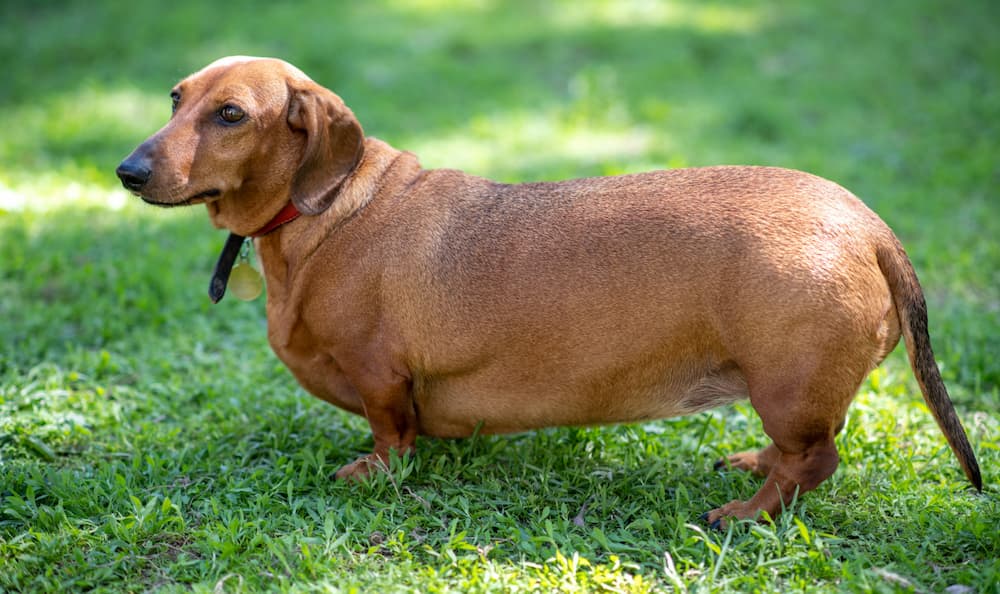 In this article, we’ll cover some of the ways that you can know whether your dog is overweight and how the right nutrition and exercise could mean more years with your furry friend!
How can you tell if your dog is overweight?
The most reliable way is a vet assessment, but there are a few simple checks you can do at home:
- Their shape from above: When your dog is in a standing position, their waist should be slightly narrower than their hips and shoulders. Overweight puppers are more rectangular or even oval shaped when seen from above.
- Their shape from the side: When looking at your dog from the side, you should see a defined slope going from your dog’s hips down to their rib cage. If their belly is a straight line from front to back, it’s likely that your dog is overweight.
- The prominence of your dog’s ribs and hip bones: If your dog is at a healthy weight, you should be able to feel their ribs and hip bones without pressing. If they’re buried under padding, that’s a red flag.
- Their neck and shoulders: Dogs also may hold extra weight in rolls around their neck and shoulders. Of course, this may not apply to dogs who are naturally wrinkly or have naturally large necks, such as Bulldogs and Mastiffs.
- Your dog’s activity levels: Dogs who are overweight may struggle to accomplish daily tasks such as lay down and get up. They may also tire quickly while playing or exercising or show signs of laboured breathing. Again, breed, personality, and other medical issues could offer alternative explanations. But, when paired with the other indications on the list, lethargy is often a sign of unhealthy weight gain.
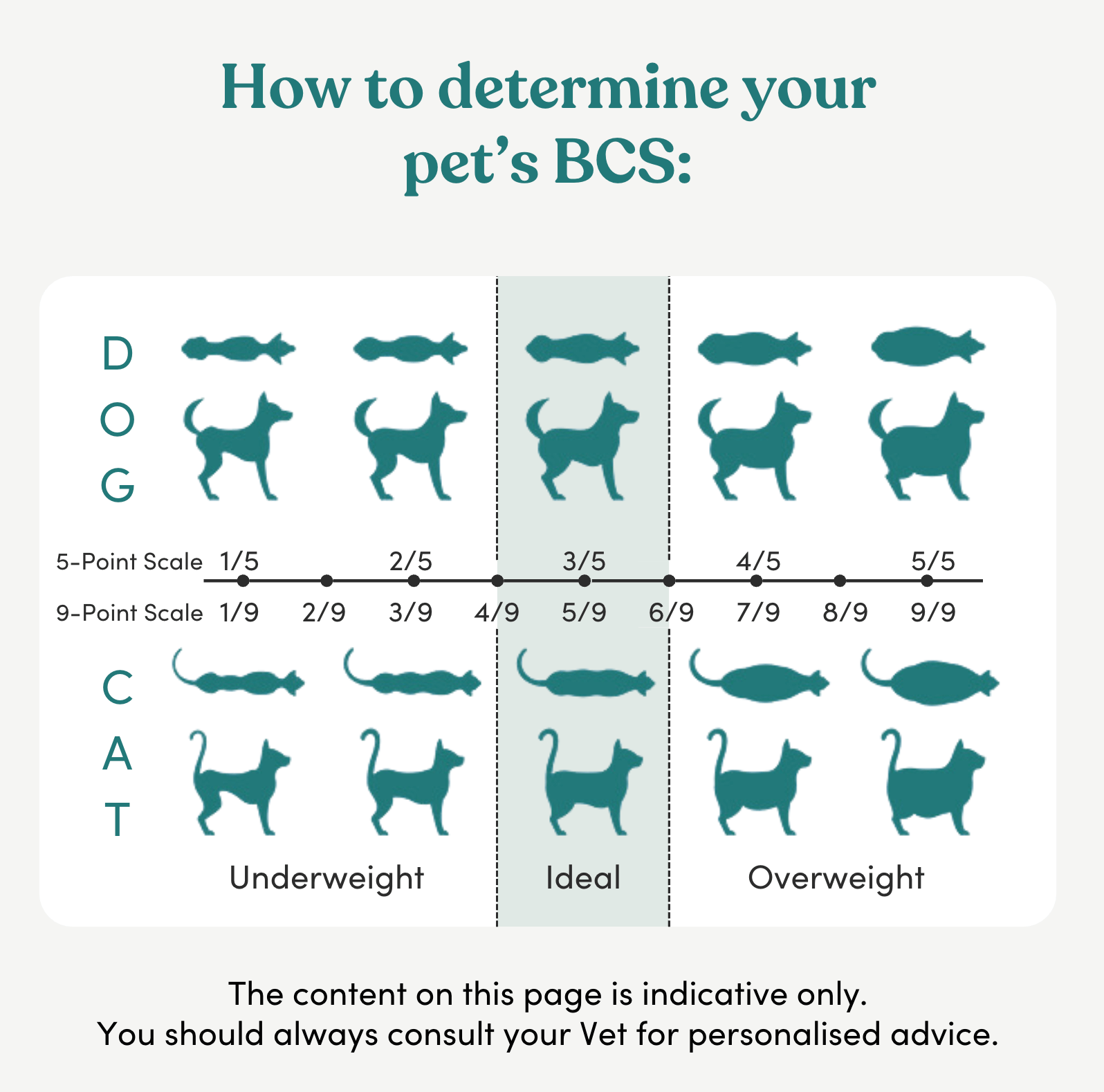
Checking their Body Condition Score (BCS) will help you determine if they’re underweight, overweight, or at an ideal weight. If your pup fits one or more of these categories, it’s a good idea to get them fully assessed by a vet.
Why does it matter if your dog’s overweight?
A little extra fluff might seem harmless, but excess weight can take a toll. It’s linked to joint issues like osteoarthritis, as well as heart disease, respiratory problems, and more.
Obesity has also been linked to certain cancers, bladder stones, kidney disease, liver disease, diabetes in dogs, and high blood pressure.
One study done on the longevity of Labrador Retrievers found that the doggy participants who were able to maintain a lean body mass lived longer than those with excess body fat. Turns out, not only are dogs living longer when they’re at a healthy weight, but they also enjoy a better quality of life.
Are some dogs more prone to weight gain?
Yes, some pups are more likely to stack on kilos. Here are a few factors that can increase your dog’s risk of being overweight:
- Desexing: While there are many benefits to desexing your dog, it does typically increase the risk for unhealthy weight gain. That’s because energy levels tend to taper off after desexing, which can mean that your dog has less motivation to exercise than before.
- Breed: Some breeds, including Cocker Spaniels, Labradors, Cairn Terriers, and Beagles, are at higher risk for obesity than others.
- Age: Some dogs still act like puppies well into their golden years, but most tend to settle down as they get older. Keeping senior dogs active and on a healthy diet can help them live out their last years more comfortably.
Even if your dog falls into one of these categories, their unique personality and biology may act as protective factors against unhealthy weight gain. Your actions can also have a huge impact on your dog’s overall health.
Let’s take a look at what you can do to make sure your pup is at a healthy weight. Keep reading!
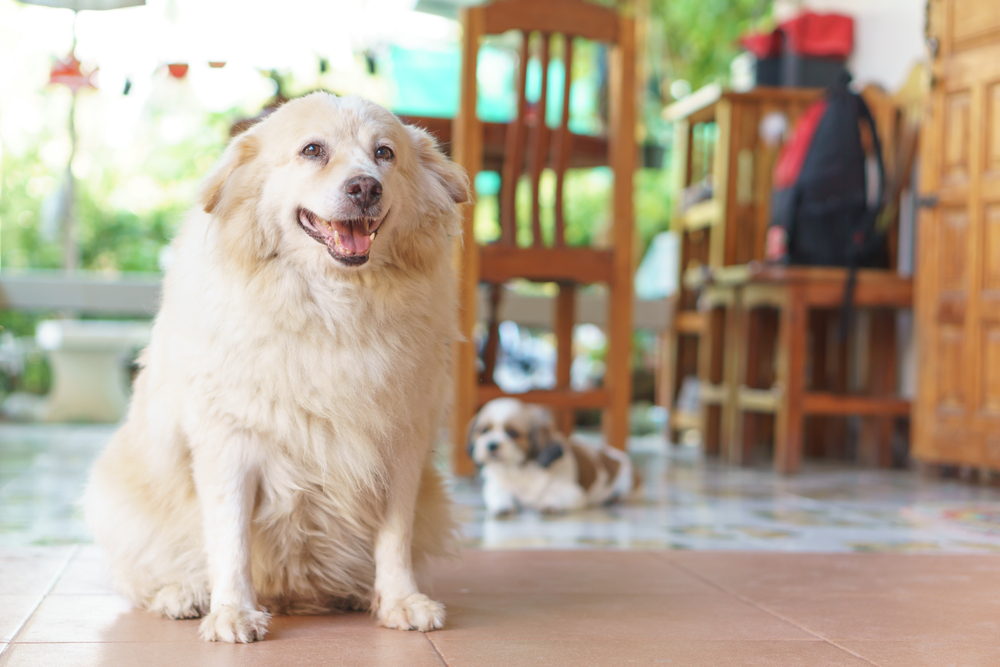
Your dog is overweight…what now?
#1: Talk to your vet
A proper weight loss plan should always start here, especially if diet changes are involved.
#2: Review your dog’s meal plan
As you might have guessed, one of the best ways to make sure your dog stays healthy is with proper diet. Focus on quality, portion control, and consistency:
- Stick with the freshest ingredients available. All-natural, locally sourced proteins, veggies and grains are exactly what your doggo needs to be healthy and active. Fill up their bowl with high quality natural dog food so that you can steer clear of unhealthy fillers and additives.
- Be mindful about portion sizes. Research how much food your dog should be served – it’s up to you to have self-control here! They’ll only eat what they have access to!
- Get your pup on a regular feeding schedule. Giving your dog meals at the same time everyday is typically recommended over free-eating. If multiple members of your family help with mealtimes, make sure that your pup isn’t getting more than their allotted meals per day!
#3: Ease up on the treats
Treats add up quickly. Luckily, positive reinforcement training can work with alternative rewards, such as positive praise and play. Instead of taking away the treats all at once, you can slowly phase them out over time.
#4: Find fun ways to be active with your dog
Fitness is important in your dog’s overall health, so it pays to be proactive in creating an exercise routine to help them stay fit, mentally and physically.
That said, it doesn’t have to be a chore for either of you.
If your family enjoys going to the beach, for example, find a dog-friendly spot and bring along a frisbee or floating toy to encourage them to play. You can even invite a little bit more exercise into your time at home by setting up fun obstacle courses or playing with a flirt pole in an outdoor space.
#5: Call in the pros
If you’re struggling to give your pup the exercise that your vet recommends, don’t worry! A dedicated Dog Walker is a fantastic way to ensure that your pupper gets their daily steps in.
#6: Don’t expect immediate results
The safest way for your dog to lose weight is slowly! In fact, it’s much healthier and sustainable to implement small changes that will gradually lower your dog’s weight instead of flipping their life upside down overnight.
Depending on how overweight your dog is at this moment, your pup’s weight loss journey could last anywhere from a few months to a year.
As you go through this journey with your dog, make sure to give them plenty of love, attention, and positive praise. Weight loss is difficult for doggos, too, and they’ll appreciate all the encouragement they can get!
