
*UPDATED JULY 2026*
In short:Yes, dogs do miss their owners! And research suggests they have some sense of how long you’ve been away. Studies show dogs greet owners more intensely after two or four hours apart than after just 30 minutes, and their brains respond most strongly to their owner’s scent specifically, not just any familiar person. The good news: there’s plenty you can do to ease the wait. |
 What does the research actually say?
It’s easy to assume dogs live entirely in the moment and have no concept of “you’ve been gone a while.” But, the research says otherwise!
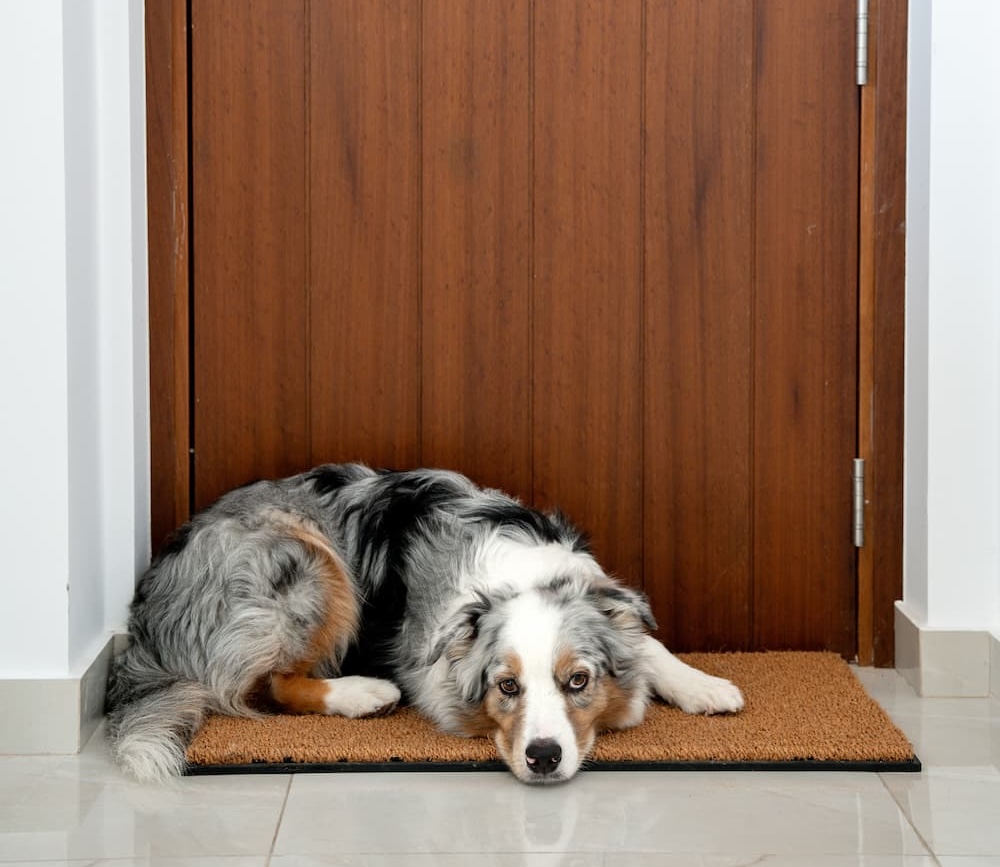
So if you’ve asked yourself, ‘does my dog miss me when I’m gone?’, the answer is… they absolutely do!
Do dogs notice how long we’ve been away?
A 2011 study by researchers Therese Rehn and Linda Keeling, published in Applied Animal Behaviour Science paper, filmed 12 dogs at home across three separate absences: 30 minutes, 2 hours, and 4 hours. The dogs greeted their owners with noticeably more intensity (more tail wagging, more physical contact, more lip-licking) after the 2 hour and 4 hour absences than after just 30 minutes.
Interestingly, there wasn’t a meaningful difference in greeting intensity between the 2 hour and 4 hour marks. This suggests that a dog’s response builds for a couple of hours, then plateaus, rather than getting steadily “sadder” the longer you’re away.
Does my dog miss me specifically, or just people in general?
A separate 2014 study, titled ‘Scent of the familiar’, led by neuroscientist Dr Gregory Berns at Emory University used fMRI scans on 12 dogs trained to lie still in the scanner. Each dog was presented with five scents: their own, a familiar human, a stranger, a familiar dog, and a strange dog.
Only one scent lit up the caudate nucleus (the brain’s reward centre) significantly more than the others… the familiar human. Not the familiar dog. Not just any person. This suggests dogs aren’t simply comforted by having someone around. The specific, individual bond with their owner carries its own reward value in the brain.
Signs your dog misses you:
Every dog copes differently, but keep an eye out for:
- Excessive greeting behaviour – jumping, whining, or frantic tail wagging when you return
- Destructive chewing, particularly of items that smell like you
- Pacing, whining, or barking near the door after you leave
- Following you from room to room in the lead-up to you leaving (a sign of anticipatory anxiety)
- Loss of appetite while you’re away, followed by normal eating once you’re home
If these signs are frequent, intense, or escalating, it may be more than a normal amount of missing you. It could point toward separation anxiety, which is worth addressing directly rather than just managing around. For more on this, jump over to our article about how to identify and manage separation anxiety in dogs.
So what can I actually do about it?
You can’t be home 24/7, and you shouldn’t have to feel guilty about that. A few things genuinely help, though:
- Build a consistent routine so your dog can predict when you’ll be back
- Leave an item of clothing with your scent on it. Given the scent research above, this isn’t just a folk remedy, there’s a real neurological reason it can help
- Set up enrichment (puzzle feeders, interactive toys, background noise) to occupy the first stretch after you leave
- Introduce your dog to a regular, familiar carer for the days you can’t be there
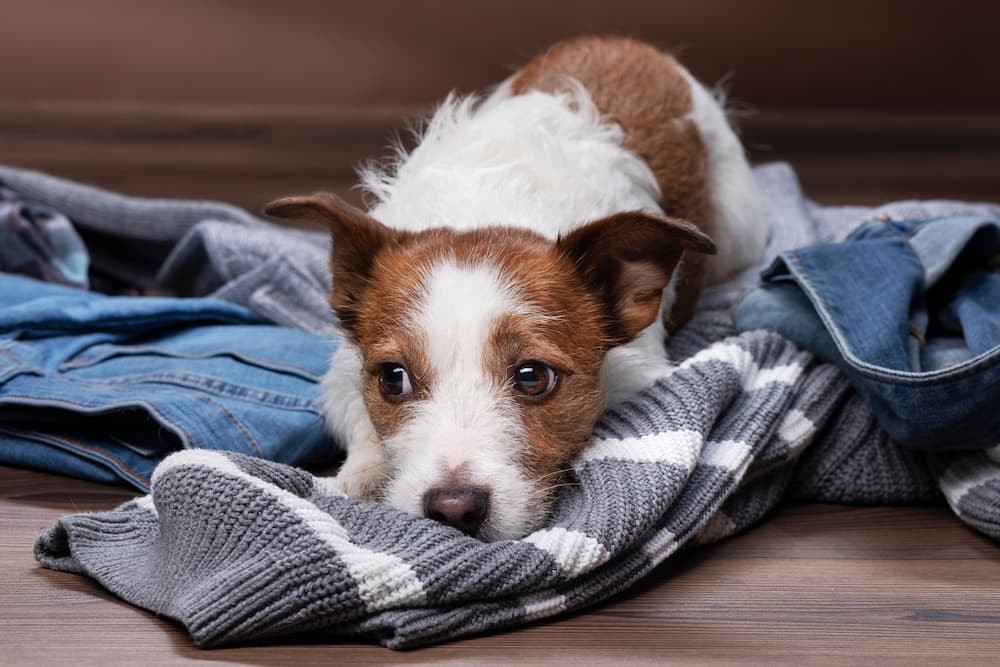
The scent of your clothes helps to comfort them while you’re not there.
On the last point (4) above, the Rehn & Keeling findings above are also why a familiar face matters more than a rotating cast of strangers. If your dog builds a real relationship with the same Pet Sitter or Dog Walker over time, that consistency does a lot of the emotional heavy lifting. For example: a Dog Walker who visits at the same time each day, or a Pet Sitter your dog already knows, can turn a long day alone into a broken-up, much less stressful one.
If you’re working out how long is actually reasonable to leave your dog in the first place, we’ve broken that down by age and breed in How long can I leave my pet home alone? >
Frequently asked questionsDoes my dog miss me when I’m gone, or is that just how we interpret their behaviour? Research supports it! Dogs greet their owners more intensely after longer absences (Rehn & Keeling, 2011), and their brains show a stronger reward response to their owner’s individual scent than to any other person or dog (Berns et al., 2014). How long does it take for a dog to start missing their owner? Behavioural differences become measurable from around the 2 hour mark, based on greeting intensity when owners return. Responses don’t appear to keep intensifying much beyond four hours in the available research. Does leaving an item of clothing actually help with separation? There’s a genuine neurological basis for it. Because dogs’ brains respond specifically to their owner’s individual scent, a worn piece of clothing can provide some of that same familiar-scent comfort while you’re away. What’s the difference between my dog missing me and separation anxiety? Missing you is normal and usually shows up as excitement on your return. Separation anxiety is more severe (think; destructive behaviour, distress vocalising, or house-soiling) and happens consistently while you’re gone, not just a warm greeting when you’re back. |