
*UPDATED SEPTEMBER 2026*
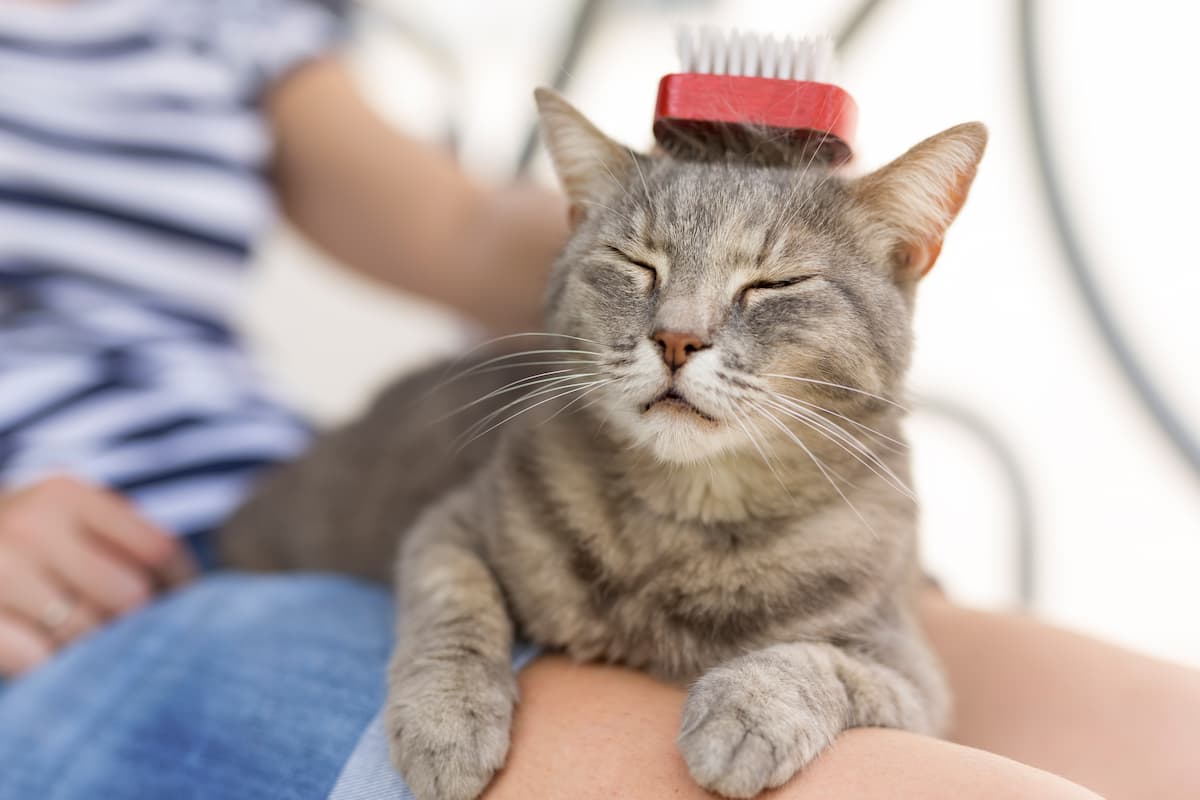
In short:The most effective way to manage cat hair is to groom your cat daily with the right brush for their coat type, reduce their stress (which triggers extra shedding), and use purpose-built cleaning tools — lint rollers, rubber gloves, pet-hair brooms, and a strong vacuum — to lift hair before it embeds in fabric. Most cats also shed more heavily during seasonal coat changes in spring and autumn, so stepping up grooming during those windows makes the biggest difference. |
 As a Cat Owner, you’ve probably had someone (or just about everyone) look at your clothes and say, “Oh, do you have pets?” On a positive note, it’s a good conversation starter. The reality: you’re realising that despite your best effort to remove all cat hair prior to that big presentation at work, somehow, your clothes are still covered in fluff.
Below is everything that actually helps, from grooming tools to cleaning hacks to the seasonal patterns worth planning around.
Why is cat fur so tough to manage?
Most cats (long-haired or short) have a double coat – a soft, insulating undercoat and a coarser protective topcoat that shields against dirt, UV, and the elements. Tools that grab the visible topcoat often miss the fine undercoat fur underneath, which is why hair keeps reappearing even after a “thorough” brush.
Two other factors make it worse:
- Static – Cat fur is lighter and drier than human hair or wool, so it clings to fabric with very little static charge.
- Constant self-grooming – Cats groom themselves for a large part of the day, which redistributes loose fur across your furniture, clothes, and floors rather than removing it from your home entirely.
Do all cats shed? No.
Hairless breeds like the Sphynx shed minimally, and curly-coated breeds such as the Cornish Rex are considered low-shedding options if you’re choosing a cat with fur management in mind.
What’s the best way to groom a shedding cat?
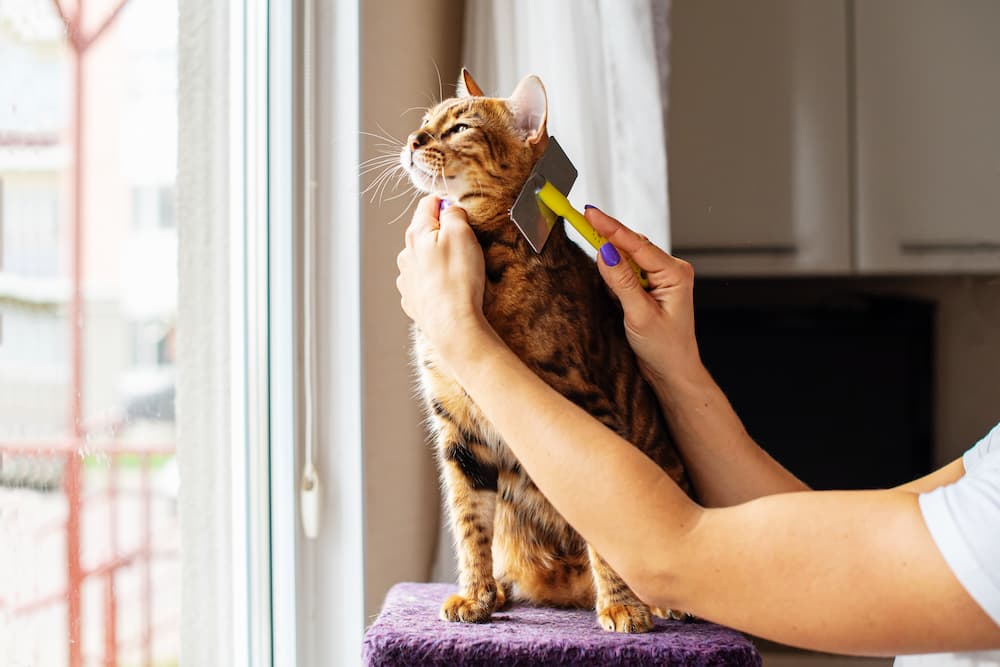
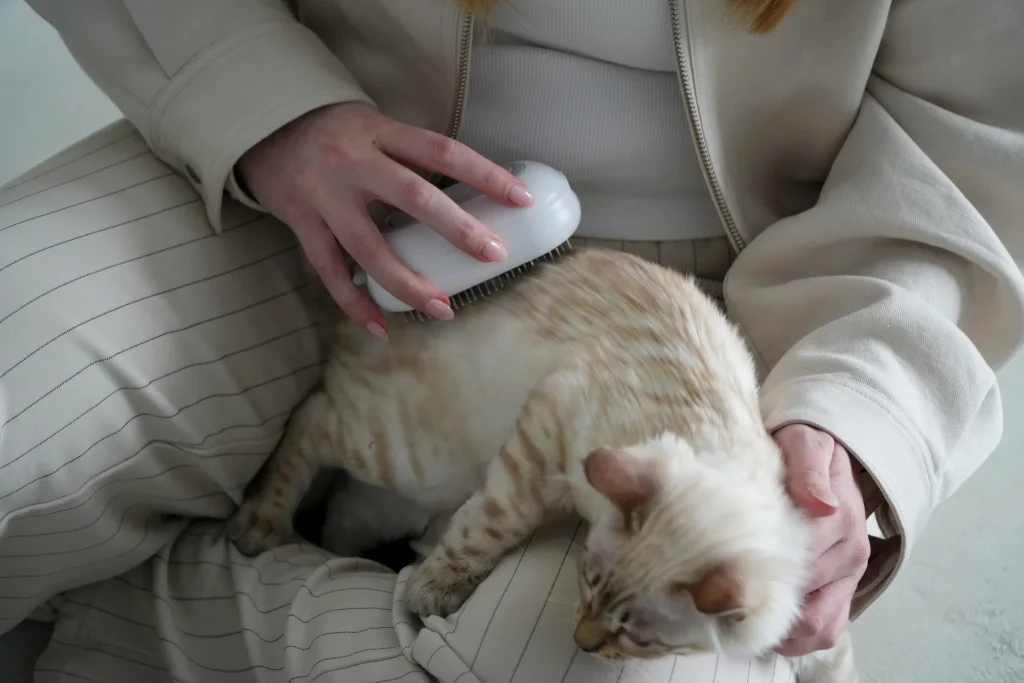
Daily grooming (yes, daily) is the single biggest lever you have. It removes loose fur before your cat’s self-grooming spreads it around the house.
- For short-haired cats: a slicker brush lifts fur from both coat layers. Finish with a rubber grooming glove to catch what’s left on the topcoat.
- For long-haired cats: use a slicker brush plus a shedding comb or de-matting tool, focusing on the neck and other areas prone to knots.
Getting your cat comfortable with grooming: introduce tools gradually and pair sessions with treats. Never force a grooming session….because a stressed cat often sheds more, not less!
 Can stress cause a cat to shed more?
Yes. Cats commonly lose more fur when their environment feels unstable. It could be a new pet or family member, rearranged furniture, or a change in routine that can trigger stress-related shedding (or over-grooming).
Where you may notice signs of anxiety or stress in your cat, see if any of these help reduce their shedding:
- Add elevated resting spots or cat shelving so your cat has a sense of security
- Keep up daily play and exercise to support mood regulation
- Consider calming pheromone diffusers
- Book a trusted Cat Sitter for time away, so your cat isn’t left alone and anxious for long stretches
If shedding is excessive or paired with bald patches or visible skin irritation, it may be linked to an underlying medical condition rather than stress alone. If that’s the case, it’s always best to consult with your Vet.
What cleaning tools actually remove cat hair?
Standard cleaning tools usually aren’t enough on their own. These make the biggest difference:
- Reusable lint rollers — keep one full-size for furniture and a travel-size for on the go
- Rubber cleaning gloves — the friction pulls hair out of nooks a lint roller can’t reach
- A pet-hair broom — soft silicone or rubber bristles pick up the light, wispy hair traditional brooms push around instead of collecting
- A cat-hair laundry tool — traps fur during the wash cycle; adding a microfibre towel to the dryer helps pull residual hair off clothes
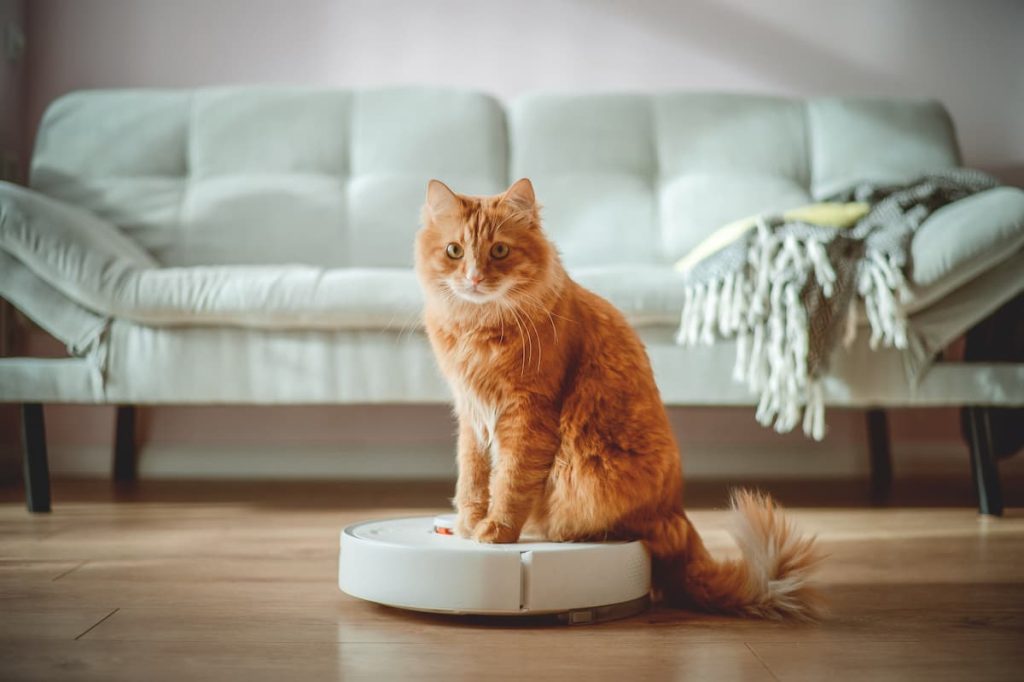
- A high-powered vacuum — the final step, and worth the investment given how often you’ll use it. To help here, check our latest reviews on the top 5 best vacuums for pet hair >
When do cats shed the most?
Cats shed year-round at a low level, but most go through a heavier “coat-blowing” period during seasonal transitions. Expect to see more fur covering the floors in Spring (shedding the winter undercoat) and Autumn (shedding the summer coat to grow a warmer one). If shedding spikes noticeably outside these windows, it’s worth ruling out stress or a medical cause rather than assuming it’s seasonal.
FAQsWhy does cat hair stick to everything? How can I stop cat hair from ending up on my clothes? Is it normal for cats to shed a lot in spring? How often should I clean to stay on top of cat hair? Can I shave my cat to reduce shedding? |