
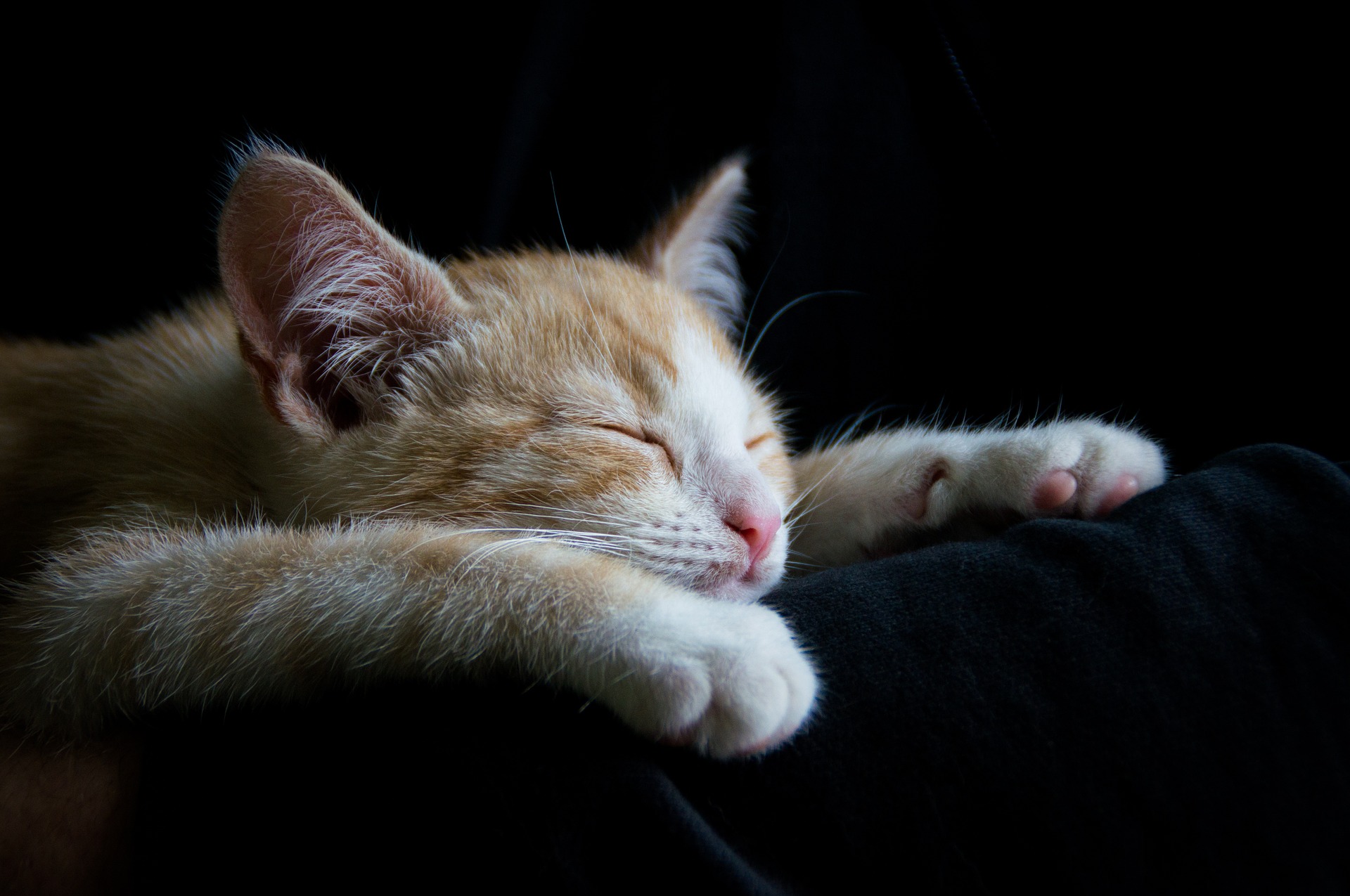
Why do cats sleep so much? Is it part of their nature? Or, have they just figured out the perfect life hack? In short:Most cats sleep 12 to 20 hours a day because they’re naturally designed for short bursts of intense activity followed by long periods of rest. So, even though your cat isn’t hunting mice for dinner anymore, their body still follows the same energy-saving blueprint as their wild ancestors. In this article, we’re going to lay out all the interesting facts about cat sleeping habits. So, cuddle up with your furry feline and get ready for the ultimate bedtime story! |
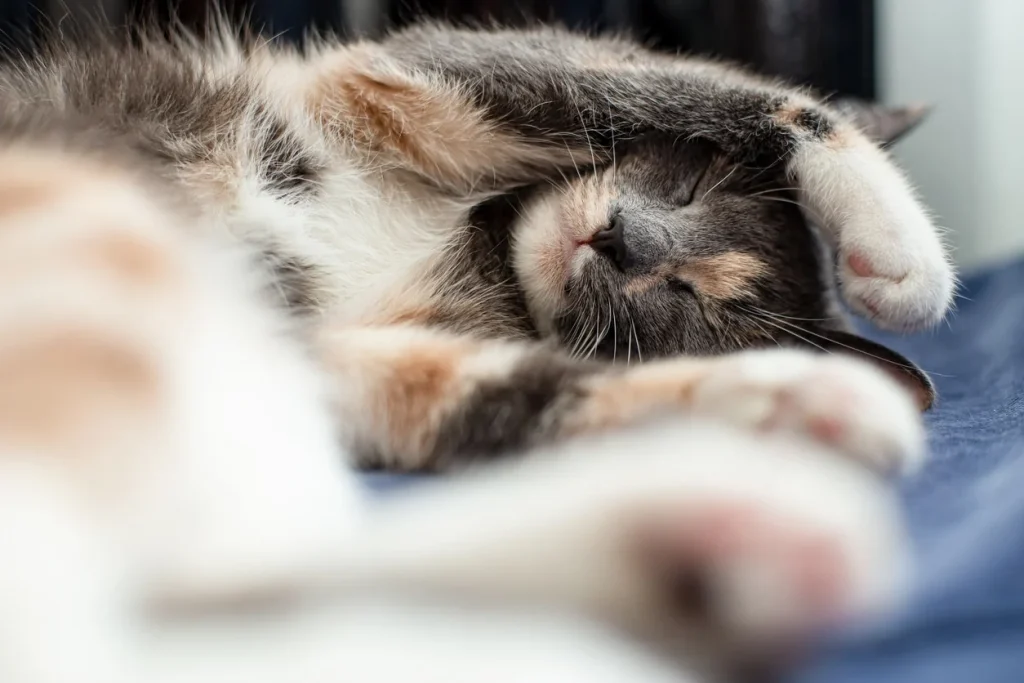
Why do cats sleep so much during the day?
Everything about your fur baby is by design. Their retractable claws, forward-facing eyes, sensitive whiskers, and rotating ears all help make them efficient hunters (and escape from larger predators). It’s one of the reasons why we have an entire article dedicated to learning How to Keep Your Cat from Attacking Wildlife.
Hunting requires enormous amounts of energy. Cats in the wild might spend considerable time stalking prey before launching into a short but explosive chase. Those bursts of activity burn through energy quickly.
The solution? Rest, recharge, and prepare for the next hunt.
Even though your cat’s meals probably arrive in a bowl rather than requiring a successful hunt, their instincts haven’t changed. Their body is still programmed to conserve energy whenever possible.
That’s why cats tend to sleep in short bursts throughout the day, ranging from a few minutes to a few hours at a time.
How many hours do cats sleep a day?
The amount of sleep a cat needs can vary considerably throughout their life. As a general guide:
- Kittens: 18 to 22 hours per day
- Adult cats: 12 to 16 hours per day
- Senior cats: 16 to 20 hours per day
Just like people, every cat is different. Some are naturally more active, while others are content spending most of the day perfecting the art of the nap.
Are cats actually sleeping the whole time?
Not necessarily. Cats spend a significant portion of their day in a light sleep or resting state rather than deep sleep. This allows them to conserve energy while remaining alert to potential opportunities or threats.
This behaviour also comes from their wild ancestors. While cats are predators, they’re not at the very top of the food chain. Staying partially alert while resting helped them avoid becoming someone else’s dinner.
So, if you’ve ever watched your cat seemingly asleep with one ear twitching toward a sound in the kitchen, you’ve witnessed this in action.
Do cats sleep more than dogs?
When we ask the question, “why do cats sleep so much?” we might also ask ourselves how they compare to other animals.
Let’s take our other at-home companions: dogs. Doggos generally spend about 12 to 14 hours sleeping per day, plus an extra few hours lounging around….That’s not too far off from felines.
Wolves, hyenas, and African wild dogs also spend large portions of their day conserving energy between periods of activity.
Let’s take the comparisons a step further though. Everyone on the ‘predator’ end of the spectrum is getting over 10 hours of sleep. Compare that to herbivores and the difference is quite dramatic. Plant eaters, like the giraffe, get about 5 hours of sleep per day. And a horse gets just 3 hours!
It turns out that predators across the animal kingdom are surprisingly committed to getting their beauty sleep.
Why is my cat asleep all day and awake at night?
Many pet parents assume cats are nocturnal, but that’s not entirely true. Cats are actually crepuscular, meaning they’re naturally most active around dawn and dusk. These low-light periods were ideal hunting times for their ancestors, so it’s just in their DNA.
While it may feel like your cat sleeps all day and parties all night, they’re really just following an ancient routine!
Check out this helpful info if you need help to keep your cat’s night zoomies at bay >
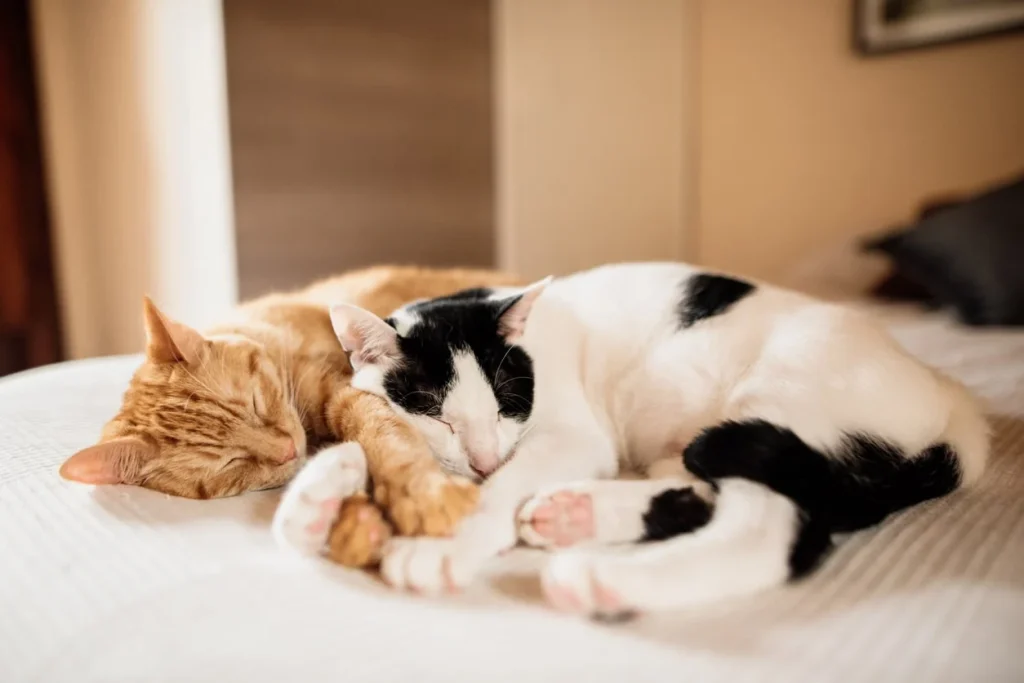 Do cats sleep more when it’s cold or raining?
Many cat parents notice that their feline companions seem even sleepier on gloomy days. And truth be told, there’s some merit to this observation. We covered this in another article for dog owners, asking the question, ‘Does the change of seasons affect dogs?‘.
Like dogs, cats often sleep more during cold and raining weather, and even overcast days.
Scientists don’t fully understand all the reasons behind this behaviour, but conserving energy during less favourable hunting conditions may play a role.
Your cat may simply see a rainy day as the perfect excuse to turn into a croissant! (…If you don’t know what we mean by this, check out our gorgeous guide to cats’ different sleeping positions >).
When should I worry about my cat sleeping tooooooo much?
Most of the time, a sleepy cat is simply being a cat. However, it’s a good idea to pay attention to changes in your cat’s normal routine.
Consider speaking with your veterinarian if your cat:
- Suddenly starts sleeping much more than usual
- Seems difficult to wake
- Loses interest in food
- Appears lethargic when awake
- Stops playing or interacting
- Experiences unexplained weight loss
The amount of sleep matters less than a significant change in behaviour. Because you know your cat best, you’re often the first person to notice when something seems different.
